Understanding mechanisms, recognising warning signs, and rebuilding load tolerance gradually
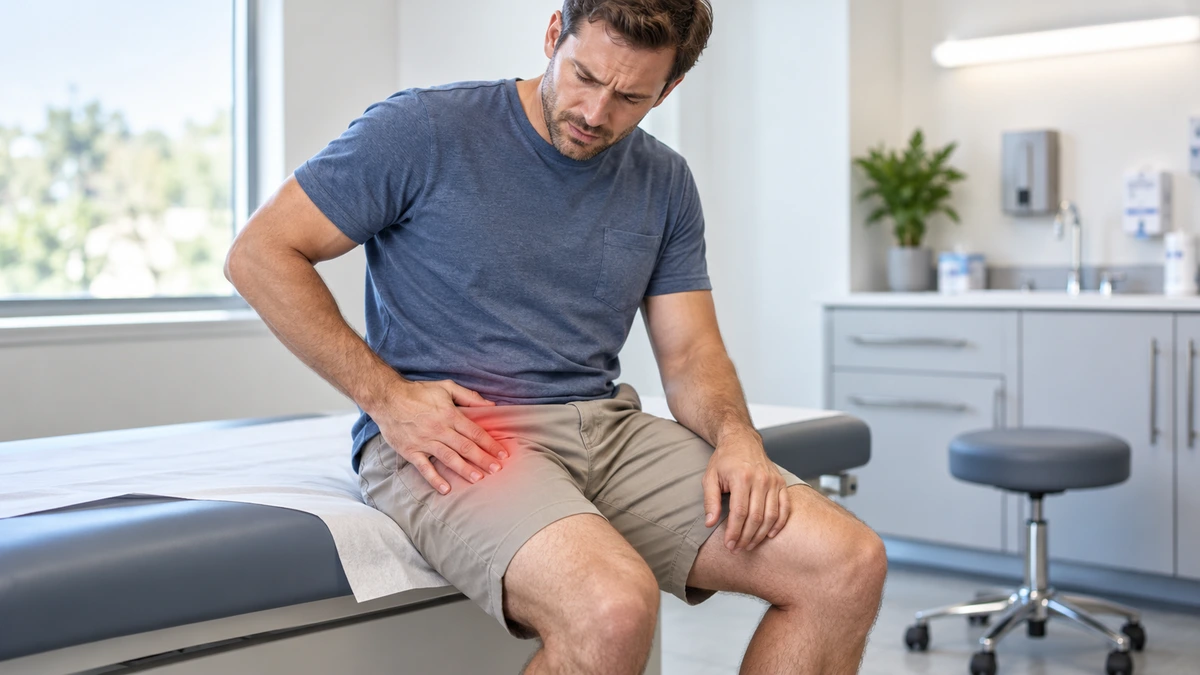
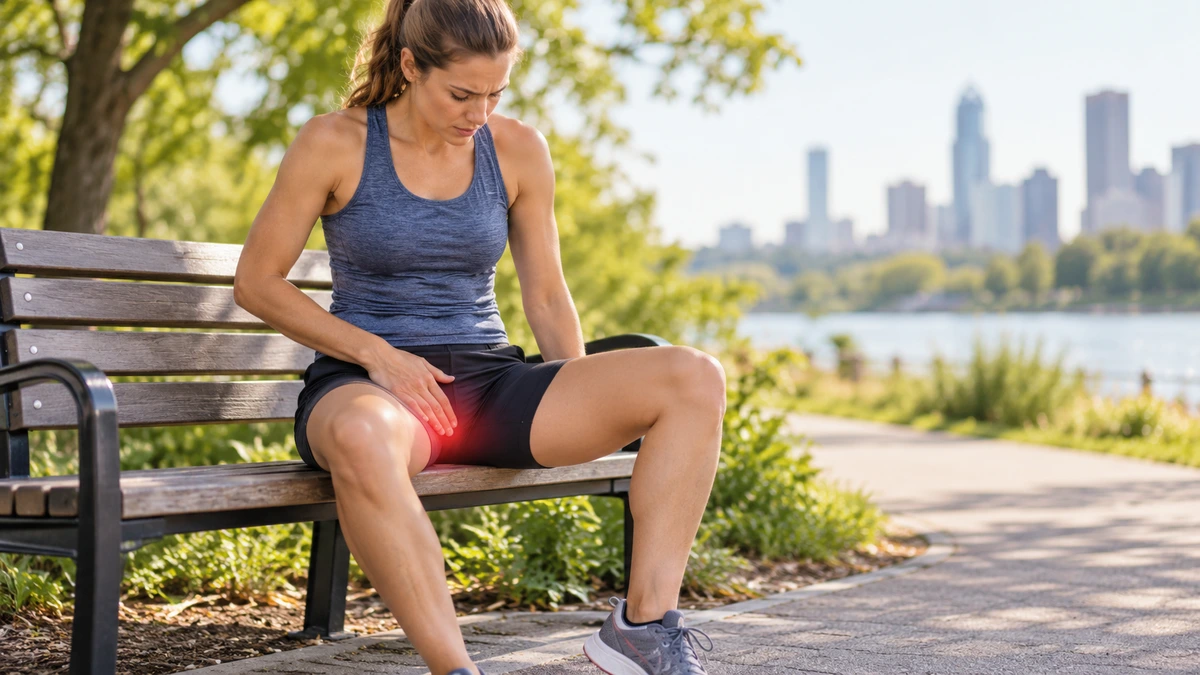
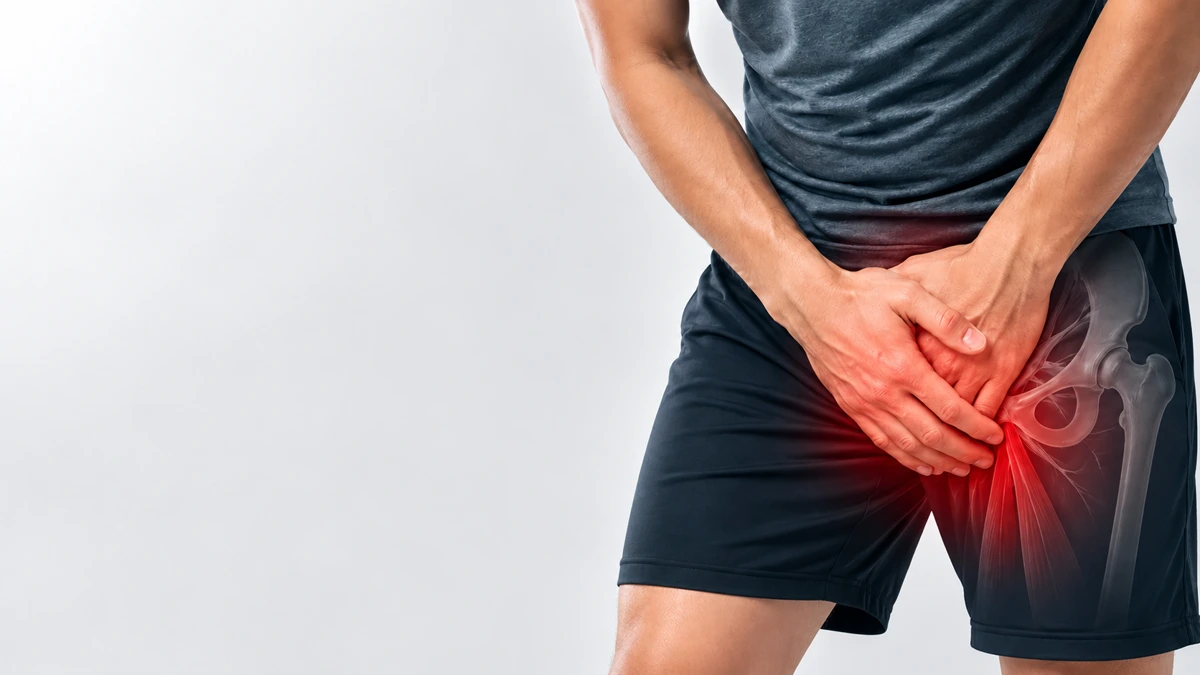
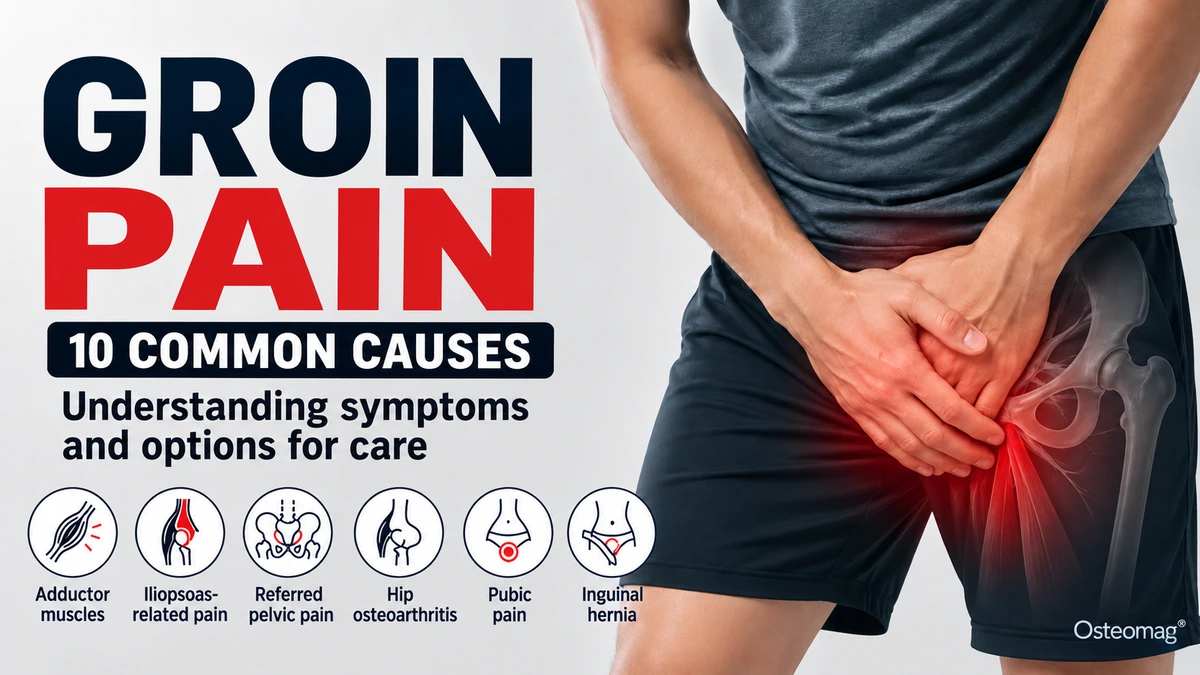
Groin pain may arise from a muscle, tendon, the hip, the inguinal region, or a non-musculoskeletal medical cause. This anatomically dense area contains several structures that can produce very similar symptoms. Location alone therefore cannot establish a diagnosis.
At a glance: in athletes, the Doha framework distinguishes adductor-related, iliopsoas-related, inguinal-related, and pubic-related pain, alongside hip-related causes and other diagnoses [1]. Several mechanisms can coexist in one person: in a series of 100 athletes, 44% had more than one clinical entity [2]. Substantial groin pain with difficulty bearing weight, a painful groin lump, testicular symptoms, fever, or abdominal symptoms warrants prompt medical assessment.
First: where is the pain actually located?
The groin is the junction between the lower abdomen and upper thigh. Pain may be superficial near the pubis, deep within the hip joint, situated in the inguinal canal, or referred from elsewhere. Circumstances are often more informative than precise location: sprinting, changing direction, deep hip flexion, coughing, carrying a load, prolonged weight-bearing, distance running, or pain at rest.
1. Adductor-related pain
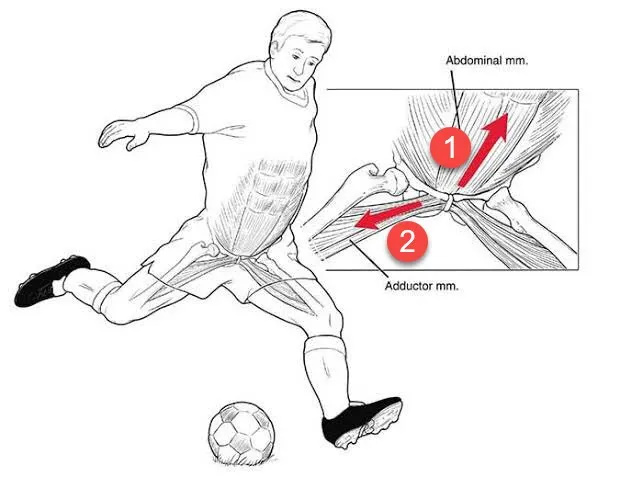
In athletes, adductor-related pain is one of the most common presentations. Under the Doha classification, it is suggested when the adductor region is tender to palpation and resisted contraction reproduces the athlete’s familiar pain [1].
It occurs particularly in sports involving acceleration, changes of direction, kicking, and sliding. When a tendon problem persists, tendinopathy is often a more appropriate term than ‘tendinitis’, because inflammation alone does not explain chronic tendon pain.
Management generally relies on load management and progressive strengthening rather than complete rest. Adductor, pelvic, and trunk capacity should be rebuilt according to the activity’s actual demands.

2. Iliopsoas-related pain
The psoas major and iliacus join the lesser trochanter through the iliopsoas unit. Their role in hip flexion explains why lifting the thigh or running can load this region. Nevertheless, anatomical proximity alone cannot distinguish muscle, tendon, and joint [7].
The iliopsoas is a powerful hip flexor. Pain related to this region may be felt deep in the groin crease and reproduced by resisted hip flexion or some stretching movements. The Doha consensus uses these findings, together with iliopsoas tenderness, to guide assessment [1].
However, pain should not automatically be attributed to a psoas that is ‘too short’ or ‘blocked’. Anterior hip pain can also arise from the joint, labrum, a tendon, or another structure. A comprehensive examination is more useful than an isolated test.
3. Inguinal hernia and inguinal pain without a palpable hernia
A true inguinal hernia can cause heaviness, pain, or a lump that becomes more evident when abdominal pressure increases: coughing, exertion, lifting, or straining. A suspected hernia deserves medical assessment.
Athletes may also have inguinal pain without a palpable hernia. The Doha classification describes pain in the inguinal canal region with local tenderness, often aggravated by resisted abdominal activity, coughing, or a Valsalva manoeuvre [1]. Older terms such as ‘sports hernia’ can be confusing when no actual hernia is present.
A groin lump that becomes very painful, hard, and irreducible, together with nausea or vomiting, requires urgent assessment.
4. Hip osteoarthritis
Hip osteoarthritis frequently causes deep groin pain. Stiffness, particularly during rotation or after inactivity, may accompany gradually reduced walking ability, difficulty putting on shoes, or difficulty getting into a car.
An X-ray showing osteoarthritis does not, however, automatically explain all pain. The clinical presentation must remain consistent. Guidelines revised in 2025 emphasise rehabilitation that includes therapeutic exercise; manual techniques may also form part of an individualised programme [3].
Movement, strengthening, load management, and adapted physical activity are therefore important pillars. Decisions about specialised medical care depend on the degree of limitation, progression, and an appropriate assessment.
5. Pubic-related pain
The pubic symphysis region can become painful, particularly in running and change-of-direction sports. ‘Pubalgia’ is used broadly, but describes a painful region rather than one specific structure.
The Doha consensus describes pubic-related pain when the pubic symphysis and immediately adjacent bone are tender. This presentation can coexist with adductor-related or inguinal-related pain [1].
Rehabilitation should be individualised and account for sport demands, adductor strength, trunk control, and load progression.
6. Femoroacetabular impingement and other intra-articular pain
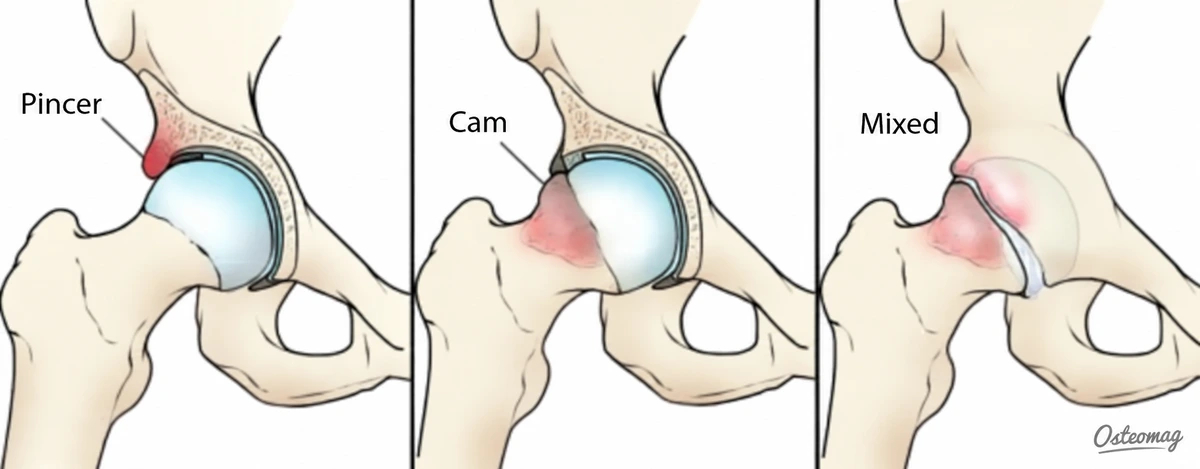
Femoroacetabular impingement syndrome can produce deep groin pain, pinching during flexion, sometimes clicking, or limited movement. However, bone morphology alone is insufficient for diagnosis. The international Warwick consensus requires the combination of symptoms, clinical signs, and imaging findings [4].
This is an essential distinction: cam or pincer morphology can be present in someone without pain. An image should therefore never be interpreted independently of the clinical presentation.
Treatment may include structured rehabilitation, temporarily adapting irritating ranges of motion, and progressive strengthening. Surgery is an option for selected cases, but is not automatically necessary [4] [5].
7. Labral injury or another intra-articular problem
The labrum is a fibrocartilaginous ring around the acetabulum. An injury may be associated with groin pain, clicking, catching, or a locking sensation. However, these symptoms are not specific and can occur in other hip problems.
Suspicion of an intra-articular injury becomes more relevant when the history, clinical tests, and imaging, if needed, converge. Treatment depends more on functional impact and clinical profile than on the mere presence of an imaging abnormality.
8. Femoral neck stress fracture
This is a less common cause, but an important one not to miss. A femoral neck stress fracture may present as progressive hip or groin pain, particularly in endurance runners, military personnel, and people who have rapidly increased training volume [6].
Pain often occurs during activity and initially improves with rest. As it progresses, it may occur while walking or even at rest. Early X-rays are sometimes normal; MRI is the best investigation when clinical suspicion is substantial [6].
Significant groin pain in a runner who is limping or struggling to bear weight should not simply be treated as muscle tension. An unrecognised incomplete fracture can progress to a displaced fracture, with serious consequences. Prompt medical assessment is indicated [6].
9. Pain referred from the back, pelvis, or elsewhere
The lower back and pelvis can sometimes refer pain towards the groin. Some upper lumbar nerve disorders, sacroiliac pain, or other musculoskeletal disorders may enter the differential diagnosis.
However, the simplistic idea that a ‘displaced pelvis’ is a common, easily identifiable cause should be avoided. Referred pain is assessed through the history, neurological examination when relevant, symptom behaviour, and exclusion of more likely causes.
10. Non-musculoskeletal causes
The groin lies close to abdominal, urological, gynaecological, and vascular structures. Pain may therefore originate outside the muscles or hip.
Depending on the context, possible causes include a hernia, infection, testicular condition, gynaecological problem, urinary stone, inflammatory disease, or vascular cause. Pain with systemic or visceral symptoms deserves medical assessment rather than empirical manual treatment.
What examination and imaging can contribute
Assessment brings together the history, gait, hip mobility, reproduction of familiar pain, and muscle-group capacity. Palpation or one positive test is insufficient. When a hernia is suspected, medical examination and, depending on the context, ultrasound or other investigations can clarify the situation [1] [9].
After trauma with a suspected fracture, X-rays are generally the initial investigation. If they are normal or inconclusive but suspicion persists, further imaging is necessary under ACR recommendations. A normal X-ray should therefore not lead to forcing weight-bearing. Stress fractures also require specific reasoning, often including MRI [6] [10].
A guide to possible causes
| Presentation | Causes to consider |
|---|---|
| Pain during adductor contraction | Adductor-related pain |
| Pain during resisted hip flexion | Iliopsoas, hip, or other anterior causes |
| Pain with coughing or straining | Hernia or inguinal-related pain |
| Progressive hip stiffness | Osteoarthritis or another joint disorder |
| Pinching during deep flexion, clicking | FAI, labrum, or another intra-articular cause |
| Activity-related pain in a runner with limping or difficulty bearing weight | Stress fracture requiring prompt exclusion |
| Fever, urinary symptoms, or abdominal symptoms | Non-musculoskeletal medical cause |
This table does not establish a diagnosis. Several causes can produce the same symptoms, and several mechanisms can coexist.
How can groin pain be eased?
A randomised trial in athletes with chronic adductor-related pain supports an active strength and coordination programme rather than passive treatments alone. This does not automatically apply to every type of groin pain: exercise remains adapted to the clinical category, irritability, and desired activity [8].
There is no universal stretch for all groin pain. An exercise useful for adductor pain may be inappropriate for a stress fracture or hernia. The first goal is therefore to determine the most likely category.
Without warning signs, several principles are generally reasonable:
- temporarily reduce activities that cause substantial worsening;
- maintain tolerable movements and activities;
- avoid repeatedly stretching an already irritable area aggressively;
- gradually rebuild strength and load capacity;
- gradually increase running, sprinting, or changes of direction;
- monitor the response during activity and in the following hours.
What role can osteopathy play?
The osteopath can contribute to musculoskeletal assessment: hip mobility, muscle-group provocation and capacity, lumbar movement, gait, and load tolerance. Manual treatment can be used for comfort or mobility when appropriate.
The role is not to ‘put the pelvis back in place’, treat a hernia manually, or continue treatment when signs suggest a fracture, visceral emergency, or another medical condition. Responsible care includes referral for medical investigation, imaging, or more specific rehabilitation when necessary.
When should you seek prompt assessment?
- significant pain after a fall or trauma;
- new inability or difficulty bearing weight on the leg;
- progressive pain in a runner or athlete with a suspected stress fracture;
- a groin lump that becomes very painful, hard, or irreducible;
- acute testicular pain;
- fever, chills, or a marked decline in general health;
- substantial abdominal pain, vomiting, or pronounced urinary symptoms;
- new numbness, weakness, or other neurological symptoms;
- persistent or worsening pain despite a reasonable reduction in loading.
Key points to remember
Groin pain is not a diagnosis. In athletes, the adductor, iliopsoas, inguinal, pubic, and hip categories offer a useful framework, but several may coexist. In non-athletes, osteoarthritis, intra-articular disorders, hernias, and medical causes must also be considered.
The most appropriate care starts by identifying the most likely mechanism, then adapting load and progressively rebuilding function. Unusual or very intense pain, difficulty bearing weight, or systemic signs deserves medical assessment rather than an attempt at self-treatment.
Scientific references
- [1] Weir et al. Doha agreement meeting on terminology and definitions in groin pain in athletes. 2015.
- [2] Taylor et al. Multidisciplinary Assessment of 100 Athletes With Groin Pain Using the Doha Agreement: High Prevalence of Adductor-Related Groin Pain in Conjunction With Multiple Causes. 2018.
- [3] Koc et al. Hip Pain and Mobility Deficits-Hip Osteoarthritis: Revision 2025. 2025.
- [4] Griffin et al. The Warwick Agreement on femoroacetabular impingement syndrome (FAI syndrome): an international consensus statement. 2016.
- [5] Trigg et al. Femoroacetabular Impingement Syndrome. 2020.
- [6] Bernstein et al. Femoral Neck Stress Fractures: An Updated Review. 2022.
- [7] Tramer et al. The Iliopsoas: Anatomy, Clinical Evaluation, and Its Role in Hip Pain in the Athlete: A Scoping Review. 2024.
- [8] Hölmich et al. Effectiveness of active physical training as treatment for long-standing adductor-related groin pain in athletes: randomised trial. 1999.
- [9] Stabilini et al. Update of the international HerniaSurge guidelines for groin hernia management. 2023.
- [10] American College of Radiology et al. ACR Appropriateness Criteria® Acute Hip Pain: 2024 Update. 2025.