Comparing the attack pattern and examination without attributing every headache to the neck
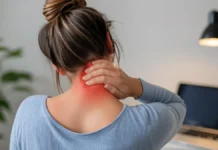
Migraine can cause neck pain, and pain arising from the neck can cause headache. This overlap is precisely what makes the distinction difficult. A stiff or tender neck therefore does not prove that a headache ‘comes from the cervical spine’: neck pain is extremely common in people with migraine [1].
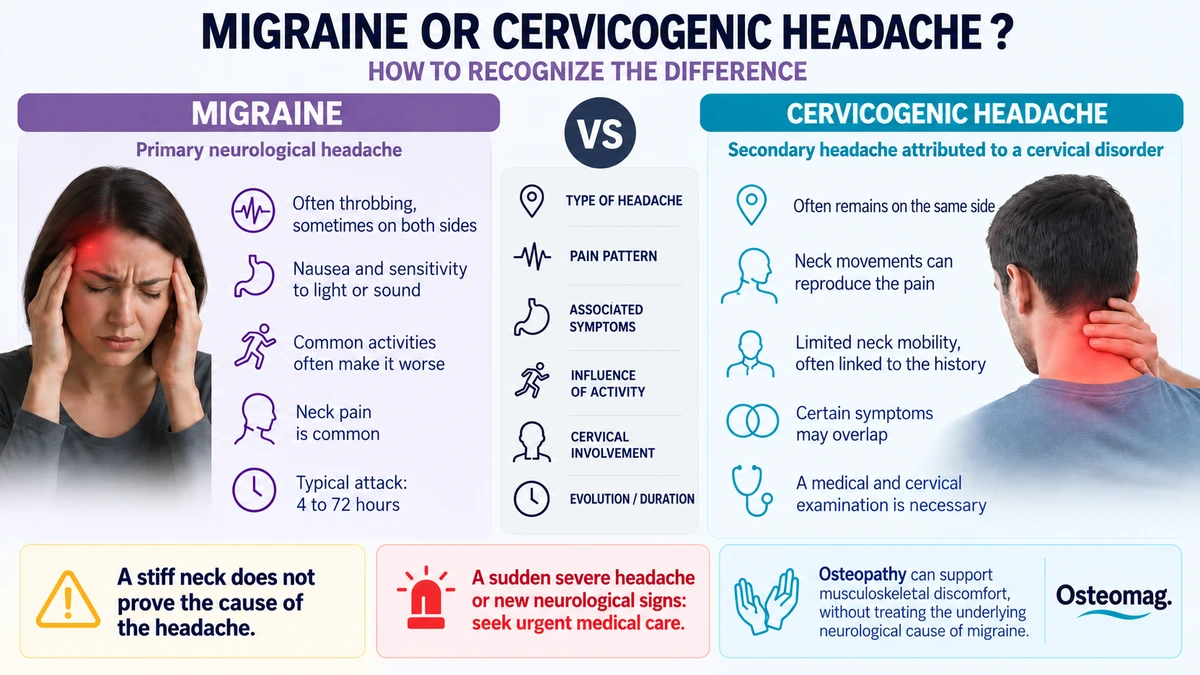
At a glance: migraine is a primary neurological disorder; cervicogenic headache is a secondary headache attributed to a cervical structure; and tension-type headache is another diagnosis. The best distinction considers the complete profile: attack duration, nausea, light and sound, physical activity, possible aura, neck behaviour, neurological examination, and cervical examination. Neither a ‘tight muscle’ nor isolated stiffness allows a conclusion.
Migraine: much more than a headache
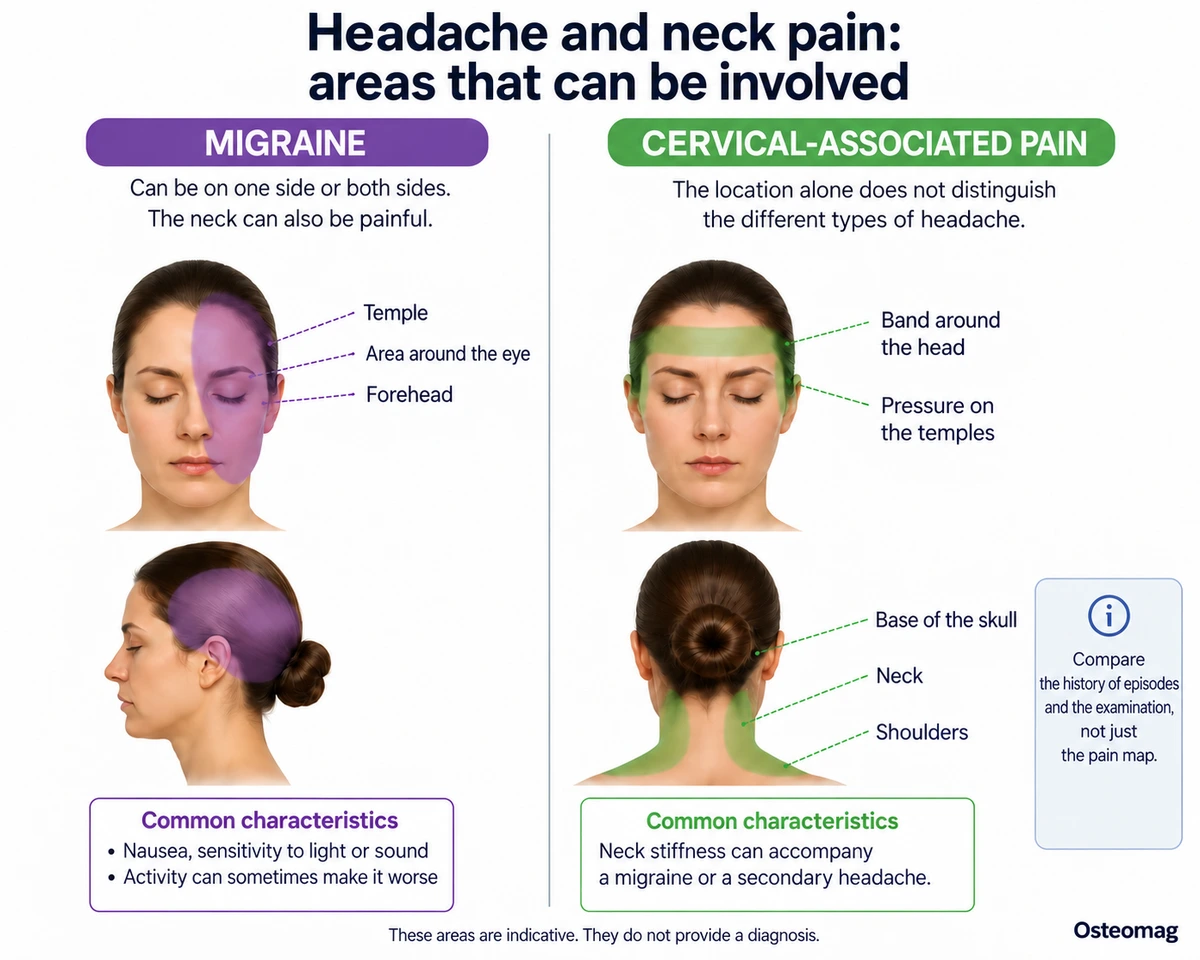
Migraine is a recurrent neurological disorder. Under the international ICHD-3 classification, migraine without aura typically involves attacks lasting 4 to 72 hours when untreated or unsuccessfully treated. Classic features include pain that is often unilateral, pulsating, moderate to severe, and aggravated by routine physical activity, with nausea and/or sensitivity to light and sound [8]. Not every feature occurs in every person.
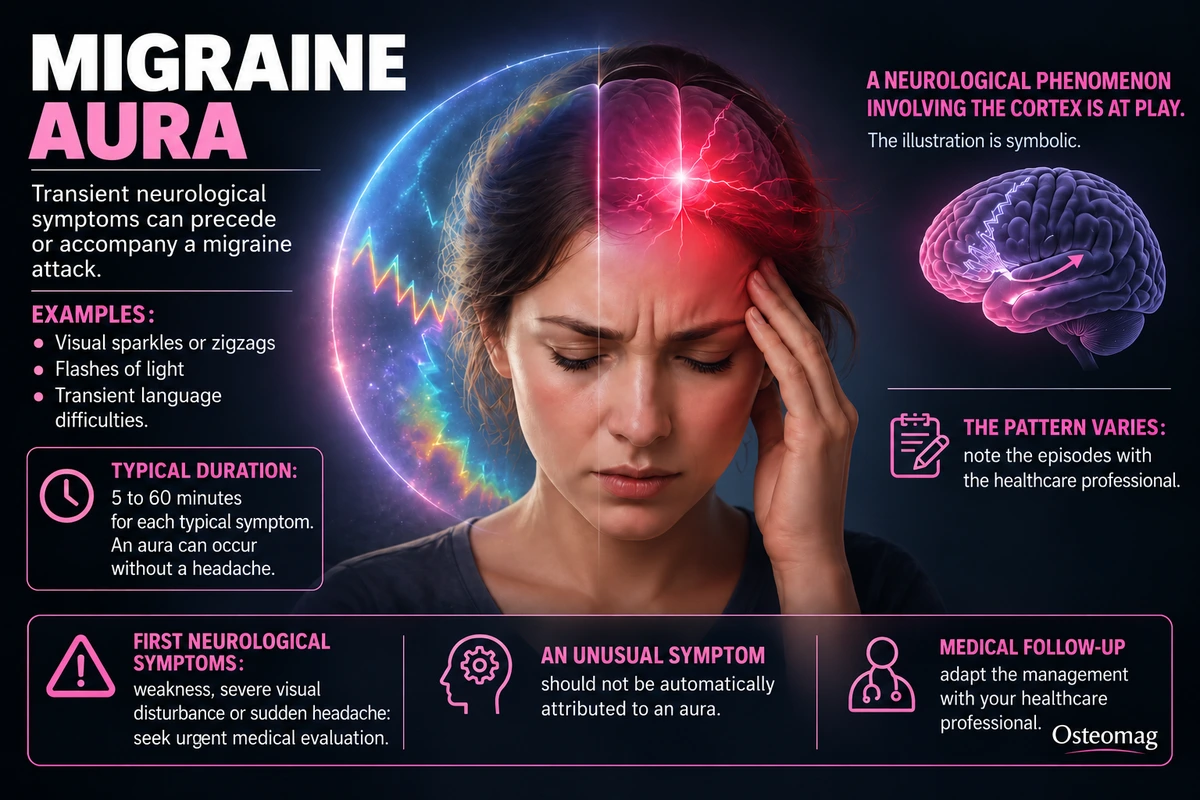
In some people, aura precedes or accompanies an attack: visual phenomena, sensory symptoms, or transient language disturbances. A first unusual or prolonged aura, or one accompanied by an unfamiliar neurological deficit, deserves medical assessment.
Migraine may also include a premonitory phase with fatigue, yawning, mood changes, difficulty concentrating, and sometimes neck pain. This can create the impression that a neck ‘blockage’ triggered the attack, although the neck pain may itself be part of the migraine phenomenon.
Neck pain is very common in migraine
A 2022 meta-analysis estimated that around 77% of people with migraine reported neck pain in clinical studies, with an even higher proportion in chronic migraine [1]. This strong association does not mean that the neck is always the headache’s source.
The trigeminal system and afferents from the upper cervical regions converge within the trigeminocervical complex. This neuroanatomical organisation contributes to the overlap between head and neck pain: migraine can be felt in the neck, while a painful cervical structure can refer pain towards the head.
What is cervicogenic headache?
Cervicogenic headache is a secondary headache attributed to a condition or dysfunction in the cervical region. Pain may begin in the neck or occipital region and refer towards the temple, forehead, or around the eye. It is often unilateral and may be associated with reduced cervical mobility [2] [3].
However, diagnosis is more demanding than it may appear. Recent reviews emphasise that a tender spot, contracted muscle, movement restriction, or degenerative imaging finding does not prove that the neck is the headache’s source [2] [3]. The clinical history, pain behaviour, and several examination findings must agree.
The cervical flexion–rotation test can contribute to clinical reasoning. A meta-analysis reported sensitivity and specificity of around 83% in the available studies, making it a useful clue rather than a definitive test [2].
Features that point more towards migraine
- Recurrent attacks with a relatively recognisable pattern.
- A typical duration of several hours, sometimes up to three days.
- Moderate or intense pain that limits activities.
- Aggravation by, or avoidance of, routine physical activity during the attack.
- Nausea or vomiting.
- Photophobia and/or phonophobia.
- Pulsating pain in many people, but not everyone.
- Aura in a proportion of patients.
- A need to withdraw to a quiet or dark place.
- Fatigue or ‘brain fog’ before or after the attack.
Nevertheless, migraine can be bilateral and accompanied by substantial neck stiffness. Shortcuts such as ‘one-sided = migraine’ or ‘stiff neck = cervical headache’ should therefore be avoided.
Features that point more towards a cervical origin
- Pain regularly triggered or aggravated by certain neck movements or positions.
- Reproducible cervical restriction on examination that fits the presentation.
- Pain often starting in the cervical or occipital region and then spreading towards the head.
- A pattern frequently remaining on the same side.
- A history of neck trauma in some patients.
- Consistent reproduction of the headache through relevant cervical tests.
Nausea or sensitivity to light may sometimes occur with cervicogenic headache, which explains why the differential diagnosis cannot rely on one symptom [3].
Comparison table
| Feature | Migraine | Cervicogenic headache |
|---|---|---|
| Nature | Primary neurological headache | Secondary headache attributed to the cervical region |
| Neck pain | Very common; may be part of the attack | Common and more closely related to the cervical mechanism |
| Neck movements | May be uncomfortable without being the cause | May consistently reproduce or increase pain |
| Nausea | Common | Possible but less characteristic |
| Light / sound | Frequently bothersome | Sensitivity may occur |
| Physical activity | Often aggravating during an attack | Variable effect depending on cervical loading |
| Cervical mobility | May also be reduced | Restriction more consistently associated with symptom reproduction |
What about tension-type headache?
Tension-type headache should not be confused with simple ‘tension in the neck’. It is a primary headache diagnosis with its own criteria. It is typically bilateral, feels like pressure or tightening, is mild to moderate, and is not aggravated by routine physical activity. Substantial nausea is unusual.
The neck and scalp muscles can be tender during tension-type headache, but this does not mean that a ‘knotted’ muscle is its sole cause.
Why a cervical examination cannot exclude migraine
People with migraine also frequently show changes on cervical examination. A systematic review found, on average, some reductions in cervical mobility and strength, as well as lower sensitivity thresholds, compared with people without headache [4].
Finding neck stiffness or tenderness in someone with migraine is therefore common. The examiner must determine whether these findings truly reproduce the patient’s usual presentation and fit the history, rather than automatically concluding that ‘the migraine comes from the neck’.
Stress, screens, and posture: possible factors, not diagnoses
A long day at a screen may coincide with headache for several reasons: sustained concentration, visual fatigue, fewer breaks, stress, static positioning, insufficient sleep, or dehydration. It is therefore too simplistic to attribute every headache to ‘poor posture’.
Variation often matters more than seeking a perfect posture. For someone with a cervical component, breaks, improved movement tolerance, progressive strengthening, and reasonable ergonomics may help. For someone with migraine, regular sleep, meals, and activity, together with an appropriate medical treatment plan, may be more influential.
How is the diagnosis established?
For migraine, diagnosis is mainly based on clinical history and international criteria. American Headache Society recommendations indicate that neuroimaging is generally unnecessary when the presentation is typical of migraine, the neurological examination is normal, and there are no warning signs or atypical features [5].
Imaging may, however, be considered when the pattern changes substantially, for a first or ‘worst’ headache, when aura is unusual, prolonged, or persistent, or when another finding raises suspicion of a secondary cause [5] [6].
For cervicogenic headache, assessment combines the pain history and cervical examination. Further investigations may sometimes be needed, but degenerative changes on cervical imaging are common and do not, by themselves, prove that they cause the headache.
When should you seek prompt assessment?
A new or unusual headache requires more caution than a familiar, stable attack. Urgent assessment is particularly important in the following situations [5] [6]:
- a sudden headache reaching maximum intensity within seconds or minutes;
- new weakness, paralysis, confusion, speech disturbance, or substantial sensory loss;
- fever with meningism or a marked decline in general health;
- loss of consciousness or a seizure;
- a new headache after significant trauma;
- a new headache pattern during pregnancy or the postpartum period;
- a new headache in someone with cancer or immunosuppression;
- a clear, progressive change in a usual headache pattern;
- a very painful red eye with visual disturbance;
- unusual, persistent, or progressive neurological symptoms.
How can someone with migraine be supported?
Medical care depends on attack frequency, duration, and impact. An individualised plan explains what to do during an attack, when to reassess, and which prevention goals are relevant. American Headache Society recommendations reflect changes in this care; neck treatment does not replace appropriate medical strategies [7].
Regular sleep, meals, and activity may contribute to day-to-day management. A simple diary records headache days, associated symptoms, limited activities, and genuinely reproducible factors. It avoids systematically restricting foods or movements based only on an occasional association.
How is a cervical component managed?
A 2023 systematic review suggests that exercise may reduce some symptoms of cervicogenic headache, but certainty is low to very low and programmes are heterogeneous. Reviews of manual approaches and exercise cannot guarantee an outcome or attribute benefit to one specific technique. These findings do not prove that treating the neck corrects migraine [9] [10].
When a headache has a credible cervical component, management may include mobility, control, and strengthening exercises, activity progression, and manual techniques for some people. Treatment should aim at function rather than a continual search for ‘displaced’ vertebrae.
Medical approaches, such as selected diagnostic or therapeutic blocks, may be used in some cases of cervicogenic headache, particularly when diagnosis remains uncertain or symptoms persist [3].
What role can osteopathy play?
Osteopathy may be relevant when there is a musculoskeletal component: painful neck movement restriction, reduced movement tolerance, associated muscle pain, or a need for a gradual return to mobility.
However, it should not be presented as a treatment capable of correcting migraine’s neurological cause. In someone with migraine, cervical care may sometimes improve comfort when the neck itself is painful, but it replaces neither medical diagnosis nor specific treatment when indicated.
Responsible care therefore identifies what can actually be modified musculoskeletally, recognises the limits of manual treatment, and refers for medical assessment when the presentation requires it.

Frequently asked questions
Can migraine cause neck pain?
Yes. Neck pain is very common in migraine and may be part of the attack rather than its cause [1].
Is a headache that starts in the neck necessarily cervicogenic?
No. The starting location is insufficient. Diagnosis depends on the complete clinical profile and examination.
If neck massage helps, does that prove the problem comes from the neck?
No. Temporary relief can occur for several reasons and does not necessarily identify the headache’s cause.
Is MRI necessary?
Not routinely. A headache consistent with typical migraine, without warning signs and with a normal neurological examination, generally does not require routine neuroimaging [5].
Key points to remember
Neck pain alone cannot distinguish migraine from a headache arising from the neck. Migraine can produce substantial neck pain, while cervicogenic headache can involve some migraine-like symptoms.
The best distinction rests on attack history, associated symptoms, pain behaviour, neurological examination when necessary, and a structured cervical examination. A precise assessment then guides the appropriate strategy: specific migraine care, cervical rehabilitation, or a combination when several mechanisms coexist.
Scientific references
- [1] Al-Khazali et al. Prevalence of neck pain in migraine: A systematic review and meta-analysis. 2022.
- [2] Demont et al. Cervicogenic headache, an easy diagnosis? A systematic review and meta-analysis of diagnostic studies. 2022.
- [3] Pareek et al. Cervicogenic Headaches: A Literature Review and Proposed Multifaceted Approach to Diagnosis and Management. 2024.
- [4] Anarte-Lazo et al. Differentiating migraine, cervicogenic headache and asymptomatic individuals based on physical examination findings: a systematic review and meta-analysis. 2021.
- [5] Evans et al. Neuroimaging for Migraine: The American Headache Society Systematic Review and Evidence-Based Guideline. 2020.
- [6] Do et al. Red and orange flags for secondary headaches in clinical practice: SNNOOP10 list. 2019.
- [7] Charles et al. Calcitonin gene-related peptide-targeting therapies are a first-line option for the prevention of migraine: An American Headache Society position statement update. 2024.
- [8] International Headache Society. The International Classification of Headache Disorders, 3rd edition (ICHD-3). 2018.
- [9] Becher et al. Effectiveness of therapeutic exercise for the management of cervicogenic headache: A systematic review. 2023.
- [10] Bini et al. The effectiveness of manual and exercise therapy on headache intensity and frequency among patients with cervicogenic headache: a systematic review and meta-analysis. 2022.