Restoring arm function while respecting surgical and oncology follow-up
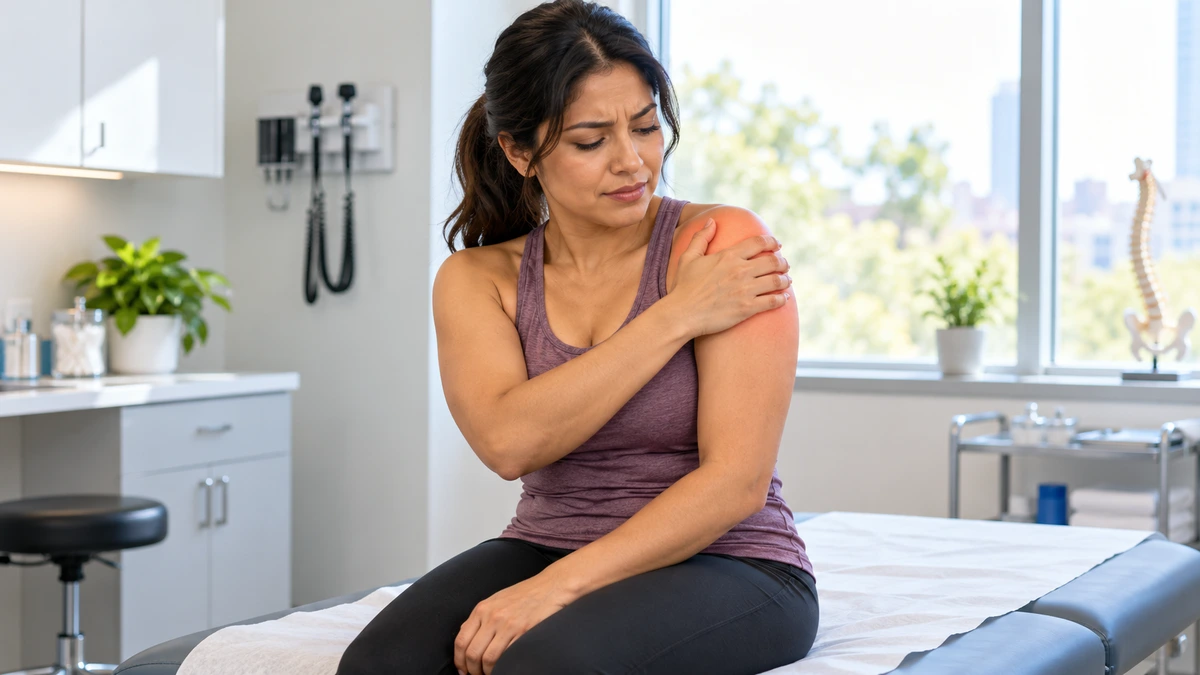
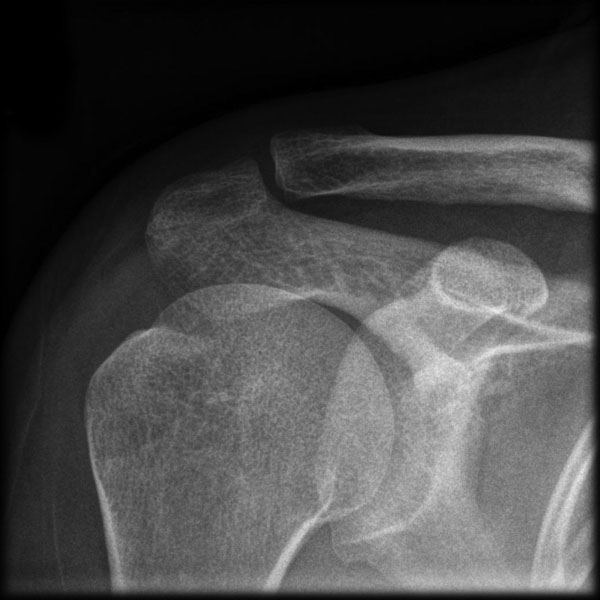
After a mastectomy, lumpectomy or axillary surgery, some people develop chest wall pain, shoulder stiffness, scar hypersensitivity or fear of moving the arm. These problems are common and may persist well beyond skin healing.
Osteopathy may sometimes contribute to comfort and mobility, but it treats neither cancer nor oncological complications themselves. The priority is to distinguish ordinary musculoskeletal limitations from lymphoedema, neuropathic pain, infection, reconstruction complications or symptoms requiring oncology advice.
Why can the shoulder become stiff after breast surgery?
Several factors may combine:
- postoperative pain;
- protecting the arm;
- a chest or axillary scar;
- lymph node dissection;
- radiotherapy;
- relative immobilization;
- fear of pulling on the wound;
- deconditioning;
- breast reconstruction, depending on the technique used.
The limitation is therefore not necessarily caused by a single ‘adhesion’ that a practitioner could release in one session.
What does exercise evidence show?
A 2024 meta-analysis involving more than 2,000 patients who underwent breast cancer surgery found that exercise significantly improved flexion, abduction and upper-limb function. [1]
Active rehabilitation therefore has a stronger evidence base than reliance on manual treatment alone.
The PROSPER trial also supports a structured programme after surgery without reconstruction in patients at risk of arm limitations. Its findings do not define the appropriate timing after every reconstruction. [2]
Why is early movement important?
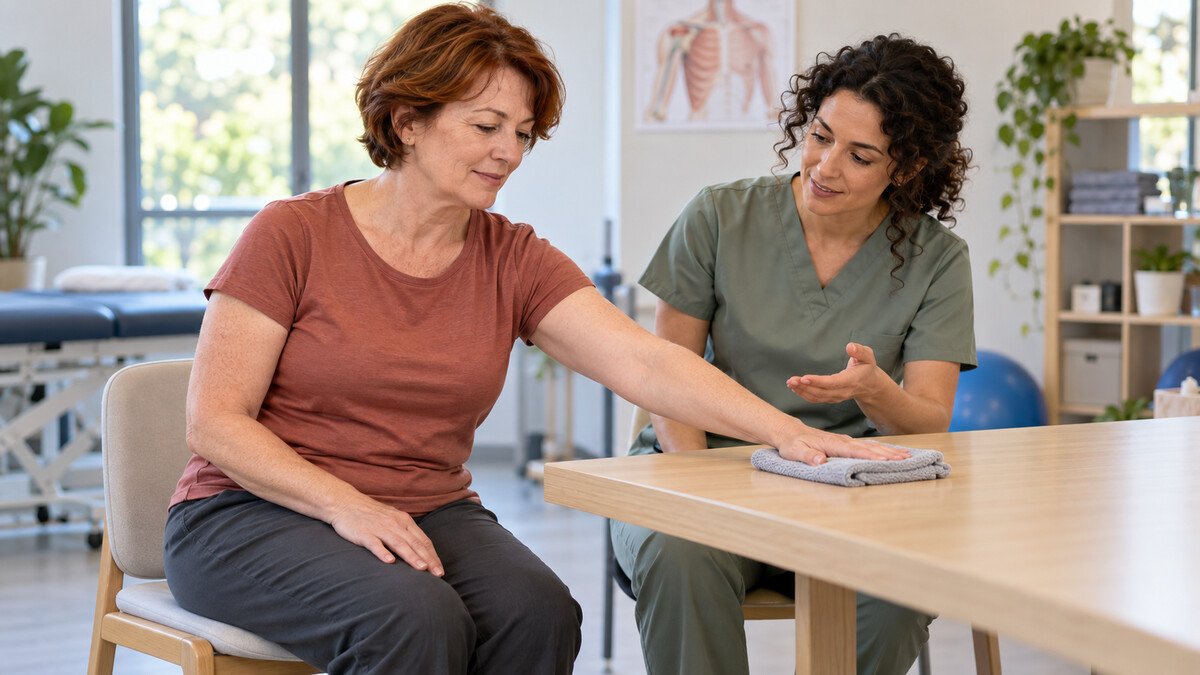
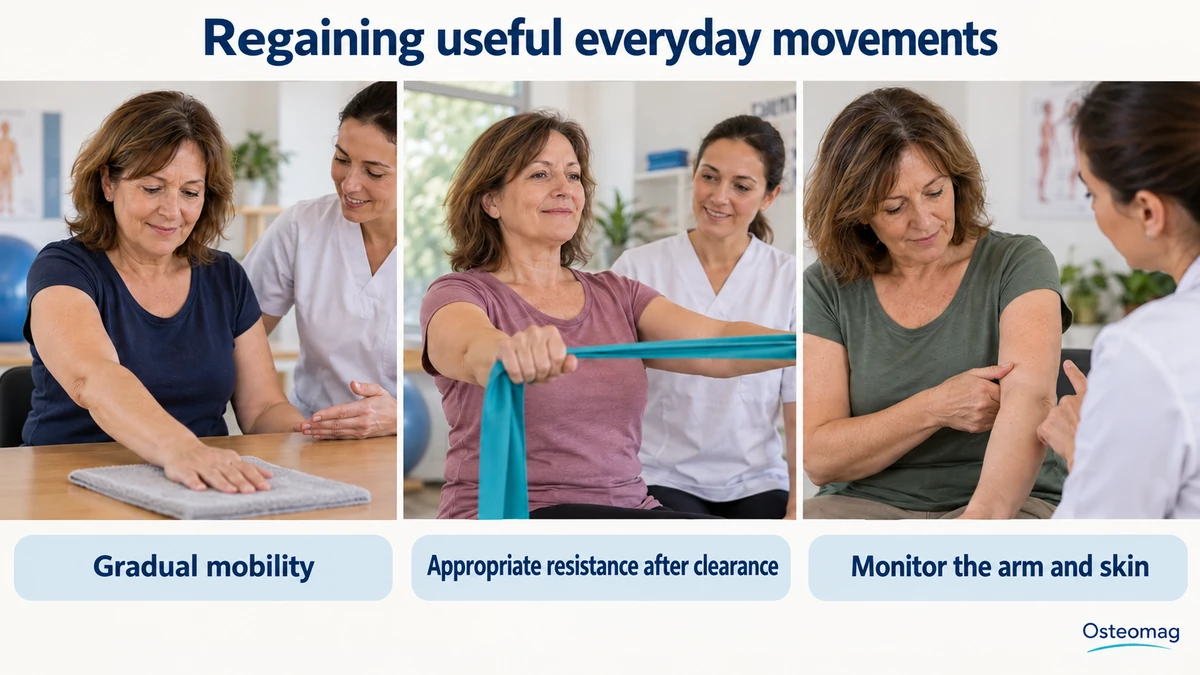
When compatible with surgical guidance, gradually resuming arm movements helps avoid lasting loss of range.
However, the pace depends on:
- the type of surgery;
- the presence of drains;
- reconstruction;
- the wound’s condition;
- the surgical team’s recommendations.
Can manual treatment help?
Possibly, as an adjunct. A review of shoulder treatments after breast cancer care reports several rehabilitation strategies, including exercise, stretching and manual techniques. [3]
However, evidence for specific manual interventions is much less robust than that for exercise.
Why can a scar remain sensitive?
A scar extends through skin, subcutaneous tissue and sometimes deeper structures. After surgery, it may involve:
- hypersensitivity;
- numbness;
- pulling sensations;
- neuropathic pain;
- reduced local tissue gliding;
- discomfort from clothing contact.
Does an ‘adherent’ scar necessarily need deep work?
No.
Sensitivity may be neuropathic or related to protective responses. Early deep pressure may increase symptoms.
Progression can start with self-touch, light contact, gentle skin movement and active arm movement.
When does scar work become reasonable?
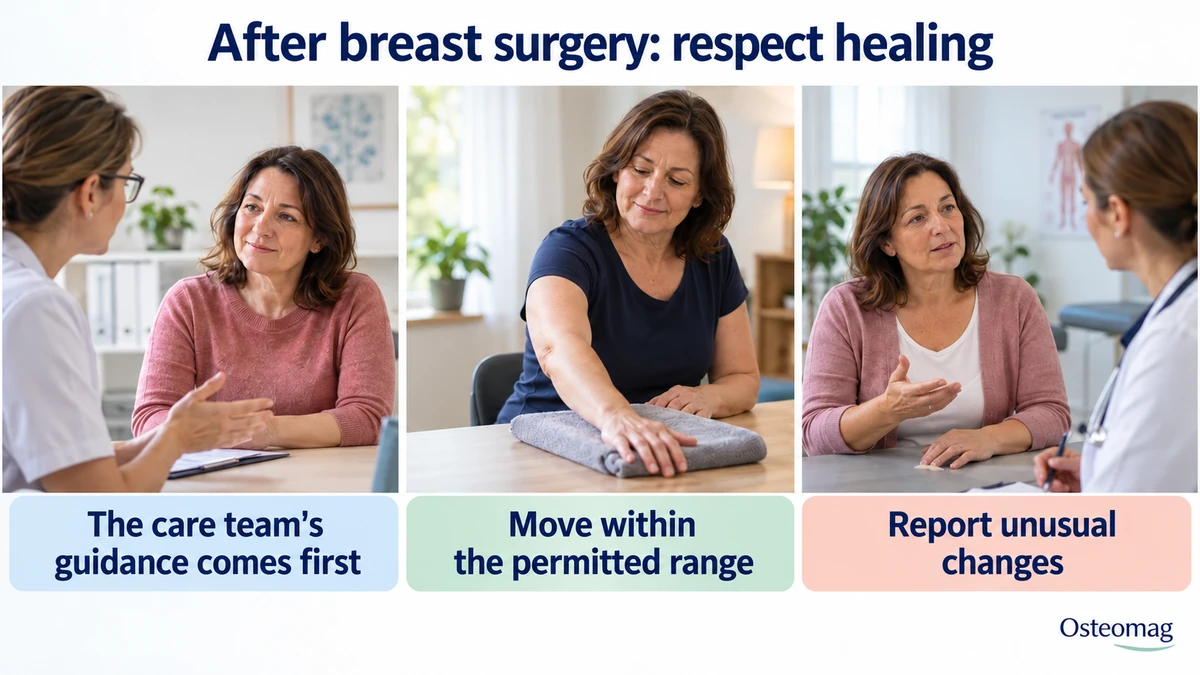
Only when the wound is closed and sufficiently healed, without infection or surgical complications, and in line with the care team’s recommendations.
After complex reconstruction, knowing the postoperative restrictions is particularly important.
What is post-breast surgery pain syndrome?
Persistent pain after breast surgery may affect the chest wall, armpit, arm or shoulder. It may have a neuropathic component related to irritation or injury of cutaneous nerves.
Evidence on non-pharmacological approaches to persistent post-mastectomy pain remains heterogeneous. It supports assessing the pain mechanism and providing multimodal care, without establishing the superiority of a particular manual technique. [4]
Why does burning or electric pain change the assessment?
Burning pain, electric shocks, allodynia or numbness suggest a neuropathic component rather than simple muscle tension.
Strong manual pressure may be very poorly tolerated in this context.
Can massage ‘repair’ a nerve?
No.
Touch may sometimes improve comfort or support gradual desensitization; it is not nerve regeneration.
What is axillary cording?
Axillary web syndrome may produce a palpable, tight cord in the armpit or arm, sometimes limiting arm elevation.
Specialized rehabilitation may help. Practitioners should avoid abruptly forcing this cord. [5]
Axillary cording has also been associated with a higher lymphoedema risk in a prospective cohort. This association supports monitoring, without proving that the cord alone causes swelling. [6]
Why does lymphoedema matter?
After lymph node surgery or radiotherapy, some people develop lymphoedema of the arm or chest wall.
Possible signs include:
- progressive swelling;
- heaviness;
- a difference in circumference;
- skin tightness;
- reduced mobility.
Should a swollen arm automatically be massaged?
No.
New swelling must first be assessed. Lymphoedema, infection, thrombosis and other causes must be distinguished. [7]
When should infection be considered?
Redness, warmth, increasing pain, fever or feeling unwell may signal cellulitis or another infection.
In this situation, manual treatment is stopped and medical assessment is required.
What is the role of lymphatic drainage?
For diagnosed lymphoedema, manual drainage may form part of specialized care that often includes compression, exercise, skin care and education. [8]
It should not be presented as ‘detoxification’.
The additional effect of manual drainage compared with compression alone remains uncertain and varies across studies. It replaces neither assessment of new swelling nor the other components of specialized care. [9]
Why can breathing be restricted after surgery?
Chest wall pain can make deep inspiration uncomfortable. A protective posture may also reduce chest expansion.
Gentle breathing exercises may help restore comfort and mobility without claiming to change cancer or the immune system.
| Situation | Priority | What to avoid |
|---|---|---|
| A wound or reconstruction still healing | The surgical team’s guidance | Deep pressure or imposed stretching. |
| Stiffness without an identified complication | Permitted gradual mobility and exercise | Reliance on passive care alone. |
| New arm swelling | Assessment of its cause | Automatic massage without assessment. |
| Redness, warmth, fever or unusual chest pain | Prompt medical advice; emergency help if faint or breathless | Automatically attributing the symptom to the scar. |
What is the role of rib-focused work?
Gentle thoracic mobilization may sometimes improve mechanical discomfort, but forceful techniques over a recently operated or irradiated region should be avoided without understanding the context.
Why can reconstruction change care?
Reconstructions may use implants or autologous tissue. Depending on the technique, they may involve the chest, abdomen or back.
Practitioners must know the exact surgery and restrictions before any direct intervention.
What about abdominal flap reconstruction?
The abdominal wall may also have scarring, weakness or a feeling of tightness. Progression must respect healing and prioritize a gradual functional return.
Why should strength be assessed?
A shoulder may regain range yet remain weak. Carrying loads, overhead tasks and repetitive work require strength and endurance.
Which exercises are useful?
Depending on the stage:
- graded active elevation;
- scapular mobility;
- external rotation;
- progressive strengthening;
- functional exercises;
- aerobic activity.
Should the operated arm remain protected indefinitely?
No.
Older, highly restrictive advice can lead to underuse of the arm. Gradual loading is generally preferable once the oncology team permits it. [10]
Why can fear of lymphoedema limit activity?
Some patients avoid carrying objects or using the arm. Yet appropriately dosed progressive exercise is part of modern rehabilitation.
When should pain raise concern about recurrence or another medical problem?
New persistent, progressive or night-time bone pain, or pain associated with other symptoms, must be assessed, especially in someone with a cancer history.
New chest pain with shortness of breath or feeling faint requires urgent help. Redness, warmth, fever or rapid swelling must not wait until the next manual treatment session.
An osteopath must not automatically attribute every pain to the scar.
Why should palpation remain cautious?
A sensitive area may relate to scarring, a nerve, muscle, radiotherapy or hypersensitivity. Touch helps explore tolerance, but does not always precisely identify the responsible tissue.
How can change be retested?
Before a technique, a task can be chosen:
- raising the arm;
- placing the hand behind the head;
- carrying an object;
- taking a deep breath;
- a specific activity.
After the intervention, the same task is repeated.
Why is function more important than a ‘softer’ scar?
The aim is for the person to dress, work, sleep and use their arm. A better texture under the fingers is useful only if it contributes to these goals.
What is the role of osteopathy?
A reasonable role includes:
- assessing the musculoskeletal component;
- using progressively introduced touch;
- facilitating mobility;
- supporting exercise;
- recognizing signs requiring referral.
A useful explanation for the patient
‘Your surgery may have left sensitivity and reduced mobility. I can address these components cautiously, but our main aim will be to gradually restore arm use and monitor any sign requiring your oncology team’s advice.’
Why does armpit pain deserve particular attention?
The axillary region may have been affected by sentinel lymph node biopsy, lymph node dissection, scarring or nerve irritation. Highly localized, burning pain or pain with numbness must not be treated as simple muscle tension.
Practitioners can map the sensitive area, observe movements that reproduce symptoms and begin with light contact. When pain is neuropathic, progressive desensitization often makes more sense than deep massage.
Why does restoring shoulder blade movement matter?
After breast surgery, some people spontaneously reduce shoulder blade movement on the operated side. This protective strategy can become troublesome if it persists.
Care may then combine thoracic mobility, scapular control, external rotation and gradual arm elevation. The aim is not to ‘reposition’ the scapula, but to restore several movement options.
Should loading with the arm on the operated side be avoided?
Not indefinitely. Reasonable progressive strengthening is generally preferable to permanent protection. Loading must account for surgery, lymphoedema, pain and the oncology team’s recommendations. [11] [12]
Starting with modest loads, monitoring the arm’s response and increasing gradually helps rebuild confidence.
Why should an osteopath ask whether radiotherapy was performed?
Radiotherapy can change skin, sensitivity and tissue flexibility. An irradiated area may respond differently to pressure and require more gradual touch.
Previous radiotherapy is not automatically a contraindication, but changes the clinical context and warrants greater caution.
Conclusion
After a mastectomy or breast surgery, pain, scarring and shoulder stiffness are common and may be very limiting.
Osteopathy may contribute as an adjunct, particularly through cautious touch and function-oriented mobilization. Exercise, a gradual return to activity and screening for lymphoedema, neuropathic pain and oncological complications remain central.
References
- [1] Xu Q, Liu C, Jia S et al. Effect of physical exercise on postoperative shoulder mobility and upper limb function in patients with breast cancer: a systematic review and meta-analysis. Gland Surg. 2024;13(8):1494-1510. doi:10.21037/gs-24-255.
- [2] Bruce J, Mazuquin B, Canaway A et al. Exercise versus usual care after non-reconstructive breast cancer surgery (UK PROSPER): multicentre randomised controlled trial and economic evaluation. BMJ. 2021;375:e066542. doi:10.1136/bmj-2021-066542.
- [3] Ferrara PE, Gatto DM, Codazza S et al. An update on rehabilitative treatment of shoulder disease after breast cancer care. Musculoskelet Surg. 2024;108(1):31-45. doi:10.1007/s12306-023-00806-w.
- [4] Gónima Valero E, Rodríguez Miranda CD, Contreras Arrieta S et al. Nonpharmacological Interventions for Postmastectomy Pain Syndrome-A Systematic Review of the Literature. Clin Breast Cancer. 2025;25(2):e133-e151.e6. doi:10.1016/j.clbc.2024.10.007.
- [5] Torres-Lacomba M, Prieto-Gómez V, Arranz-Martín B et al. Manual Lymph Drainage With Progressive Arm Exercises for Axillary Web Syndrome After Breast Cancer Surgery: A Randomized Controlled Trial. Phys Ther. 2022;102(3):pzab314. doi:10.1093/ptj/pzab314.
- [6] Brunelle CL, Roberts SA, Shui AM et al. Patients who report cording after breast cancer surgery are at higher risk of lymphedema: Results from a large prospective screening cohort. J Surg Oncol. 2020;122(2):155-163. doi:10.1002/jso.25944.
- [7] National Cancer Institute. Lymphedema (PDQ®)–Health Professional Version. Cancer-related lymphedema: assessment and management. Accessed October 15, 2026.
- [8] Davies C, Levenhagen K, Ryans K et al. Interventions for Breast Cancer-Related Lymphedema: Clinical Practice Guideline From the Academy of Oncologic Physical Therapy of APTA. Phys Ther. 2020;100(7):1163-1179. doi:10.1093/ptj/pzaa087.
- [9] Ezzo J, Manheimer E, McNeely ML et al. Manual lymphatic drainage for lymphedema following breast cancer treatment. Cochrane Database Syst Rev. 2015;2015(5):CD003475. doi:10.1002/14651858.CD003475.pub2.
- [10] Campbell KL, Winters-Stone KM, Wiskemann J et al. Exercise Guidelines for Cancer Survivors: Consensus Statement from International Multidisciplinary Roundtable. Med Sci Sports Exerc. 2019;51(11):2375-2390. doi:10.1249/MSS.0000000000002116.
- [11] Schmitz KH, Ahmed RL, Troxel A et al. Weight lifting in women with breast-cancer-related lymphedema. N Engl J Med. 2009;361(7):664-73. doi:10.1056/NEJMoa0810118.
- [12] Schmitz KH, Ahmed RL, Troxel AB et al. Weight lifting for women at risk for breast cancer-related lymphedema: a randomized trial. JAMA. 2010;304(24):2699-705. doi:10.1001/jama.2010.1837.