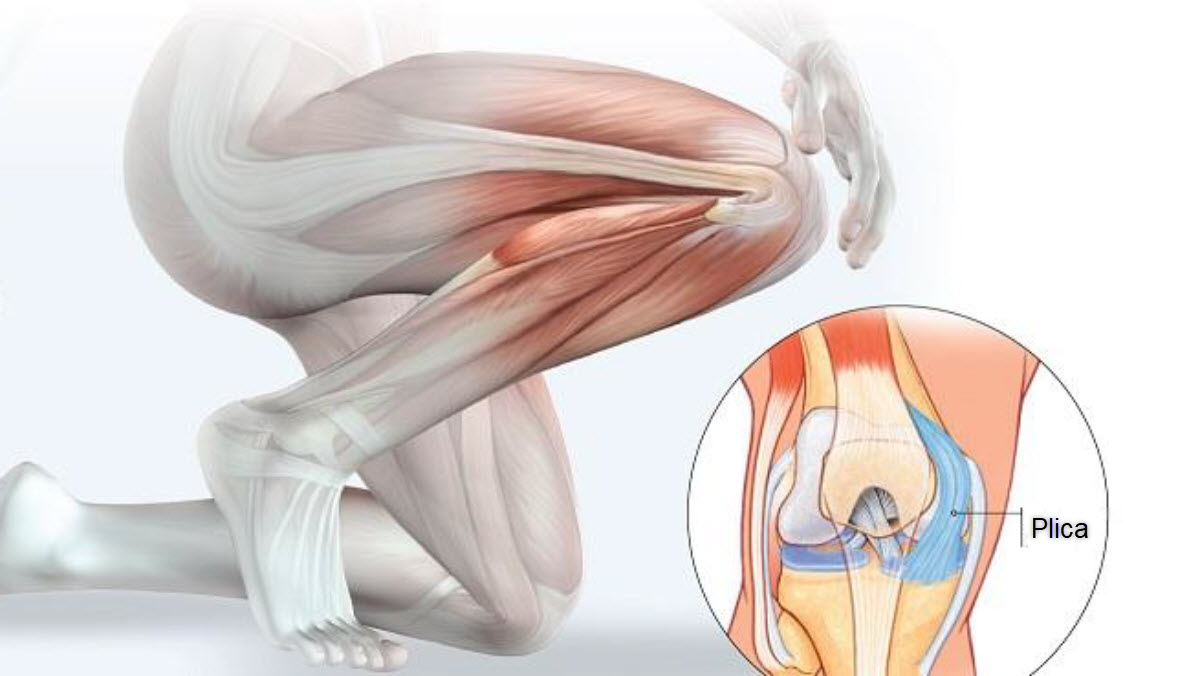

Exploring, repeating and transferring useful movements without seeking perfect posture
Movement is not simply a sequence of muscle contractions. It is also a sensory experience: we feel the support beneath a foot, a joint’s position, the effort needed to lift an object, the speed of a movement and the safety or apprehension accompanying it. This perceptual dimension lies at the heart of several historical approaches to somatic education and connects today with more contemporary concepts of motor learning.
For an osteopath, this perspective is interesting because it shifts the question. Instead of asking only ‘which structure is stiff?’, we can also ask: ‘which movement options does the person use, which do they avoid, and how can they discover others?’
Manual touch may temporarily change a sensation of stiffness or pain. But for a change to become genuinely useful, it often needs to be reintegrated into active movement. Body awareness then becomes less a pursuit of introspection than a practical tool for moving better.
What does ‘movement awareness’ mean?
Movement awareness is the ability to notice what happens during an action: where the effort lies, which part of the body participates, which strategy is used and how the sensation changes when the action is slightly modified.
This awareness does not require analysing every muscle. Instead, it relies on overall perception: support, range, speed, tension, comfort and coordination.
A person might discover, for example, that they systematically tighten their shoulders when raising an arm, hold their breath when bending or shift very little weight onto one leg after an old injury.
Pioneers of somatic education
Several twentieth-century figures developed approaches in which the experience of movement was central. F. Matthias Alexander explored postural habits and the idea of interrupting automatic responses before making a movement. Moshe Feldenkrais developed a method based on slow exploration, variation and sensory attention. Rudolf Laban studied movement through space, rhythm and the quality of an action.
These approaches should not be confused with osteopathy. Their relevance is primarily historical and educational: they helped make movement an experience to observe and learn rather than simply a performance to correct.
The Alexander technique and pain
The Alexander technique is one of the best-studied approaches among these historical methods. A systematic review published in 2012 concluded that outcomes were favourable for chronic low back pain, with more limited evidence for other conditions [1].
Its relevance lies not in correcting a precise anatomical alignment, but rather in modifying habits of movement and effort. This distinction matters: learning to stand up with less tension does not require believing that a vertebra was displaced.
Feldenkrais and motor learning
The Feldenkrais method uses slow, varied and often non-painful movements to develop a broader movement repertoire. A 2022 meta-analysis found favourable effects in certain populations, particularly on mobility, balance and some symptoms, while emphasizing the heterogeneity of the studies [2].
This approach connects with a modern rehabilitation principle: an adaptable motor system has several possible solutions to the same task.
The aim is not to find the single correct way to move, but to increase the available options.
Why does variability matter?
Movement variability is often a sign of adaptability. A healthy person does not climb every step in exactly the same way, always place the foot at the same angle or recruit muscles in a perfectly identical sequence.
The 2023 systematic review of chronic non-specific low back pain found conflicting results depending on the task: increased variability, decreased variability or no difference. Certainty is very low. It would be excessive to conclude that everyone in pain is too rigid or that increased variability always represents progress [3].
These results do not justify deliberately making movement unstable. Exploring options remains an educational proposal to test according to function, comfort and goals—not a prescription derived from a universal abnormality.
Movement as an experience, not a test
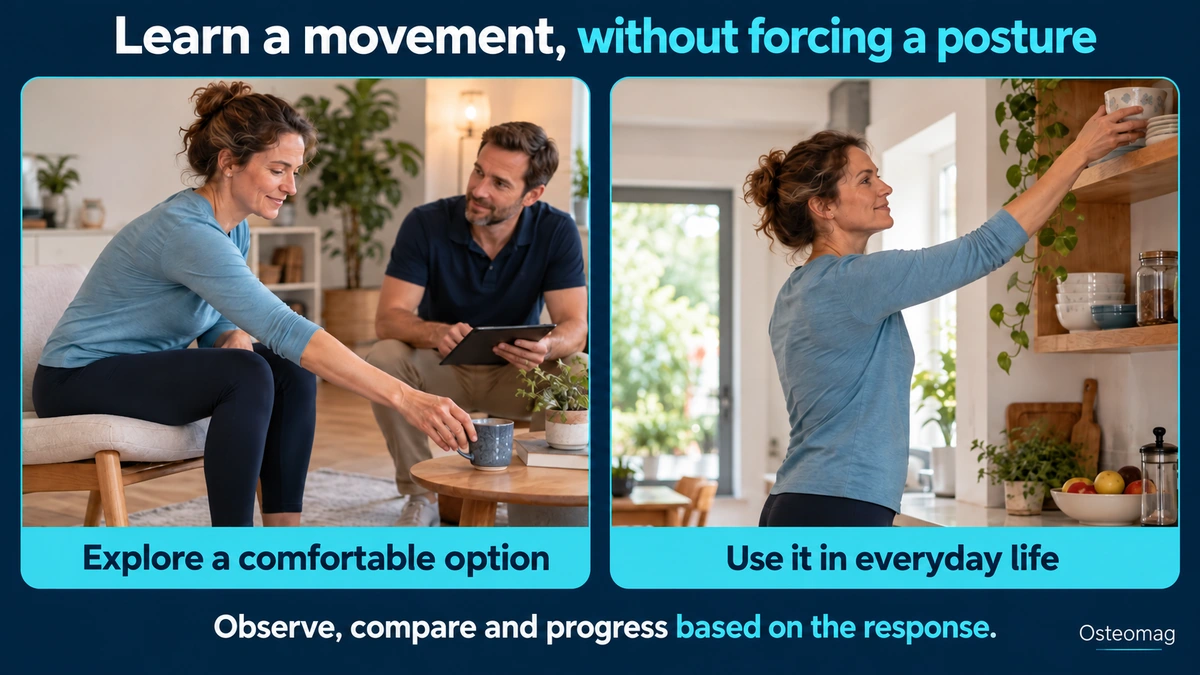
In clinical practice, a test can become a learning experience. If raising an arm hurts, the patient can be asked to try different speeds, neck positions or paths.
The aim is not to ‘cheat’ the test, but to observe whether pain depends on how movement is organized.
If a variation becomes more comfortable, the patient discovers a new possibility. This information may be more useful than an abstract explanation about a supposedly misaligned structure.
The role of motor imagery
The motor system can be engaged even without a full movement. Motor imagery and action observation are used in rehabilitation when actual movement is limited or painful.
A meta-analysis of motor imagery and action observation reports possible effects on certain musculoskeletal pain conditions, with very low certainty. A more recent review of non-specific shoulder pain found encouraging but heterogeneous results. These adjunctive interventions cannot promise benefit for every patient [4] [5].
These tools may therefore be useful as an adjunct, especially when actual movement is difficult to tolerate.
Sensory discrimination: feeling better to move better?
The 2022 review found conflicting results for low back pain and low- to very-low-certainty evidence in other situations. Educational inspiration should therefore not be confused with established clinical effectiveness. Imagining an action and distinguishing a sensation are different abilities, even though they may be incorporated into the same programme [6] [7] [10].
Sensory discrimination involves training the ability to distinguish different locations, directions or intensities of stimulation. Approaches of this kind have been studied in some chronic pain conditions [6].
The idea is not that the brain ‘forgets’ the body part, but that sensory experience can be trained, like other abilities.
In manual practice, this may inspire simple exercises: comparing two movement directions, distinguishing light pressure from firmer pressure or recognizing a joint position without looking.
Can body awareness become excessive?
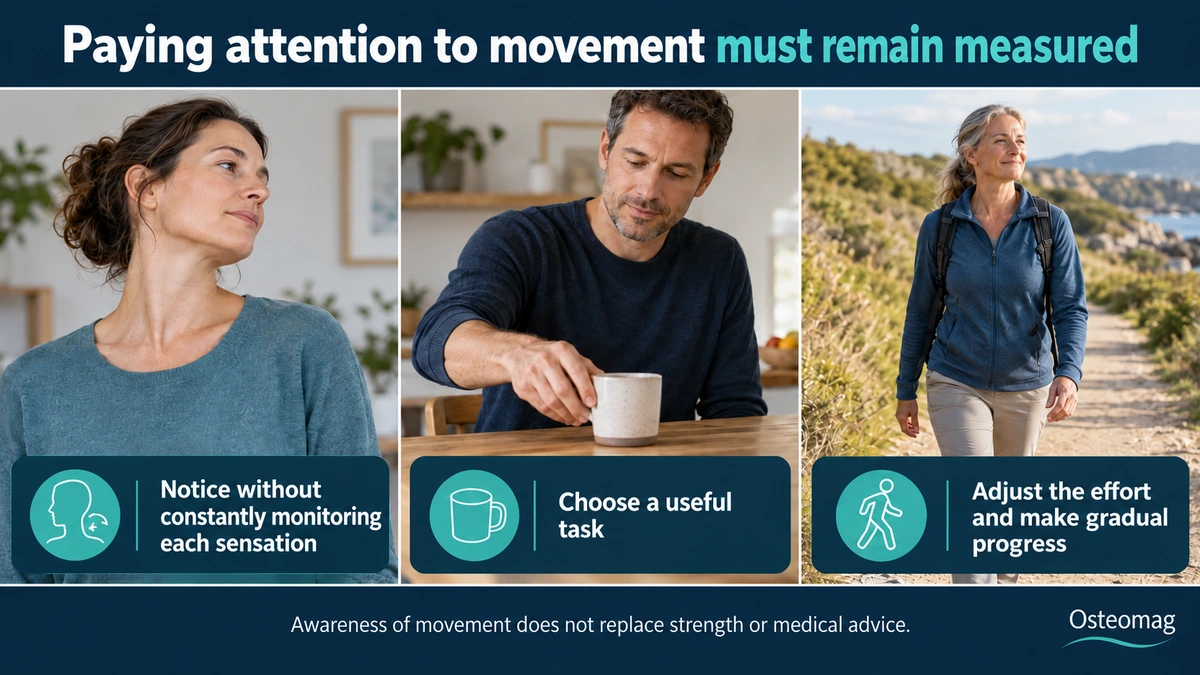
Yes. Some people in pain constantly monitor their bodies. They analyse every tension, asymmetry and unusual sensation. This hypervigilance can increase worry.
Movement awareness therefore does not always mean maximum focus. For some patients, shifting attention toward an external task is preferable: reaching for an object, walking toward a target or throwing a ball.
The amount of attention must be individualized.
Where does osteopathy fit?
Touch as preparation
A manual technique may temporarily reduce pain or change how an area is perceived. This may make movement easier to explore.
But manual treatment should not be the end of the process. It may create a window in which the patient actively tests a new option.
Active retesting
After mobilization, the patient repeats the problematic action: raising an arm, bending, turning the neck or walking.
If function improves, the change is real for the patient, even if its exact mechanism remains uncertain.
If nothing changes, the practitioner must be willing to abandon the hypothesis.
Variation as a tool
The practitioner can suggest several ways to accomplish a task:
- slightly changing foot position;
- changing speed;
- alternating the order of movements;
- letting the patient find a more comfortable strategy themselves;
- then repeating the useful variation.
This approach is closer to learning than to correction.
Motor learning and repetition
Learning without monitoring the whole body
| Observation or situation | Cautious interpretation and possible next step |
|---|---|
| Noticing excessive effort | Compare a more comfortable option without looking for an anatomical defect. |
| Imagining a task | A possible adjunct, not a substitute for actual practice or proof of healing. |
| Repeating a useful variation | Adjust the dose and check transfer to daily life. |
| Attention increases worry | Return to an external task or seek appropriate support. |
For chronic non-specific low back pain, exercise evidence supports an active return, not an obligation to monitor every segment. Models of adaptation to pain remain explanatory frameworks. Choosing a real goal, pacing attempts and checking transfer is more prudent than announcing a ‘recalibration’ of the nervous system [8] [9].
A new strategy is not consolidated simply because it succeeds once. Learning requires repetition, but also variation.
Repeating an action in several contexts—standing, sitting, with a light load and then a heavier one—helps make the ability more robust.
The patient does not need to repeat exactly the same exercise indefinitely. They can gradually transfer what they learn to their actual activities.
Perfect posture is not the goal
Historical approaches to somatic education have sometimes been interpreted as a search for ideal posture. A modern interpretation should be more flexible.
The human body tolerates many positions. The problem is not necessarily sitting ‘badly’, but sometimes staying in the same position too long or no longer being able to change it comfortably.
A better strategy is to improve tolerance and variety.
Movement and fear
When a patient anticipates pain, movement may become highly controlled and restricted. Motor learning must then respect protection rather than abruptly fighting it.
We can begin with a smaller range, slower speed or reduced load. As confidence increases, the task becomes more demanding.
The aim is to build positive experiences, not to convince the patient that their pain does not exist.
The role of the therapeutic relationship
Learning is easier when the patient feels allowed to try, fail and say that a strategy does not suit them.
The practitioner should therefore avoid turning every variation into a conformity test. The practitioner proposes, the patient experiments and the response guides the next step.
This collaboration supports autonomy.
When somatic education is not enough
New pain after trauma, progressive weakness, a walking disorder or unexplained general symptoms require appropriate assessment before continuing to experiment. Difficulty should not automatically be attributed to a lack of body awareness. The strategy depends on context and the professional’s competence; it may require medical advice or specialized rehabilitation.
Someone who has lost strength needs strengthening. Someone with low cardiovascular capacity needs endurance training. An athlete needs to regain speed, power and exposure to actual demands.
Movement awareness may help, but it does not replace every physical component of rehabilitation.
The risk would be to turn movement subtlety into avoidance of loading.
What osteopathy cannot claim
An osteopath cannot claim to ‘reprogramme the brain’ through a manual technique or erase a movement habit in a few minutes.
Nor can they conclude that a posture or movement is pathological simply because it differs from an ideal model.
Their role may be simpler and more useful: reduce some symptoms, offer new movement experiences and help the patient build lasting capacity.
Conclusion
Pioneers of somatic education helped make movement a focus of attention and learning. Contemporary motor science now offers a more precise framework for understanding this intuition.
Movement is not merely something a practitioner observes from outside. It is an experience the patient can learn to explore, modify and enrich.
In osteopathy, this perspective changes the logic of a session: touch may open a possibility, but active movement allows it to be tested and integrated. Perhaps the best correction is not to restore the body to an ideal shape, but to give it more choices.
Scientific references
- [1] Woodman et al. Evidence for the effectiveness of Alexander Technique lessons in medical and health-related conditions: a systematic review. Int J Clin Pract. 2012;66(1):98-112. doi:10.1111/j.1742-1241.2011.02817.x.
- [2] Berland et al. Effects of the Feldenkrais Method as a Physiotherapy Tool: A Systematic Review and Meta-Analysis of Randomized Controlled Trials. Int J Environ Res Public Health. 2022;19(21):13734. doi:10.3390/ijerph192113734.
- [3] Alsubaie et al. Is movement variability altered in people with chronic non-specific low back pain? A systematic review. PLoS One. 2023;18(6):e0287029. doi:10.1371/journal.pone.0287029.
- [4] Suso-Martí et al. Effectiveness of motor imagery and action observation training on musculoskeletal pain intensity: A systematic review and meta-analysis. Eur J Pain. 2020;24(5):886-901. doi:10.1002/ejp.1540.
- [5] Alaca et al. Effectiveness of movement representation techniques in non-specific shoulder pain: a systematic review and meta-analysis. Sci Rep. 2025;15(1):205. doi:10.1038/s41598-024-84016-9.
- [6] Graham et al. Sensory discrimination training for adults with chronic musculoskeletal pain: a systematic review. Physiother Theory Pract. 2022;38(9):1107-1125. doi:10.1080/09593985.2020.1830455.
- [7] Mulder et al. Motor imagery and action observation: cognitive tools for rehabilitation. J Neural Transm (Vienna). 2007;114(10):1265-1278. doi:10.1007/s00702-007-0763-z.
- [8] Hayden et al. Exercise therapy for chronic low back pain. Cochrane Database Syst Rev. 2021;9(9):CD009790. doi:10.1002/14651858.CD009790.pub2.
- [9] Hodges et al. Moving differently in pain: a new theory to explain the adaptation to pain. Pain. 2011;152(3 Suppl):S90-S98. doi:10.1016/j.pain.2010.10.020.
- [10] Proske et al. The proprioceptive senses: their roles in signaling body shape, body position and movement, and muscle force. Physiol Rev. 2012;92(4):1651-1697. doi:10.1152/physrev.00048.2011.