Understanding heel pain and gradually resuming activities
Pain under the heel, particularly when taking the first steps in the morning, may suggest plantar fasciitis . It can interfere with standing for work, walking, or running. The term remains common, but persistent forms do not necessarily correspond to isolated inflammation: it is also referred to as plantar fasciopathy. The diagnosis rests with the doctor, who considers the symptoms and looks for other possible causes. [1] [2]
The approach prioritizes information, adjustments to physical activity, and gradual rehabilitation. Footwear, exercises, and certain aids can be discussed as needed. Osteopathy can be considered as a complementary approach for comfort; it does not replace a medical assessment and does not guarantee fascial repair or rapid pain relief. [1] [7]
Anatomy: the plantar fascia and the supports of the foot
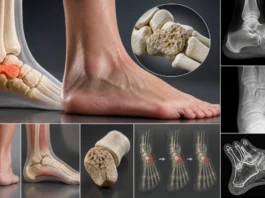
The plantar fascia is a fibrous structure located under the foot. It extends from the calcaneus, the heel bone, to the forefoot and contributes to the function of the arch. During walking, the foot changes shape and transmits forces. The muscles of the foot and calf, tendons, and joints also participate in weight-bearing control. The fascia is therefore not an isolated structure that can simply be relaxed. [1] [2]
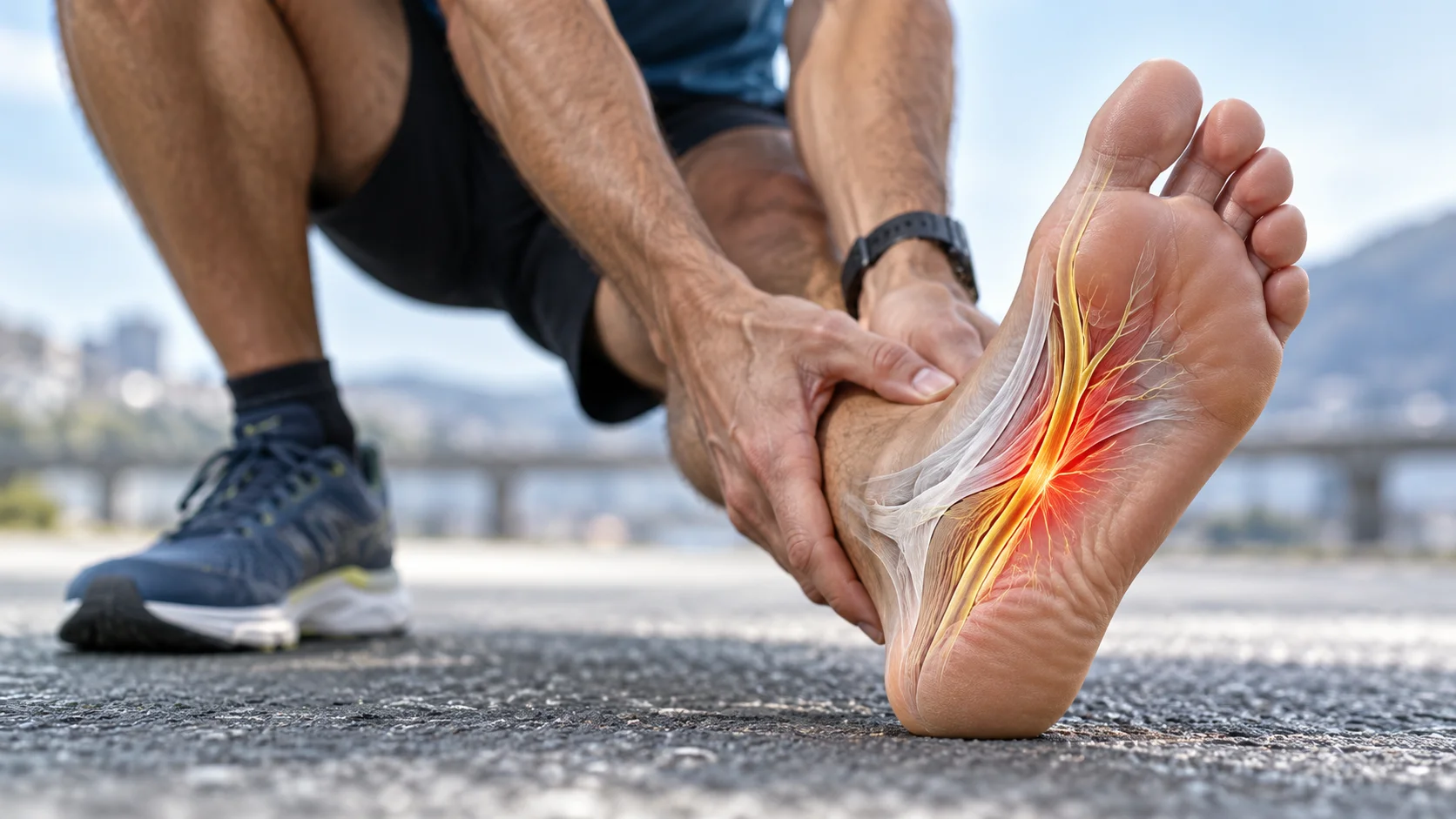
The painful area is often located near its attachment to the heel, but not all plantar pain has the same origin. An anatomical illustration helps to locate the tissues; it does not allow for a diagnosis. Similarly, a map of pain locations reported by individuals does not constitute a measurement of pressure under the foot. [1]



Typical symptoms and associated factors
The pain is often most pronounced during the first few steps after rest, then may decrease before recurring with prolonged activity. Tenderness under the inner part of the heel is common. Intensity and duration vary considerably. Pain that becomes regular warrants evaluation rather than a series of trials based solely on general advice. [1] [2]
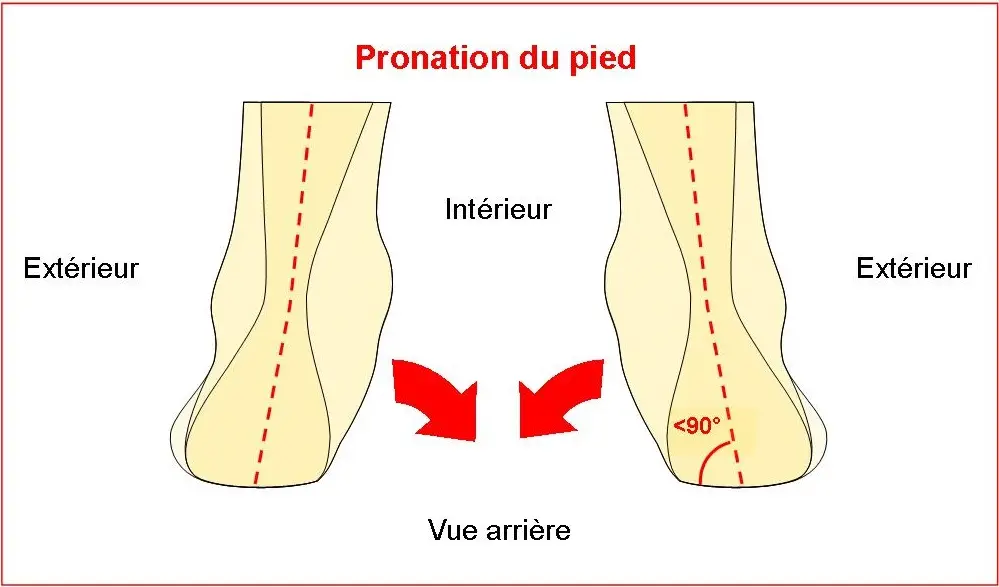
An increase in walking, running, or standing time may contribute to the onset of symptoms. Studies also look for associations with certain individual characteristics, but these links do not prove a single cause. Foot pronation, arch shape, or an apparent leg length discrepancy should not be routinely presented as the explanation for pain. [6]


This caption highlights the key detail that pain is concentrated around the area where the plantar fascia attaches to the heel, which is typical for plantar fasciitis. English wikipedia user Kosigrim, Public domain, via Wikimedia Commons
An evolution that sometimes takes time
Symptoms can fluctuate and persist for several months. This duration does not mean that the foot is permanently damaged or that aggressive intervention is necessary. Follow-up care is used to confirm the diagnosis, adjust activities, and assess capabilities. Gradual improvement may result in more comfortable first steps or longer walks, before the discomfort disappears completely. [1] [2]
Key points to remember
Plantar fasciitis is a possible cause of heel pain, but not the only one. Diagnosis is made by a doctor. The program combines appropriate exercise and progressive active training; it does not rely on painful friction or supposed pelvic correction . A heel spur alone does not prove the origin of the symptoms.
Medical evaluation: distinguishing other causes
The doctor asks about the location, onset, activities, trauma, and associated signs. The examination may explore tender areas, gait, movement, and neurological function when relevant. It helps distinguish fasciopathy from heel pad involvement, tendon problems, nerve irritation, or overuse bone injury. [1] [2]
Burning, tingling, or numbness may point to another cause. Highly localized pain after an increase in training may warrant investigation for a stress fracture. Bilateral pain associated with other joints or unusual stiffness may lead to a different assessment. The osteopath identifies these elements to guide the diagnosis, without making the diagnosis themselves. [1]
When is an image useful?
Imaging is not routinely performed when the clinical presentation is typical. An X-ray, ultrasound, or MRI may be requested for a specific reason, particularly in the presence of atypical or persistent symptoms. Observed changes must be interpreted in conjunction with the examination: structural differences may be associated with pain without fully explaining its intensity. [1] [9]
A heel spur is a bony growth visible on some X-rays. Its presence does not necessarily mean it is the sole cause of the problem, nor does it mean it should be removed. Treatment focuses on the individual and their limitations, rather than an isolated image abnormality. A normal X-ray also does not preclude reassessing any persistent, suspicious pain. [1] [9]


When to consult
Consult a doctor promptly if you experience a new inability to bear weight, significant pain after an injury, redness accompanied by heat and fever, or a concerning wound. Specific bone pain, unusual pain at rest, numbness, or a steady worsening of the condition also warrants an evaluation. Foot injuries require special attention in cases of diabetes or loss of sensation.
Adapt efforts without abandoning all activity
The goal is to temporarily reduce the constraints that worsen symptoms, while maintaining tolerated activities. A person who works standing up can distribute some tasks, schedule breaks, or use a chair when possible. For walking, shorter outings may be better tolerated than a single, prolonged journey. Adaptations must remain feasible in daily life. [2]
Progress is based on the reaction during activity and the following day. The first steps in the morning can serve as a simple indicator, provided they are not given absolute significance. Persistent worsening suggests reducing the workload and reviewing the program. There is no universal rule for automatically increasing mileage each week, regardless of symptoms. [1] [2]
A logbook can record walking time, standing periods, exercise, and any discomfort experienced. It makes it easier to identify a cumulative increase in exertion, for example, when work, errands, and sports overlap. The individual and their team can then choose a targeted adjustment, rather than eliminating all activities or multiplying treatments without knowing what helps.
Exercises: Gradually developing tolerance
Recommendations include appropriate stretching of the plantar fascia and calf, as well as strengthening exercises. These should be explained and adjusted according to the individual situation. Stretching should not be intended to cause intense pain or overcome resistance at all costs. The physiotherapist can suggest comfortable positions and adjust the duration or frequency based on the observed response. [1] [2]


Strengthening and rising onto tiptoes
Progressive heel raises can be used in some programs, with stable support and appropriate difficulty. A small trial showed some benefit of a high-intensity strengthening program on certain outcomes, particularly in the short term. It does not demonstrate guaranteed recovery or sustained superiority in all situations. [3]
Another study compared different ways of dosing slow resistance training and reiterated that the optimal dosage is not definitively established. A person might start with both feet and arm support, then increase the difficulty as appropriate. An individualized program is better than replicating a high load found in a video without knowing the adaptation criteria. [4]
The exercises should prepare the individual for the desired tasks: walking, climbing stairs, returning to work, or running. The return to running depends on individual abilities and response to the sessions; it does not begin simply because a certain number of days have passed. The progression may incorporate periods of walking and short bursts of effort, with reassessment if pain becomes more pronounced. [1] [2]


Shoes, insoles and temporary aids
Comfortable, activity-appropriate shoes can help some people. There is no single model that is mandatory for every foot shape. Any modification is best tried gradually, taking into account comfort, stability, and any other pain. Taping can be considered as temporary support within a comprehensive program, rather than as a permanent arch correction. [1] [2]
Orthotics can be considered when they serve a specific purpose. Reviews show variable effects, and a custom-made device is not automatically superior. The STAP trial did not establish a general advantage of custom orthotics over the comparators studied. Cost, tolerance, and actual use should be taken into account in the decision, with a reassessment if the device is uncomfortable or remains unused. [5] [8]
| Situation | A point to discuss | To watch |
|---|---|---|
| Painful first steps | Adapted program and gradual resumption | Trend in symptoms over several days |
| Long periods of standing | Breaks, alternating tasks, comfortable shoes | Combined workload and leisure |
| Difficult exercises | Reduce the difficulty and then progress with guidance | Severe pain or persistent worsening |
| Atypical pain or numbness | Medical reassessment | Do not automatically apply a standard program |

If the pain persists: reassess the options
Persistent symptoms first prompt a review of the diagnosis, treatment efforts, and program implementation. The various options do not all have the same level of evidence. A review synthesis highlights the heterogeneity of studies and the need to interpret results according to the interventions and comparators. Adding several treatments does not guarantee a superior effect. [7]
Shockwave therapy may be considered in certain persistent situations, but results vary. A recent trial adding different interventions to counseling and orthotics did not establish a clear additional benefit for all groups. The choice should take into account the situation, uncertainty, and preferences; it does not come with a promise of regeneration. [2] [10]
Follow a result that matters to the person
A person whose job requires standing for long periods might choose to aim for a less uncomfortable end to the day. Another might want to resume regular walks. The monitoring compares abilities and recovery under fairly similar conditions. It avoids judging results solely based on momentary sensitivity to touch or the feeling of a more flexible foot after a session.
Introducing several changes simultaneously makes it difficult to assess their usefulness. A clear plan and reassessment allow for the discontinuation of a costly or uncomfortable option with no tangible benefit. The uncertainties of research justify this individualized monitoring rather than an automatic succession of treatments. [2] [5] [7]
The osteopathic treatment process
The initial consultation reviews symptoms, medical history, available tests, and significant activities. The osteopath looks for warning signs and verifies that treatment is appropriate. They may observe gait and comfortable active movements. They do not make a diagnosis based solely on pressure under the heel and do not automatically conclude that there is a pelvic imbalance.
Gentle manual contact may be offered for comfort, with consent. Painful deep friction and pressure intended to “break” an adhesion are not required. Evidence of the specific effectiveness of osteopathy in plantar fasciopathy remains insufficient. Follow-up should support adaptations and active work, without replacing medical evaluation or physiotherapy. [1] [7]
Osteopathic care plan
Review alerts and medical records; choose a goal, such as improved daily walking tolerance; offer only comfortable care; coordinate advice with the active program; monitor initial steps, activities, and recovery. Reorient treatment if symptoms worsen and discontinue or space out sessions that are not providing useful benefit. No fixed number of consultations guarantees the disappearance of symptoms.
References
- Heel Pain — Plantar Fasciitis: Revision 2023
- Management of plantar heel pain: a best practice guide informed by a systematic review, expert clinical reasoning and patient values
- High-load strength training improves outcome in patients with plantar fasciitis: A randomized controlled trial with 12-month follow-up
- Self-dosed and pre-determined progressive heavy-slow resistance training have similar effects in people with plantar fasciopathy: a randomised trial.
- Custom insoles versus sham and GP-led usual care in patients with plantar heel pain: results of the STAP-study – a randomised controlled trial.
- Risk Factors for Plantar Fasciitis in Physically Active Individuals: A Systematic Review and Meta-analysis.
- A Systematic Review of Systematic Reviews on the Epidemiology, Evaluation, and Treatment of Plantar Fasciitis
- Foot orthoses for plantar heel pain: a systematic review and meta-analysis
- Medical imaging for plantar heel pain: a systematic review and meta-analysis
- Is radial extracorporeal shock wave therapy (rESWT), sham-rESWT or a standardised exercise programme in combination with advice plus customised foot orthoses more effective than advice plus customised foot orthoses alone in the treatment of plantar fasciopathy? A double-blind, randomised, sham-controlled trial.