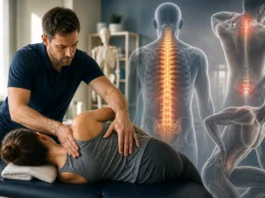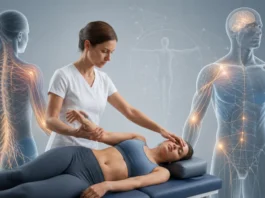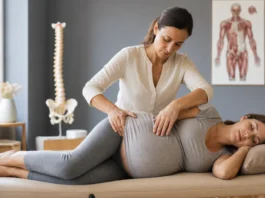
Connecting the body and lived experience without reading emotions in tissues
The body and psychological state continually influence each other. Stress can change sleep, breathing, digestion, muscle tone and pain perception. Persistent pain can, in turn, increase vigilance and affect mood. Recognizing these interactions is compatible with contemporary medicine. It does not mean that a symptom has a hidden emotional meaning that a practitioner can “read” in the tissues. [1][2]
The expression psychosomatic osteopathy may describe a practice attentive to physical symptoms, life context and behavior. In this article, it does not describe either a validated method for treating psychological disorders or a specialty that can diagnose trauma through touch. An osteopath can listen, assess a musculoskeletal component and offer support within their competence. They must also recognize when another professional is needed.
“Psychosomatic” does not mean “imaginary”
Pain, fatigue and digestive symptoms are real experiences, even when investigations show no lesion explaining their full intensity. Persistent physical symptoms may follow an illness, injury, infection or distressing event, and sometimes appear without an identified trigger. Their persistence may involve biological mechanisms, attention, expectations, sleep, learning and social conditions. A multifactorial explanation avoids an artificial opposition between the “physical” and the “psychological.” [1]
A person may have a diagnosed disease alongside contextual factors that modulate their experience. The biopsychosocial model therefore does not justify replacing medical diagnosis with an emotional interpretation. It invites us to consider more information, without accusing patients of producing their pain or not wanting to recover.
Stress, trauma and sensitivity: distinguishing levels of evidence
Acute stress mobilizes attention and may change breathing, heart rate or muscle recruitment. These responses do not follow a fixed body map. There is no validated clinical correspondence that systematically links shoulders to responsibility, the diaphragm to fear or the pelvis to an intimate conflict. Two people exposed to a similar situation may respond differently.
A meta-analysis of 48 experimental studies found a small average association between traumatic experiences and increased pain sensitivity in the laboratory. This finding concerns groups and particular tasks: it cannot identify trauma in an individual or attribute their pain to a single psychological cause. [3] Another review found associations between some psychological factors and somatic symptom disorder, but longitudinal data remain limited. Association, prediction and causation are not interchangeable. [9]
The term central sensitization also requires precision. A critical review emphasizes that reported or clinically measured sensitivity does not, on its own, demonstrate a causal neurophysiological mechanism. This caution does not deny pain: it avoids turning an explanatory hypothesis into a universal diagnosis. [4]
“Body memory”: a metaphor that must be identified as such
The nervous system learns. A threatening experience may influence expectations, attention and movement habits without a conscious memory accompanying every reaction. The expression “body memory” can illustrate this learning. It then remains an analogy, not proof that an emotion is physically stored in a muscle or fascia.
Palpating a diaphragm does not establish bereavement; examining a pelvis does not reveal sexual trauma. If an emotion or memory arises spontaneously, the practitioner can acknowledge it without assigning it a tissue-based origin. They must not suggest a forgotten event, confirm its reality through palpation or push the person to reconstruct their history.

Observing without imposing an interpretation
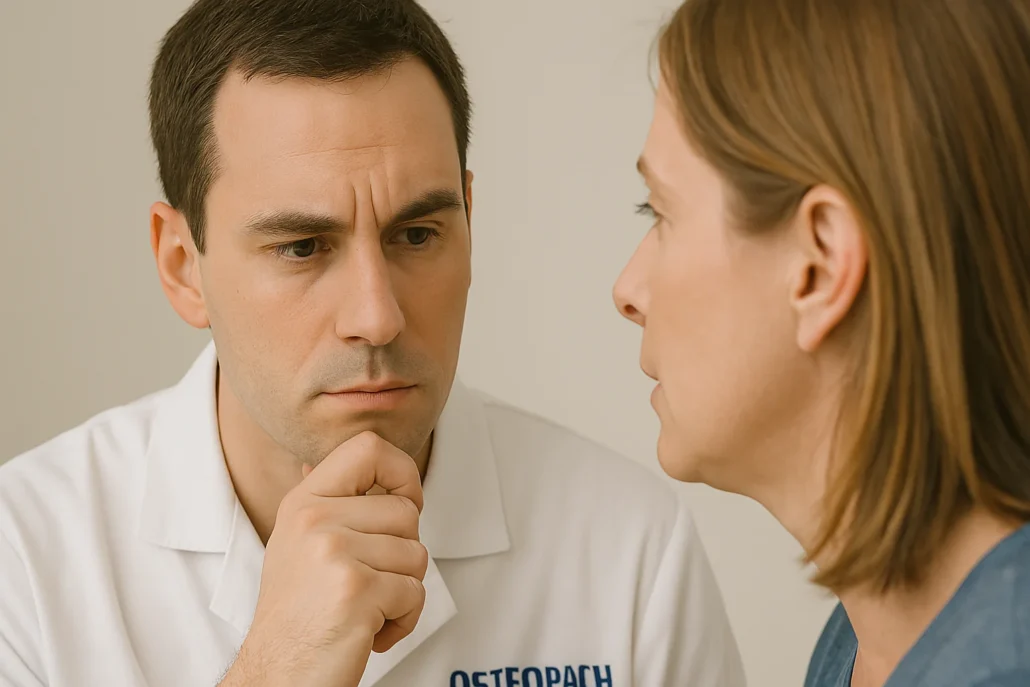
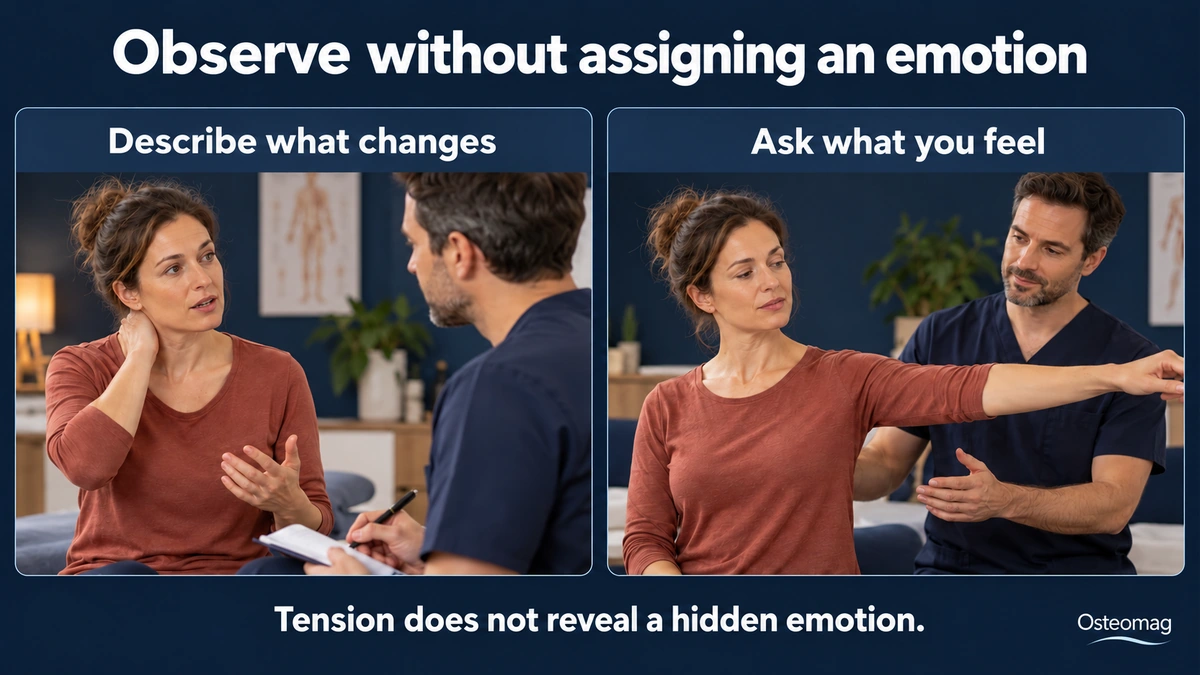
Cautious practice starts with what is observable or reported: faster breathing, apprehension about a movement, local tenderness, restricted movement or perceived effort. Saying “your breathing becomes shallower in this position” describes a phenomenon. Saying “your diaphragm is holding an old fear” assigns an unproven cause. Patients remain the authority on their inner experience.
Open questions are often enough: “What do you feel?”, “Does this movement seem easier?”, “Would you like to continue?” We can observe a change without immediately deciding what it means. The body “speaks” here in a descriptive sense: a painful shoulder tells us about a current experience, not a universal symbolic dictionary.

| Level of statement | Example | Boundary to respect |
|---|---|---|
| Observation | A movement seems less uncomfortable. | Check with the person and reassess. |
| Clinical hypothesis | Apprehension could contribute to avoidance. | Do not exclude a medical cause. |
| Author’s analogy | The body seems to be “protecting itself.” | Do not infer a hidden emotion. |
| Unestablished claim | A fascia supposedly contains a specific memory. | Do not present it as a diagnosis. |
Can touch influence stress?
Touch may feel comfortable, neutral or unpleasant depending on the person and context. Research examines its effects on autonomic, respiratory and psychological parameters. A 2024 review brings together heterogeneous trials; the changes observed do not establish a single reproducible mechanism in every patient. A physiological variation is not equivalent to a nervous-system “reset.” [5]
A 2025 meta-analysis of 20 randomized trials of osteopathic or related manual interventions found a favorable signal in depression scores immediately after intervention. Estimates remain uncertain and results heterogeneous. The increase in skin conductance also observed must not be relabeled as evidence of relaxation or parasympathetic activation. These data do not demonstrate lasting treatment of depression, trauma or an anxiety disorder through manual care. [6]
Persistent pain and functional disorders
Pain is not a simple reading of the mechanical state of tissues. Sleep, activity, expectations, mental health and context may contribute to its expression. This does not erase osteoarthritis, neuropathy or inflammatory disease. Psychological approaches to pain have their own place, delivered by appropriately qualified professionals. [7] A Cochrane review found small to very small average benefits of cognitive behavioral therapies for certain dimensions of chronic pain; this does not mean the pain is invented. [10]
The proposed term functional somatic disorders seeks a neutral position between historically separated categories of physical disease and mental disorders. Diagnosis rests on clinical characteristics and consideration of differential diagnoses, not an isolated normal imaging result. [2] Research also shows overlaps between some functional syndromes, without justifying treating them as one disease or attributing them to a common emotional cause. [8]
The gut and brain illustrate a two-way relationship. Stress can modify digestive symptoms without being their only cause. Pleasant abdominal contact proves neither that internal organs have been repositioned nor that a functional disorder has been corrected. Persistent symptoms need appropriate assessment and, depending on the case, medical, nutritional or psychological support. [1][2]
When an emotion appears during a session
Crying, sighing, laughing or mild trembling can occur in many contexts. Such a reaction does not demonstrate “somato-emotional release.” The practitioner can slow down, allow silence, explain what they are doing and check whether the person wants to continue. Consent is ongoing: agreeing to care does not mean agreeing to every intervention or having to describe an intimate experience.
Significant distress, intrusive memories, severe anxiety or depressive symptoms warrant specific assessment. An immediate safety risk requires appropriate urgent help. An osteopath does not act as a psychotherapist and must not present body-focused care as a substitute for that care.

A realistic role for osteopathy
When a musculoskeletal component is present, goals may include comfort, better tolerance of movement and participation in an important activity. Touch or movement exploration may be adjuncts, with variable effects. Their value should be judged through function and the person’s experience, not the supposed discovery of an emotion-laden fascia.
A respectful relationship involves understandable explanations and shared goals. For example, a daily movement can be chosen, obstacles to performing it noted and progress reassessed after a jointly agreed period. If benefits remain brief, insufficient or dependent on repeated sessions, the plan should be discussed rather than justified by a persistent emotional blockage. Coordination with a physician, physiotherapist or psychologist may be more appropriate. [1][7]
When to refer rather than continue manual care alone
A new, unusual or progressive symptom warrants reassessment. Neurological weakness, fever, bleeding, unexplained weight loss or general deterioration must not be explained by stress without appropriate investigation. Chest pain with shortness of breath, faintness or another concerning sign calls for urgent assessment. The emotional intensity of a consultation never rules out a medical cause.
Interdisciplinary care avoids two pitfalls: endlessly multiplying investigations that are not indicated, or attributing symptoms to psychological factors too quickly. Each professional works within their scope, without asking the person to choose between a supposedly separate body and mind. [1][2]
Key points
A mind–body approach can remain humane and rigorous: observe without interpreting, validate without inventing, address relevant components and refer when necessary. Established knowledge about body–context interactions does not justify reading trauma in a tissue. Hypotheses must be identified and analogies recognized as such. A good therapeutic encounter does not require turning an experience of care into scientific proof.
References
- [1] Löwe B, Toussaint A, Rosmalen JGM et al. Persistent physical symptoms: definition, genesis, and management. Lancet. 2024;403(10444):2649-2662. doi:10.1016/S0140-6736(24)00623-8.
- [2] Burton C, Fink P, Henningsen P et al. Functional somatic disorders: discussion paper for a new common classification for research and clinical use. BMC Med. 2020;18(1):34. doi:10.1186/s12916-020-1505-4.
- [3] Nanavaty N, Thompson CG, Meagher MW et al. Traumatic Life Experience and Pain Sensitization: Meta-analysis of Laboratory Findings. Clin J Pain. 2023;39(1):15-28. doi:10.1097/AJP.0000000000001082.
- [4] Velasco E, Flores-Cortés M, Guerra-Armas J et al. Is chronic pain caused by central sensitization? A review and critical point of view. Neurosci Biobehav Rev. 2024;167:105886. doi:10.1016/j.neubiorev.2024.105886.
- [5] Stępnik J, Czaprowski D, Kędra A. Effect of manual osteopathic techniques on the autonomic nervous system, respiratory system function and head-cervical-shoulder complex-a systematic review. Front Med (Lausanne). 2024;11:1358529. doi:10.3389/fmed.2024.1358529.
- [6] Gordon TC, Hope-Bell J, Draper-Rodi J et al. Effects of manual osteopathic interventions on psychometric and psychophysiological indicators of anxiety, depression and stress in adults: a systematic review and meta-analysis of randomised controlled trials. BMJ Open. 2025;15(2):e095933. doi:10.1136/bmjopen-2024-095933.
- [7] Serdarevic M. Chronic Pain Psychology in Neurology Practice. Continuum (Minneap Minn). 2024;30(5):1501-1516. doi:10.1212/CON.0000000000001471.
- [8] van der Meulen ML, Bos M, Bakker SJL et al. Validity and diagnostic overlap of functional somatic syndrome diagnoses. J Psychosom Res. 2024;181:111673. doi:10.1016/j.jpsychores.2024.111673.
- [9] Smakowski A, Hüsing P, Völcker S et al. Psychological risk factors of somatic symptom disorder: A systematic review and meta-analysis of cross-sectional and longitudinal studies. J Psychosom Res. 2024;181:111608. doi:10.1016/j.jpsychores.2024.111608.
- [10] Williams ACC, Fisher E, Hearn L et al. Psychological therapies for the management of chronic pain (excluding headache) in adults. Cochrane Database Syst Rev. 2020;8(8):CD007407. doi:10.1002/14651858.CD007407.pub4.