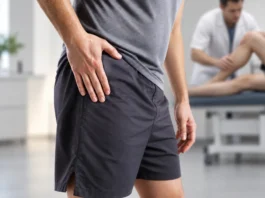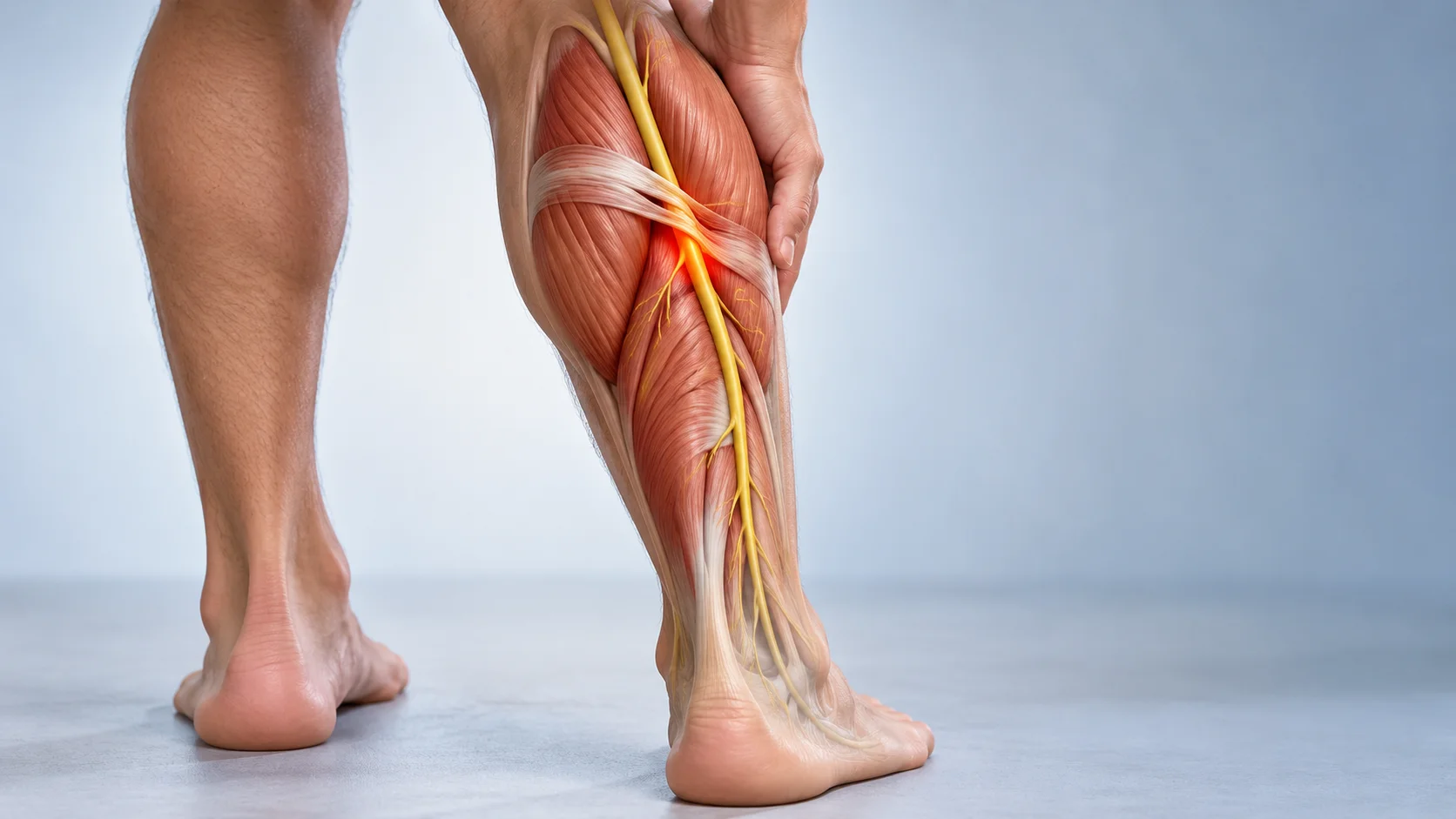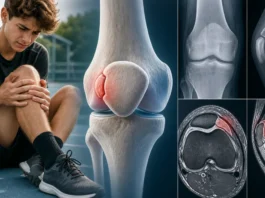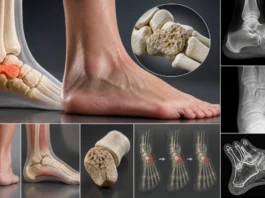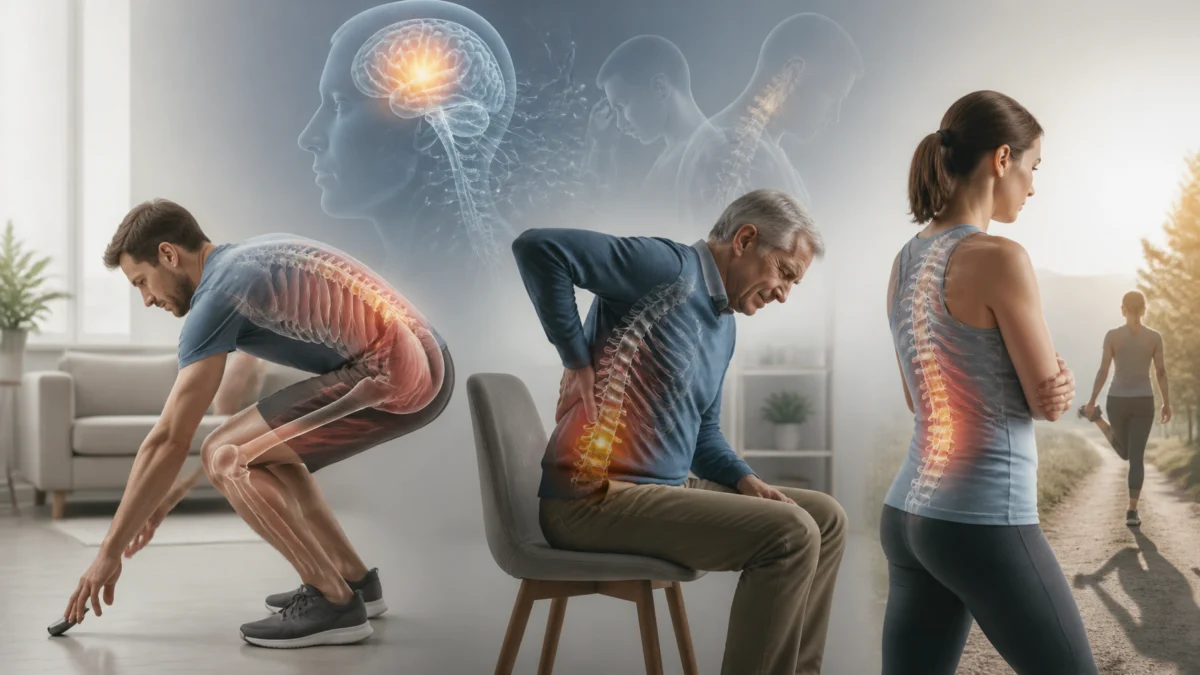
A person bends down to pick up an object and already feels apprehensive before the movement begins. Another braces the back before rising from a chair. A third has avoided for months a movement that once triggered intense pain, even though the initial injury has healed.
This phenomenon cannot be reduced to “it is all in your head.” The brain and motor system use past experience to predict what might happen and prepare a response before action begins. This anticipation is a normal protective function. It can, however, become overly cautious.
Why does the body anticipate?
To act effectively, the body cannot wait for an event to happen. It predicts the likely consequences of a movement and prepares the muscles, breathing, and balance. This anticipation is essential when lifting a load, walking on unstable ground, or catching an object.
What changes after a painful experience?
A movement that has previously caused significant pain can become associated with danger. When the movement is attempted again, the system may increase vigilance, slow the movement, or recruit certain muscles more strongly even before pain appears.
Is it fear?
Sometimes, but not always. Fear of movement, also called kinesiophobia in some contexts, describes excessive concern that movement may cause pain or a new injury. But a person can also adopt a cautious strategy without experiencing strong conscious fear.
What does recent research show?
A 2026 meta-analysis indicates that measures of fear related to a specific task are more strongly associated with certain spinal motor behaviors than general psychological measures. This supports asking, “Which movement worries you?” rather than assuming that the person is generally anxious.
Does fear of movement always reduce activity?
Not in a simple way. A 2025 meta-analysis covering many conditions found an overall association between fear of movement and lower physical activity, but the relationship varied across populations. In groups defined only by pain, the association was not always significant.
Why should overly simple explanations be avoided?
Avoidance can be reasonable when a tissue has recently been injured, a fracture is possible, or a movement produces a neurological deficit. Before attributing behavior to fear, it is important to establish that the movement is medically appropriate.
How can useful protection be distinguished from excessive protection?
Useful protection normally decreases as tissues heal and capacity returns. Protection that has become excessive persists despite sufficient recovery, limits important activities, and no longer adjusts easily when the context becomes safer.
Is anticipated pain imaginary?
No. Pain is a real experience even when anticipation influences it. Expectations, context, and learning can modulate how sensory signals are processed. This does not mean that the person is inventing the pain.
Does the brain “create” pain, then?
That wording can be misleading. All pain involves the nervous system, but pain may also be associated with tissue injury, inflammation, nerve irritation, or other factors. It is more useful to say that pain emerges from a protective system that integrates many kinds of information.
What is pain learning?
When a movement is repeatedly performed in a painful context, cues associated with that movement can themselves become predictive: a position, place, load, or sensation. The system then learns to prepare earlier. This learning can change through new experiences, but it does not disappear instantly.
Should we talk about “body memory”?
The expression can be used as a metaphor, but it becomes problematic if it suggests that a psychological memory is literally stored in a muscle or fascia. It is more precise to speak of sensorimotor learning, procedural memory, and anticipation.
Why do muscles contract more?
A protective strategy may attempt to limit range or speed. In some people, this increases co-contraction around a region. But there is no single muscular response to pain: motor control can adapt in many different ways.
Does contraction always protect?
In the short term, it may increase stability. Over time, strong contraction can make movement more costly and reinforce the impression that the region is fragile. The goal is therefore not to eliminate all protection, but to regain the ability to increase or decrease it according to the situation.
Why do some patients move better when distracted?
Attention to threat can alter both movement and the pain experience. When a task becomes more automatic or is directed toward an external goal, some people move more freely. This does not prove that their pain is psychological; it shows that motor control depends on context.
Does pain during movement always mean you should stop?
No, but it should not simply be ignored either. A mild, temporary increase may be acceptable in some rehabilitation programs, whereas intense or progressive pain, or pain accompanied by weakness, loss of sensation, or major swelling, requires a different approach.
What is graded exposure?
Graded exposure means progressively returning to avoided movements or activities under controlled conditions. A person might begin with a smaller range, lighter load, or slower speed, then progress after discovering that the task can be performed without disproportionate consequences.
Why does experience matter more than explanation alone?
Saying “you can move” is not always enough. A successful concrete experience provides new information to the system. The person discovers that the movement can be performed with less pain or more control than expected.
Should all precautions be removed?
No. A precaution can be useful and may even represent progress if it allows someone to resume an activity. The aim is to make strategies more flexible, not to impose abrupt exposure.
Why can movement variability help?
Practicing a task in several ways can expand movement options: slightly changing position, speed, load, or support. This variability should remain appropriate to the person’s capacity and should not become a succession of unnecessary challenges.
What is the osteopath’s role?
An osteopath may contribute by temporarily reducing discomfort, exploring better-tolerated movements, and helping the person gradually return to activity. Manual treatment then becomes support for movement rather than a way of correcting a supposedly displaced structure.
Can touch facilitate a return to movement?
For some people, reassuring and predictable contact makes movement easier. For others, it increases vigilance. It should be tested rather than assumed. The patient must retain the right to say that touch is not helpful.
How can we talk to patients without reinforcing fear?
It is better to avoid statements such as “your back is fragile” or “your pelvis is unstable.” A more useful formulation might be: “Your body seems to prepare very strongly for this movement. We can look for a version that allows you to do it with greater confidence and control.”
Why is the word “protection” useful but imperfect?
It reminds us that the response is not irrational. However, persistent pain should not always be explained by a single protective mechanism. Some people have several sources of pain, genuine structural disorders, or diseases that require a specific diagnosis.
When is medical reassessment needed?
Rapidly worsening pain, new weakness, a significant sensory deficit, fever, unexplained weight loss, major trauma, or a substantial change from the usual symptom pattern requires appropriate evaluation before concluding that the problem is simply anticipation.
Why is confidence not enough?
A person may feel more confident without yet having recovered strength or endurance. Progression should therefore consider both confidence and actual physical capacity.
How can progress be measured?
Range of motion, speed, tolerated load, breathing, pain after activity, and especially the ability to resume an important function can all be observed. Progress often means having more choices rather than achieving the complete absence of pain.
Conclusion
The body can anticipate pain because it learns to predict the consequences of movement. This anticipation may be influenced by fear, but also by experience, protection, and the person’s current physical capacity.
The most useful clinical response is rarely to tell a patient to “stop being afraid.” It is usually better to progressively create movement experiences that are safe enough for protection to become more flexible.
References
- Task-specific vs general measures of pain-related fear relative associations with spinal motor behaviour: a systematic review and meta-analysis. Pain. 2026;167(2):258-272.
- Goubran M, et al. Relationship Between Fear of Movement and Physical Activity in Patients With Cardiac, Rheumatologic, Neurologic, Pulmonary, or Pain Conditions: A Systematic Review and Meta-Analysis. Phys Ther. 2025.
- How to experimentally induce fear of movement-related pain and measure psychophysiological and behavioral reactions as a proxy: a scoping review. 2025.
- De Baets L, Matheve T, Timmermans A. The Association Between Fear of Movement, Pain Catastrophizing, Pain Anxiety, and Protective Motor Behavior. Am J Phys Med Rehabil. 2020;99(10):941-949.
- Tomassini M, et al. Outcome measures for fear of movement in individuals with musculoskeletal disorders: a systematic review with meta-analysis. 2026.