Introduction
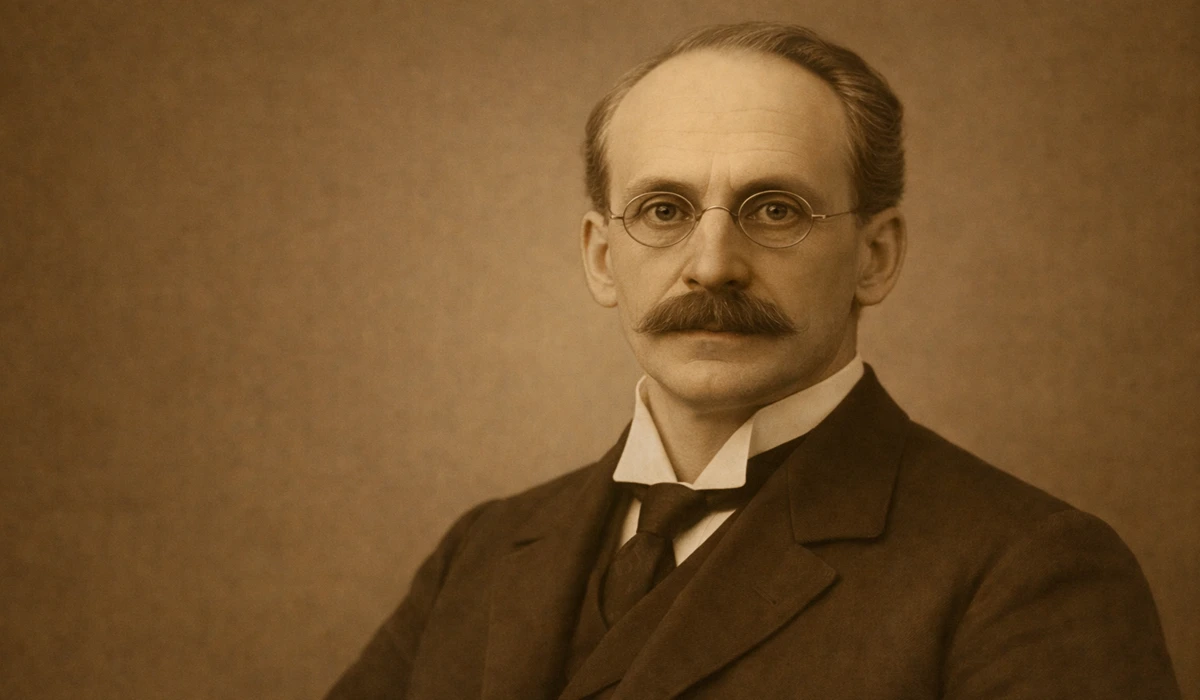
John Martin Littlejohn, born in 1865 and died in 1947, remains an eminent figure in the history of osteopathy. His fascinating life and considerable impact left an indelible mark on the development of this alternative medical discipline.
Born in Ayr, Scotland, in 1865, Littlejohn dedicated his life to the understanding and promotion of osteopathy. His academic journey took him to the University of Edinburgh, where he studied medicine. However, it was his meeting with the founder of osteopathy, Andrew Taylor Still, in the United States that profoundly influenced his view of health and well-being.
In 1900, alongside his two brothers, James Buchanan Littlejohn and David Littlejohn, John Martin Littlejohn co-founded The Littlejohn Hospital in Chicago, Illinois. This teaching hospital became a cornerstone for the advancement of osteopathic medicine, combining clinical practice with educational initiatives to train future osteopathic physicians. Their collective efforts not only solidified osteopathy’s foundation but also inspired its global reach and recognition as a holistic medical discipline.
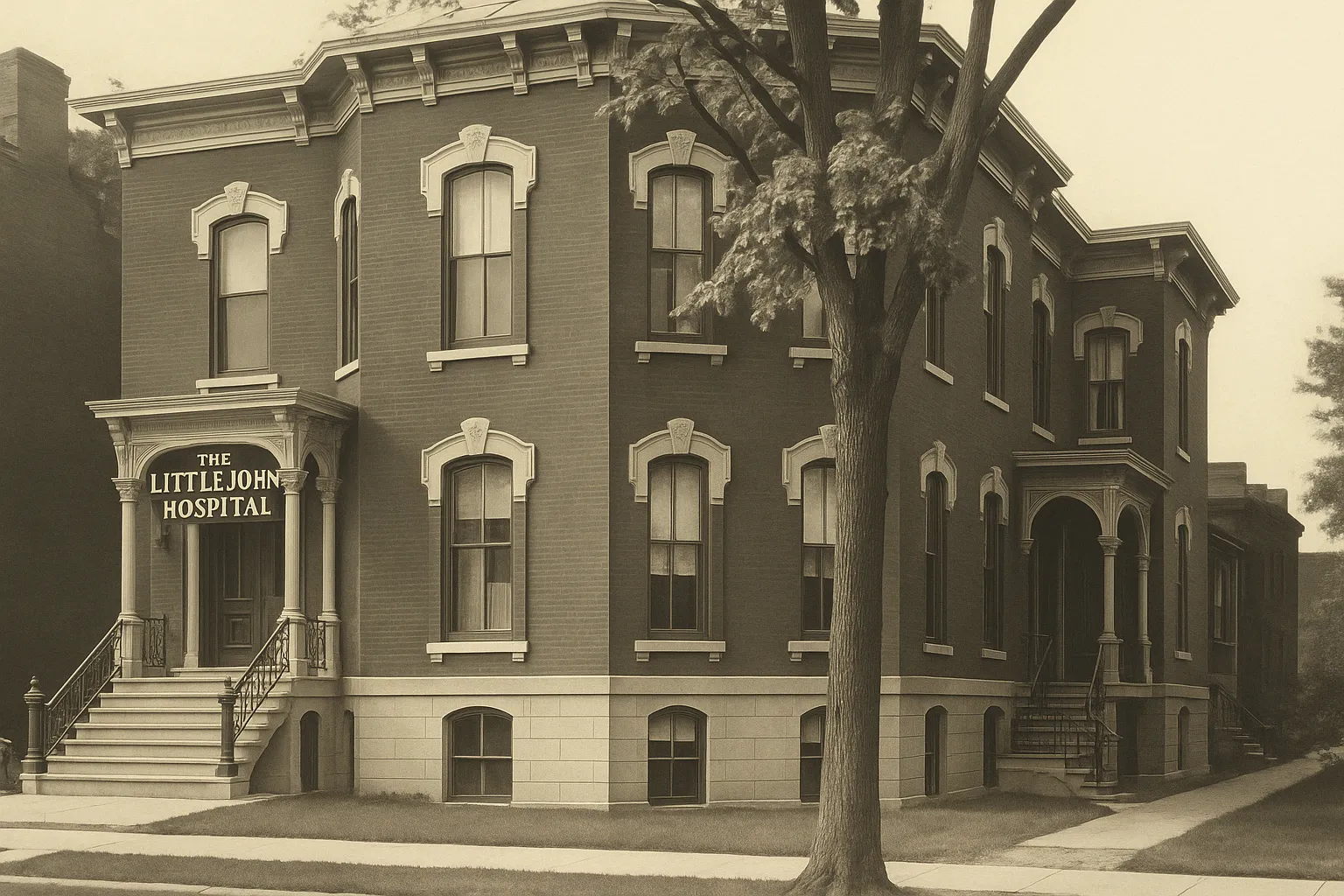
Littlejohn’s Teaching Hospital played a pivotal role in the development of osteopathic medicine, further cementing Chicago’s significance in the history of healthcare. The hospital not only served as a treatment facility but also as a place for medical education, helping to train new generations of healthcare providers. The tranquil setting, with large trees and a peaceful neighborhood, reflected the nurturing environment the hospital aimed to provide for its patients.
After studying with Still, Littlejohn returned to Scotland and established the first school of osteopathy outside the United States, in London, in 1917. This school, known as the “British School of Osteopathy,” played a crucial role in the dissemination and formalization of osteopathy in Europe.
Littlejohn’s contributions to osteopathy are not limited to his educational role. He developed theoretical concepts and practical principles that enriched the discipline. His holistic view of health, emphasizing the structural balance of the body, helped shape the foundations of modern osteopathy.
During his tenure as head of the British School of Osteopathy, Littlejohn trained many practitioners and cemented the school’s reputation as a center of excellence in the field. His influence also extended to his writings, where he shared his innovative ideas on osteopathy, physiology, and the interconnected nature of the human body.
The death of John Martin Littlejohn in 1947 marked the end of an era, but his legacy lives on in the practice and teaching of osteopathy. His exceptional contribution laid the foundation for the continued evolution of this discipline, influencing generations of practitioners that followed. In this introduction, we will explore in more depth the life, key ideas and lasting impact of John Martin Littlejohn on the osteopathic landscape.
Family Origins and Education
John Martin Littlejohn’s family background and schooling played a decisive role in his path to osteopathy, a discipline that would later benefit from his exceptional contributions.
Born in 1865 in Ayr, Scotland, Littlejohn came from a family background that may have influenced his interest in medicine. While the precise details of family history sometimes remain unclear, it is common to see healthcare professionals from families with ties to medicine.
His academic journey began at the University of Edinburgh, where he chose to study medicine. This decision marked the start of his medical career, but it was his experiences in the United States that significantly shaped his future.
His meeting with Andrew Taylor Still, the founder of osteopathy, was a pivotal moment. Still’s innovative ideas on the holistic approach to the human body captivated Littlejohn, leading him to embrace osteopathy as an alternative medical path.
Upon returning to Europe, Littlejohn founded the first school of osteopathy outside the United States, the British School of Osteopathy in London, in 1917. His commitment to education greatly contributed to popularizing osteopathy on the European continent.
Littlejohn’s family background and education thus provided a solid foundation for his later commitment to osteopathy. This combination of Scottish influences, conventional medical training, and an enlightening discovery in the United States shaped an individual whose impact on the history of osteopathy remains significant. In the following sections, we will examine more closely his specific contributions to this discipline and their lasting influence on the medical field.
John M. Littlejohn and Andrew T. Still: a meeting of minds in osteopathy
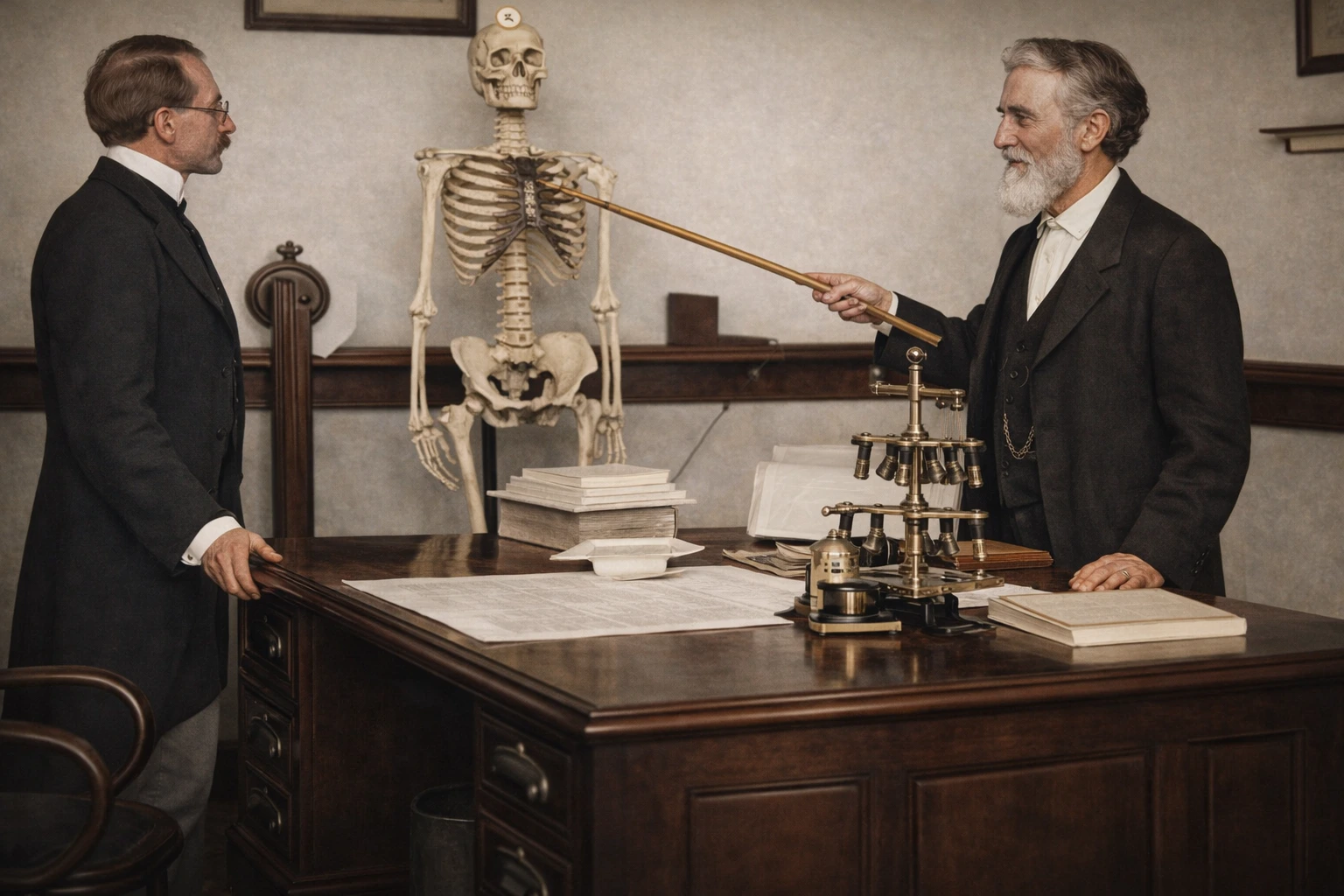
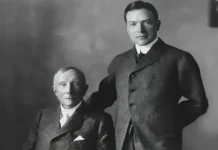
This historic photograph captures a profound moment between John Martin Littlejohn (left), a leading figure in the development of osteopathy, and Andrew Taylor Still (right), the founder of the discipline. Together, they represent two generations of osteopathic pioneers united by their commitment to holistic healthcare and the principles of structural and functional harmony in the human body.
Andrew T. Still, with his revolutionary vision of osteopathy as a drug-free, manual therapy-based system, laid the foundation for a new approach to medicine. His teachings emphasized the body’s innate ability to heal itself when properly aligned and functioning optimally. In this image, Still demonstrates his anatomical expertise, illustrating his unwavering belief in the connection between structure and health.
John M. Littlejohn, one of Still’s most distinguished protégés, expanded on these principles by integrating a rigorous scientific framework into osteopathy. As a scholar and educator, Littlejohn was instrumental in advancing osteopathic education, helping to transform it into a recognized and respected medical discipline worldwide.
This photograph not only commemorates a partnership that shaped the trajectory of osteopathy but also symbolizes a shared dedication to innovation, education, and the holistic care of patients. Their collaboration continues to inspire osteopaths across the globe.
The meeting between John Martin Littlejohn and Andrew Taylor Still marks one of the most significant moments in the history of osteopathy. It was not simply the meeting of a student discovering a new medical method, but that of two minds deeply committed to the reform of healthcare.
When Littlejohn arrived in the United States at the end of the 19th century, he was already well-trained in European academic medicine. His time at the University of Edinburgh had given him a rigorous scientific foundation, rooted in anatomy, physiology, and critical thinking. Yet, he encountered the limitations of a medicine that was still largely symptomatic and pharmacological.
Andrew Taylor Still, for his part, embodies a break. Trained as a doctor, but deeply marked by the shortcomings of the medicine of his time, he developed a radically new approach: understanding the body as an organized system, capable of self-regulation, whose disorders stem from a structural imbalance.
The meeting between the two men is therefore a unique convergence:
- Still brings the foundational, intuitive, and revolutionary vision.
- Littlejohn brings analytical, academic and structuring rigor.
Littlejohn did not simply adopt osteopathy; he questioned it, analyzed it, and sought to understand its scientific foundations. Where some disciples merely reproduced the techniques taught, he focused on the physiological coherence of its principles. This critical attitude was not a rejection, but a form of in-depth study.
Still quickly recognized Littlejohn’s brilliant mind. Their relationship went beyond mere technical knowledge transfer. It became a dialogue between pioneering and academic thinking. Together, they contributed to developing a more solid theoretical foundation for the nascent field of osteopathy.
However, this intellectual affinity did not erase their differences in temperament and approach. Still remained attached to a philosophical, almost cosmological, vision of medicine. Littlejohn, on the other hand, gradually moved towards a more scientific and institutional structuring of the discipline.
This meeting was therefore not just a moment of agreement; it was the starting point of a transformation. Osteopathy, born from a revolutionary intuition, would gradually enter the academic field thanks to figures like Littlejohn.
It is precisely in this fruitful tension between foundation and formalization that the modern evolution of osteopathy takes place.
Littlejohn vs Still: continuity or transformation?
The relationship between John Martin Littlejohn and Andrew Taylor Still is not limited to that of a student loyal to his master. It embodies a pivotal moment in the history of osteopathy: the transition from a foundational intuition to an academic structure.
Andrew Taylor Still laid the foundations for a medical revolution. His approach was based on a strong conviction: the body possesses within itself the mechanisms necessary for self-regulation and healing, provided that its structure is free and harmonious. His thinking was profoundly philosophical, rooted in a naturalistic and sometimes spiritual vision of medicine. For Still, osteopathy was a moral and scientific reform of the medical practice of his time.
John Martin Littlejohn, trained in Scottish university medicine, brings another dimension. Where Still speaks of “harmony” and “natural law,” Littlejohn introduces a marked academic rigor. He systematizes, theorizes, and organizes. He does not simply transmit the principles; he structures them within a more formalized physiological and biomechanical framework.
This difference is not a head-on opposition, but an evolution.
Still establishes a vision.
Littlejohn formalizes it.
Still speaks as a pioneer.
Littlejohn speaks as an academic.
Some historians of osteopathy have even pointed out that a doctrinal tension existed between the two men. Littlejohn sometimes sought to integrate more scientific physiology and academic standards, whereas Still favored a more intuitive and philosophical approach. This divergence did not sever their bond, but it reveals a crucial dynamic: osteopathy was becoming a structured discipline.
Thus, we can consider that Littlejohn did not simply extend Still’s work. He transformed it.
By founding institutions such as the Chicago College of Osteopathy and later the British School of Osteopathy, he helped to establish osteopathy within the academic world, with structured curricula, academic standards, and gradual recognition. He shifted osteopathy from the realm of reform movements to that of institutionalized teaching.
This transformation was decisive.
Without Still, there would have been no foundation.
Without Littlejohn, there might not have been any structured expansion.
The history of modern osteopathy thus rests on this creative tension: an intuitive foundational thought, followed by academic rationalization. Rather than a rupture, it is a dynamic continuity—a passage from vision to system.
And it is precisely in this articulation that the true modernity of John Martin Littlejohn resides.
From vision to institution: Littlejohn’s academic architecture
For John Martin Littlejohn, osteopathy could not remain a brilliant intuition championed by a charismatic man. It had to become a transmissible, structured system, capable of transcending generations. Where Andrew Taylor Still had founded a medical revolution, Littlejohn understood that a revolution only survives if it becomes institutionalized.
Trained in the rigorous environment of Scottish universities, Littlejohn possessed a strong scientific sensibility. His analytical mind led him to view osteopathy not only as an effective clinical practice, but also as a discipline capable of being integrated into the academic landscape. For him, the future of osteopathy depended on its ability to engage with physiology, anatomy, and modern educational standards.
This conviction materialized in 1900 with the creation of the Chicago College of Osteopathy. This institution was not simply another school; it embodied a shift in approach. Osteopathy was taught there according to a structured, demanding curriculum designed to train practitioners capable of combining scientific understanding with manual skill. Littlejohn sought to go beyond mere technical transmission. He wanted to train professionals capable of understanding the human body in its entirety, both mechanically and functionally.
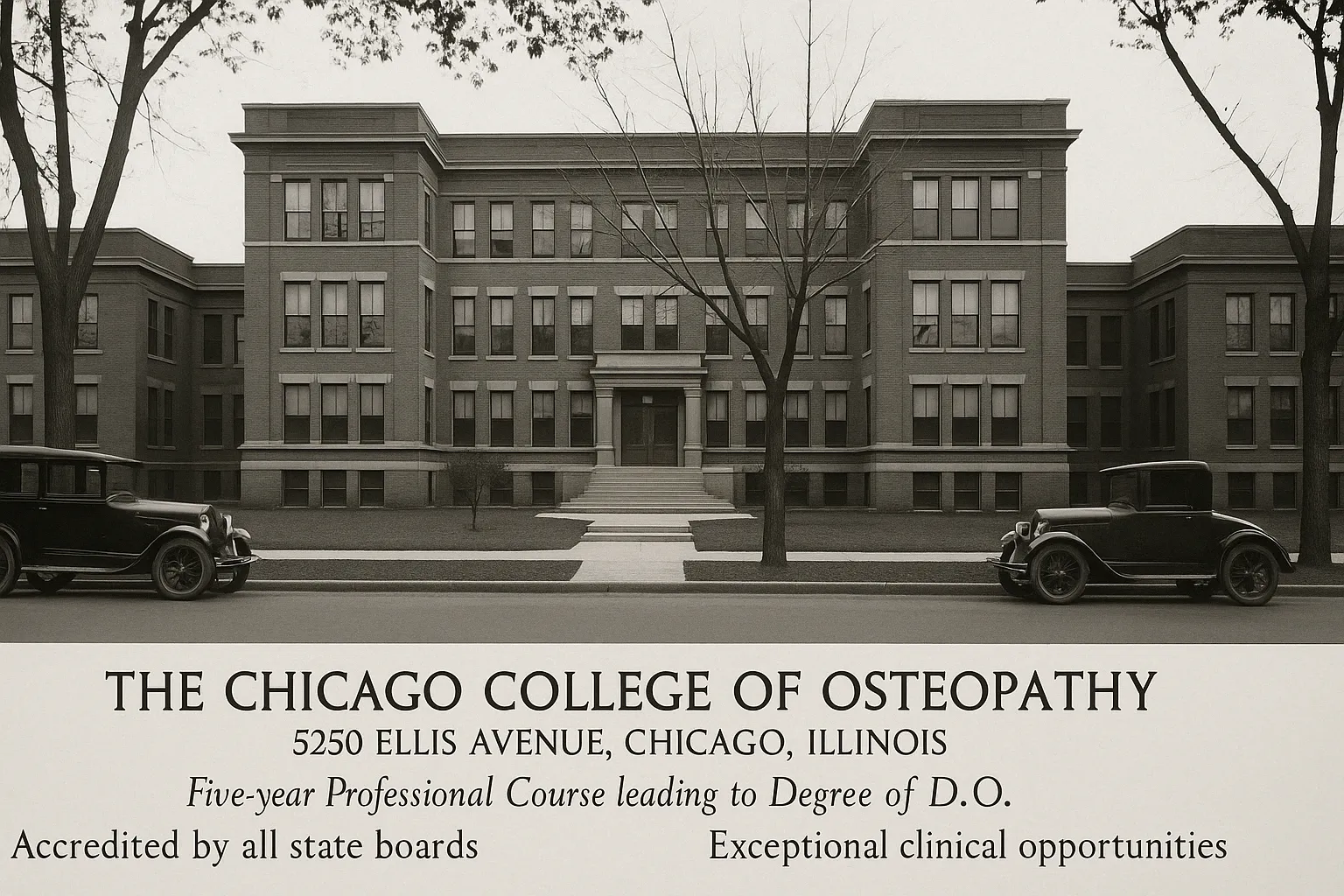
The Chicago College of Osteopathy, pictured here at 5250 Ellis Avenue, Chicago, Illinois, stands as a historic monument to the foresight and determination of John Martin Littlejohn. A true visionary in the field of osteopathy, Littlejohn founded this institution to advance the education and practice of osteopathy as a holistic and science-based approach to healthcare.
Established with a rigorous five-year professional course leading to the Doctor of Osteopathy (D.O.) degree, the college quickly gained recognition for its excellence. Accredited by all state boards, it became a beacon for aspiring osteopaths and a testament to Littlejohn’s unwavering commitment to integrating anatomical, physiological, and mechanical principles into medical training.
Under Littlejohn’s guidance, the Chicago College of Osteopathy emphasized exceptional clinical opportunities, preparing graduates to approach patient care with precision and compassion. His legacy not only transformed osteopathic education in the United States but also laid the foundation for global expansion, influencing osteopathic medicine in Europe and beyond.
This image encapsulates more than just a building; it symbolizes Littlejohn’s enduring impact on osteopathy—a reminder of his dedication to advancing healthcare and his role as a pioneer whose influence continues to inspire osteopaths worldwide.
In this approach, education became a strategic lever. It was no longer simply a matter of treating patients, but of training generations of practitioners capable of defending and developing the discipline. The school became a tool for legitimizing the profession.
This ambition took on an international dimension in 1917 with the founding of the British School of Osteopathy in London. This move was decisive: osteopathy definitively shed its status as a primarily American movement to become an exported, structured, and academic discipline in Europe. By establishing a lasting institution on the European continent, Littlejohn ensured osteopathy’s geographical and intellectual continuity.
His contribution therefore goes beyond pedagogy. He participated in the transformation of an emerging medicine into an organized discipline, endowed with standards and progressive recognition. Where Still had laid down foundational principles, Littlejohn built the institutional architecture necessary for their dissemination.
This development was not insignificant. Institutionalizing a discipline involves structuring it, formalizing it, and sometimes rationalizing it. Littlejohn assumed this responsibility. He introduced an academic rigor that allowed osteopathy to enter the international medical dialogue rather than remaining on the margins.
Thus, John Martin Littlejohn appears less as a mere continuator than as an architect. He consolidates, organizes, and projects osteopathy into the future. Without this structuring phase, it is likely that the discipline would not have experienced the global expansion it enjoys today.
In this sense, his legacy lies not only in his writings or his direct teaching, but also in the institutions he helped to found. They remain the living foundation of his influence, bearing witness to a vision where transmission and academic rigor become the guarantors of the enduring nature of an idea.
Conclusion: the architect of a sustainable discipline
John Martin Littlejohn’s trajectory transcends mere biography. It embodies a decisive stage in the maturation of osteopathy. Trained in European academic medicine and deeply influenced by the foundational vision of Andrew Taylor Still, Littlejohn did not simply transmit a legacy: he structured it.
Still had initiated a medical revolution based on the body’s capacity for self-regulation and the interdependence between structure and function. Littlejohn understood that a revolution, to survive, must be organized. By integrating scientific rigor, structured pedagogy, and institutionalization, he transformed a reform movement into a lasting academic discipline.
The founding of the Chicago College of Osteopathy and later the British School of Osteopathy was not a mere administrative act. It was a strategic move: to establish osteopathy within a long-term historical framework, transcending the charismatic figure of its founder. Thanks to this institutional structure, the discipline was able to expand, become more formalized, and engage with international medical standards.
Littlejohn thus appears less as a disciple than as an architect. He consolidated the principles, organized their transmission, and ensured their continuity. His contribution lies not only in his writings or his direct teaching, but also in the solidity of the structures he helped to build.
Even today, modern osteopathy bears the mark of this foundational tension: an intuitive vision that became a transmissible system. It is in this interplay between inspiration and organization that the true modernity of John Martin Littlejohn lies.
Honoring his legacy is not just about remembering his name. It is about recognizing the crucial role he played in transforming an innovative idea into a structured international discipline—one capable of evolving, adapting, and transcending generations.
Appendix A: Chronological Landmarks of John Martin Littlejohn
- 1865 — Born in Ayr, Scotland.
- 1880s–1890s — University studies in medicine at the University of Edinburgh.
- Late 1890s — Meeting with Andrew Taylor Still in the United States and immersion in the nascent field of osteopathy.
- 1900 — Participated in the founding of the Chicago College of Osteopathy, marking a major step in the academic structuring of the discipline.
- 1917 — Creation of the British School of Osteopathy in London, the first osteopathic school outside the United States.
- 1920s–1930s — Consolidation of osteopathic teaching in Europe and international dissemination of the principles structured by Littlejohn.
- 1947 — Death of John Martin Littlejohn, leaving a lasting institutional legacy in the osteopathic world.
Appendix B: Andrew T. Still and John M. Littlejohn — Two Foundational Positions
The evolution of modern osteopathy rests on a complementary dynamic between its founder and one of his most brilliant successors. The following table highlights the differences in approach and orientation between Andrew Taylor Still and John Martin Littlejohn.
| Andrew T. Still | John M. Littlejohn |
|---|---|
| Founder of osteopathy | Architect of its institutionalization |
| A pioneering and reformist vision | Academic and pedagogical structuring |
| An intuitive and philosophical approach | Analytical and academic approach |
| Emphasis on the natural laws of the body | Increased integration of scientific physiology |
| Direct master-disciple transmission | Organization of structured and degree-granting courses |
| Medical reform movement | International academic discipline |
Andrew T. Still initiated a break with the medical thinking of his time. His approach was based on the conviction that the body possesses within itself the resources necessary for healing when its structure is balanced. His thinking is both scientific and profoundly philosophical.
John Martin Littlejohn, while remaining faithful to the founding principles, made a strategic shift: he formalized, organized, and integrated osteopathy into a structured academic framework. Where Still founded a movement, Littlejohn built a lasting architecture.
Rather than an opposition, it is a dynamic continuity:
the founding vision becomes a transmissible system.