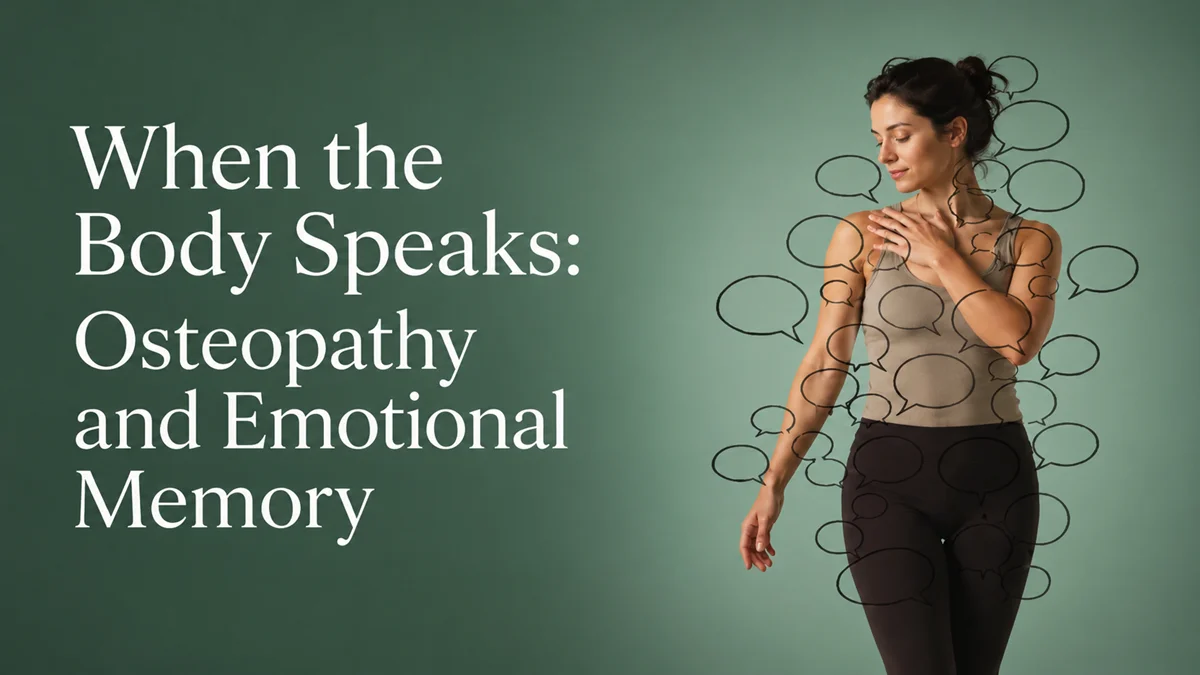
- The body can retain lasting traces of stress, intense emotions, and certain life experiences.
- Chronic tension, persistent pain, or rigid postures may sometimes reflect implicit body memory.
- The autonomic nervous system plays a central role in how emotional reactions become embedded in the body.
- The diaphragm, psoas, shoulders, and jaw are frequently involved in the body’s response to stress.
- Unprocessed emotions may contribute to ongoing states of vigilance, tension, or muscular hypertonicity.
- Osteopathy does not replace psychotherapy, but it may help release certain somatic tensions.
- Osteopathic treatment aims to improve mobility, breathing, bodily safety, and nervous system regulation.
- Emotional release during treatment should never be forced or automatically interpreted as evidence of a specific trauma.
- An integrative approach recognizes the links between the body, emotions, posture, lived experiences, and physiological adaptation.
- In cases of severe anxiety, significant trauma, psychological distress, or persistent symptoms, medical or psychological consultation is essential.
Short Text Version
When the Body Speaks: Emotional Memory and Osteopathy
The body does not only carry the traces of physical trauma. It may also retain the imprint of stress, anxiety, intense emotions, or difficult life experiences. Certain chronic tensions, persistent pain, or rigid postures may reflect a form of body memory, where the nervous system remains in a prolonged protective state.
Possible Manifestations
- Persistent muscle tension
- Unexplained chronic pain
- Blocked or shallow breathing
- Diaphragm stiffness
- Chronic fatigue
- Disturbed sleep
- Closed or rigid posture
- Body hypersensitivity
The Role of the Nervous System
- Chronic stress activation
- Body hypervigilance
- Persistent reflex tension
- Altered breathing patterns
- Defensive muscle contraction
- Difficulty relaxing
- Prolonged autonomic response
How Can This Show Up?
- Constant neck tension
- Contracted psoas
- Chest tightness
- Stress-related headaches
- Functional abdominal pain
- Feeling “frozen”
- Pain that fluctuates with emotions
The Role of Osteopathy
- Whole-body approach
- Work on fascial tensions
- Respiratory mobility
- Diaphragm release
- Nervous system regulation
- Creation of a safe therapeutic space
- Complementary support
What Osteopathy Should Not Promise
- Replace psychotherapy
- “Heal” trauma on its own
- Interpret every pain symptom
- Force emotional release
- Replace medical evaluation
When Should You Consult a Mental Health Professional or Doctor?
- Persistent severe anxiety
- Frequent panic attacks
- Intrusive traumatic memories
- Persistent unexplained pain
- Weight loss or fever
- Significant psychological distress
- Dark thoughts
- Trauma requiring specialized support
In Summary
The body may sometimes express what words were never able to say. Osteopathy does not replace psychological or medical care, but it can support physical well-being by helping certain tensions release and by restoring greater mobility, breathing capacity, and inner bodily safety.
Introduction – The body, this great silent one
We often think of the mind as the repository of our memories, our wounds, and our emotional pain. Yet, a growing body of research and clinical practice shows us that the body, too, retains memories of our experiences —sometimes far more faithfully than our conscious mind could. This silent, buried bodily memory expresses itself through chronic tension, persistent pain without a clear organic cause, or even rigid postures that seem to tell a forgotten story.
Osteopathy, by its very nature, is an art of touch, of attentive listening to the tissues, and of the resonance between gesture and sensation. It is therefore naturally situated at the crossroads of the physical and the emotional , where the body expresses what words cannot.
The concept of bodily emotional memory is not new. It was explored as early as the 1930s by Wilhelm Reich , who spoke of “muscular armor” as expressions of psychological defenses. Later, approaches such as Alexander Lowen’s bioenergetics, somatotherapy, and psychoneuroimmunology enriched our understanding of this profound link between emotion, tension, and bodily structure.
But how do these tensions manifest in the body? The autonomic nervous system plays a central role here. During an intense emotional event (fear, humiliation, loss, anger, etc.), the body reacts with a physiological cascade: activation of the amygdala, release of adrenaline, and reflexive muscle contraction. If these responses cannot be expressed or integrated, they can become fixed in the body’s structure—thus creating a lasting somatic imprint.
These traces then become areas of hypertonia, hypomobility, or compensation , which the osteopath can perceive with their hands. Chronic back pain can thus reflect unresolved past stress; a rigid diaphragm can betray a deep-seated, long-standing fear; a tight psoas muscle can sometimes be part of a protective bodily response linked to stress or a difficult emotional history, without automatically implying a specific trauma.
During a session, it’s not uncommon for osteopathic manual work to release not only a joint or fascia, but also a buried emotion . Tears may arise for no apparent reason, a memory may resurface, or simply a profound sense of calm may settle in. This isn’t magic, but a neurophysiological and bodily reality that is increasingly well-documented.
When should you consult a mental health professional or a doctor?
Some pains, tensions, or bodily reactions can be linked to stress, anxiety, or a traumatic experience. However, certain signs should prompt a medical or psychological consultation to obtain appropriate support.
- Severe anxiety that disrupts sleep, work or daily life;
- Frequent or difficult-to-control panic attacks;
- Intrusive traumatic memories, recurring nightmares, or a constant state of alert;
- Unexplained pain that persists despite rest or usual care;
- Unexplained weight loss, fever, nighttime pain or significant fatigue;
- Dark thoughts, significant psychological distress or a feeling of no longer being able to cope;
- History of trauma requiring specialized psychotherapeutic support.
In these situations, osteopathy can sometimes support physical well-being, but it does not replace a medical, psychological or psychiatric evaluation when the signs go beyond the functional framework.
Far from claiming to replace psychological therapy, osteopathy offers a complementary approach , working not on words, but on the language of the tissues. It thus allows the body to be relieved of some of its invisible burdens, and to open a space where the person can feel more unified, more fluid, more alive.
In this article, we will explore how this emotional memory settles in the body, how it influences posture, tone and movement, and above all, how osteopathy can support its release , in a respectful, non-intrusive and profoundly human framework.
Body memory: what the body doesn’t forget
The body doesn’t speak with words, but it remembers with remarkable precision. Long before the rational brain consciously registers a situation, the body has already grasped its essence: variations in heart rate, muscle tension, breathing patterns, and changes in postural tone. These physiological responses are the first level of our emotional memory. They are encoded in the muscles, fascia, autonomic nervous system, and sometimes even in overall posture.
We are talking here about implicit memory , that is, a form of non-declarative memory that doesn’t need words to express itself. Unlike explicit memory (the kind of memory we can recount), implicit memory is sensory, motor, and emotional. It is at work in reflexes, habits, phobias, and in certain chronic pains that resist purely mechanical or pharmacological treatments.
Consider the example of a child who experienced a traumatic hospitalization at a young age. They may not consciously remember it, but their diaphragm, shoulders, or psoas muscle may still bear the imprint . Years later, they may develop a closed posture, shallow breathing, or functional abdominal pain without any obvious medical cause. The body will have retained the trace of this experience, like a locked file in a system that cannot be opened by thought alone.
These bodily imprints often manifest as chronic tension , localized or diffuse, sometimes migrating, and are difficult to correlate with lesions visible on imaging. They are the body’s language , expressing something that could not be spoken or integrated at a more conscious level. This can be psychological trauma, grief, old shame, or simply an accumulation of emotional microaggressions.
Neuroscience sheds light on this dynamic. The amygdala, the brain’s processing center for intense emotions, is capable of recording an emotional memory without passing through the hippocampus —that is, without a narrative recollection. Similarly, studies in the neurobiology of stress have shown that glial cells in the spinal cord (such as astrocytes or microglia) can sensitize peripheral nerves in response to chronic stress or inflammation, thus causing pain in certain areas of the body even in the absence of any apparent injury.
In their practice, osteopaths regularly encounter these manifestations of bodily memory: a pelvis that remains locked despite structural techniques, a rigid thorax without clear rib restrictions, an asymmetrical skull without a history of trauma. In these cases, tissue listening, primary respiratory rhythm, and empathetic presence take precedence over mechanical manipulation. It is less about correcting than inviting, less about forcing than allowing.
It’s not about psychologizing every pain, nor about assigning meaning to every symptom. But it is essential, in a holistic approach, to allow space for the body as a living memory of personal history. It is in this openness that the therapeutic dimension of osteopathy takes on its full meaning: that of a touch that liberates not only the structure, but also the experiences inscribed within it.
Somatic tensions: when emotion takes on flesh
In everyday language, we say that stress “weighs on the shoulders,” that fear “knots the stomach,” or that sorrow “tightens the throat.” These popular expressions, far from being innocuous, reflect a profound bodily reality: emotions take on a physical form. They don’t simply pass through the mind—they imprint themselves on living matter, on muscular, fascial, and visceral tissue.
Each emotion is accompanied by a specific neurophysiological pattern . Fear induces a contraction of the diaphragm, activation of the psoas muscle, and a withdrawn posture; anger manifests as raised shoulders, jaw tension, and an accelerated heart rate; sadness can slow movements and cause the rib cage to sink. These bodily responses are natural and adaptive… provided they are temporary.
The problem arises when these states become chronic or entrenched . When an emotion is not acknowledged, expressed, or integrated, it can remain trapped in the body as persistent muscle tension , sleep disturbances, digestive problems, or even poorly localized somatic pain. The autonomic nervous system, particularly the vagus nerve , plays a central role in this dynamic. In situations of prolonged stress, it maintains the body in a state of heightened alertness, inhibiting muscle relaxation and disrupting visceral functions.
When working on these tensions, the osteopath engages not only with the structure itself, but also with the emotional history it contains. They don’t need to know this history in detail, because the tissue speaks for itself. A muscle that won’t budge, a fascia that “resists,” an area of the body that seems impervious to movement—these are all signs that something is asking to be seen, acknowledged, and released.
It’s common for a patient to come for a consultation due to mechanical pain—lower back pain, neck tension, abdominal discomfort—and for their posture to change over the course of the sessions, their breathing to open up, and sometimes, an emotion to surface. This might be a simple feeling of relief, spontaneous tears, a forgotten memory resurfacing, or a silence heavy with meaning. This doesn’t mean the osteopath becomes a psychotherapist, but rather that the body finds a space to express itself in a different way.
This dynamic is at the heart of the somato-emotional approach , which recognizes that certain tissues can function as “memory nodes.” This is not magic or wild interpretation, but a sensitive tissue reading , supported by knowledge of stress physiology, neuroplasticity, and embryology. The body is a whole: what affects the emotional state affects the structural state, and vice versa.
Somatic tensions linked to repressed emotions can also manifest paradoxically. Pain can migrate from one area to another, intensify during a stressful life event, or conversely, subside after a symbolically restorative event. These phenomena, often described as “psychosomatic,” are not imaginary— they reflect a logic inherent to the body , which seeks to restore balance between memory, adaptation, and movement.
The osteopath does not claim to interpret these tensions as a coded symbolic language. But by releasing these areas of resistance, he opens a door to a reintegration of bodily experience , a relaxation of the nervous system, and sometimes, a broader transformation of the relationship with oneself.
Wilhelm Reich: Muscular armor as the body’s defensive memory
Long before modern neuroscience spoke of implicit memory, chronic stress, or the regulation of the autonomic nervous system, Wilhelm Reich had already sensed a fundamental clinical reality: the body can retain traces of unexpressed emotions. A physician, psychoanalyst, and dissenting student of Freud, Reich developed the concept of character armor , and later muscular armor , as early as the 1930s . According to him, certain psychological defenses are not confined to thought or behavior; they are also manifested in muscle tone, posture, breathing, and body language.
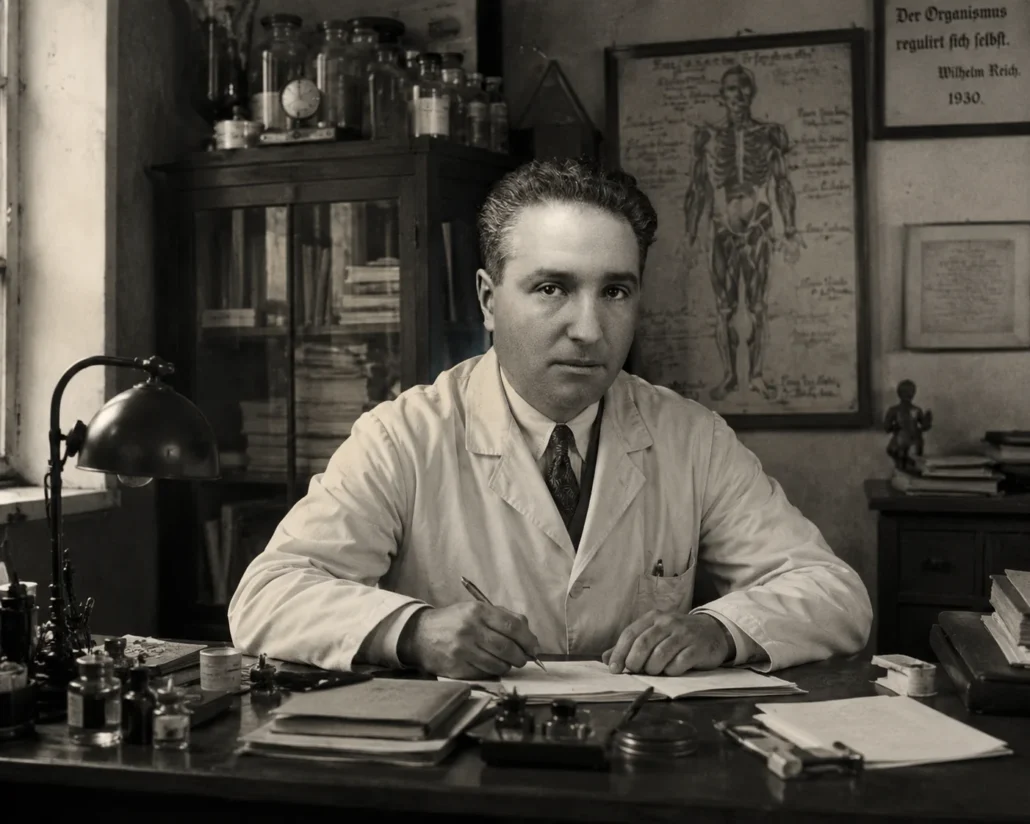
For Reich, when an intense emotion—fear, anger, sadness, shame, or desire—cannot be freely expressed, the body can learn to suppress it. This suppression gradually becomes a defensive mechanism. The shoulders rise, the jaw clenches, the diaphragm tightens, the pelvis loses its mobility, and breathing becomes shallow. These are not merely isolated instances of tension; they are sometimes bodily protective strategies, repeated over time until they become second nature.
The concept of muscular armor should not be understood as direct proof that a muscle “contains” a specific emotion. It would be too simplistic to claim that neck tension always signifies repressed anger, or that a rigid diaphragm necessarily reveals an old fear. Reich’s significance lies elsewhere: he paved the way for an understanding of the body as a site of defensive adaptation. The body does not hold onto an emotion like an object locked in a drawer; rather, it preserves a way of protecting itself, of breathing, of holding itself, and of relating to the world.
This intuition aligns with several observations encountered in osteopathy. Some patients present with tensions that do not respond to a purely mechanical approach. A region may remain locked despite apparent good joint mobility. A diaphragm may resist movement, not due to injury, but as if maintaining a long-standing state of alertness. A closed posture may reflect less muscular weakness than an overall protective mechanism. In these situations, the osteopath does not seek to interpret the tension for the patient, but rather to create the conditions for a safe release.
Reich’s contribution is therefore both historical and clinical: he demonstrated that psychic defense has a bodily dimension. His work has influenced several subsequent mind-body approaches, notably Alexander Lowen’s bioenergetics, Reichian therapy, certain forms of somatotherapy, and, more broadly, contemporary approaches that consider the link between posture, breathing, emotion, and implicit memory.
For osteopathy, this perspective calls for great caution, but also for great depth. Caution, because the practitioner must never reduce pain to a single emotional explanation. Depth, because a painful body is not simply a structure to be corrected: it is sometimes a story of adaptation, protection, and survival. The osteopath’s hand does not then “break” the armor, but rather engages in dialogue with it. It recognizes that this tension may have served a purpose, that it protected the person at a given moment, and that it can only be released when the body feels safe enough to do so.
Thus, Reich enriches osteopathic thinking without turning it into mere psychology. He reminds us that certain chronic tensions can be understood as traces of an old defense mechanism, but that their meaning always belongs to the patient. The osteopath accompanies movement, breathing, and bodily presence; he does not impose an interpretation. It is precisely in this respectful stance that the osteopathic approach can become a space for deep listening to the body.
The role of the autonomic and limbic nervous systems
To understand how emotions are inscribed in the body, we must delve into the heart of neurophysiological mechanisms , and in particular explore the interaction between the autonomic nervous system and the limbic system , the two great conductors of our deep emotional and bodily responses.
The limbic system , located in the deep brain, is responsible for processing emotions, emotional memory, and regulating survival behaviors. It includes key structures such as:
- The amygdala , which detects threats, activates the alert and prepares the body to react with stress (fight, flight, freeze).
- The hippocampus , which contextualizes the emotional experience and participates in the encoding of memory.
- The hypothalamus , which transmits signals to the autonomic nervous system and triggers physiological responses (heart rate, muscle tension, sweating, etc.).
This limbic system is closely linked to the autonomic nervous system (ANS) , which controls the body’s involuntary functions—breathing, digestion, circulation, muscle tone. It comprises two main branches:
- The sympathetic system , activated in case of stress or danger (accelerated heart rate, muscle contraction, digestive inhibition).
- The parasympathetic system , which promotes relaxation, digestion, and letting go (particularly via the vagus nerve ).
When we experience an intense emotion—fear, anger, sadness— the limbic system captures the emotional information , interprets it according to our past experiences, and activates an autonomous response. This response is bodily before it is conscious . For example, when faced with a situation perceived as threatening, the amygdala can trigger a reflex contraction of the diaphragm or postural muscles, even before we have had time to mentally formulate what we are feeling.
If this activation is occasional, the body quickly regains its balance. But if the emotion is repressed, repeated, or poorly processed, it can maintain a state of chronic alert . This manifests as:
- Underlying muscle tension,
- Physiological hypervigilance,
- Digestive or sleep problems,
- Persistent fatigue or diffuse physical anxiety.
In this context, the osteopath plays a key role by modulating the autonomic nervous system through touch. Certain cranial, visceral, or fascial techniques, applied gently, have demonstrated their ability to stimulate the vagus nerve , promoting a return to a parasympathetic state of rest and regulation. This is what is observed when, after a session, a patient experiences gentle warmth, a sense of calm, and deep relaxation, sometimes followed by improved sleep.
It is interesting to note that vagal tone (measured by heart rate variability) is now considered a key indicator of emotional resilience and psychophysiological health. Research in psychoneuroimmunology even shows that prolonged activation of the sympathetic nervous system can lead to chronic low-grade inflammation, linked to many so-called “idiopathic” pains.
The osteopathic approach, by acting on the mobility of structures, the relaxation of fascia, the release of the diaphragm , can therefore indirectly reduce limbic hyperactivation , improve emotional regulation, and participate in the resorption of chronic somatic tensions.
Thus, the body is not merely a passive recipient of emotions—it is an active participant in the emotional experience. Through precise and respectful touch, the osteopath provides the body with a safe space where these profound adjustments can occur naturally.
Osteopathic approaches to emotional release
When emotional tensions become entrenched in the body’s tissues, simply “relaxing” them mechanically isn’t enough. It requires listening, support, and sometimes even… waiting. Because emotional release in osteopathy isn’t something that can be commanded; it’s something that must be allowed. It’s a subtle invitation, based on a quality of presence, a clear therapeutic intention, and techniques tailored to the patient’s unique needs.
In this context, the osteopath does not seek to induce emotional catharsis or replace the role of the psychotherapist. They intervene within a somatic framework , based on the premise that the body knows how to release tension, provided it is given the necessary conditions. This implies a therapeutic approach grounded in listening, non-judgment, and a high degree of manual sensitivity.
Indirect techniques: promoting tissue safety
In cases where emotion has been held in the body for a long time, a direct and structural approach risks being experienced as intrusive, even threatening. The autonomic nervous system may then react defensively, strengthening bodily defenses and preventing any release.
Indirect techniques are particularly useful here: they consist of guiding the tissues into their comfortable position , where tension seems to dissolve, where the body “breathes” again. These techniques include, for example:
- The strain-counterstrain , which places the muscle in maximum shortening to soothe the neuromuscular receptors.
- The fascial listening technique , in which the practitioner follows the spontaneous micro-movements of the tissues to their point of release.
- The biodynamic model , where the osteopath perceives and accompanies the deep primary respiratory movement (PRM), in an attentive silence that invites tissue reorganization.
These approaches have one thing in common: they reinforce the feeling of security in the body. And security is the essential condition for the vagus nerve to activate, for the limbic system to calm down, and for the body to begin to “let go”.
Freeing the diaphragm: unlocking emotional breathing
The diaphragm plays a central role in somato-emotional release. It is an anatomical, physiological, and emotional crossroads. It separates the thoracic and abdominal cavities, receives the insertions of the deep postural muscles (psoas, quadratus lumborum), and is intimately linked to the vagus nerve.
Shallow, shallow, or reversed breathing often reflects unprocessed emotional burdens. Gently working manually on the diaphragm helps to restore visceral mobility, improve lymphatic circulation, and also open up an inner space conducive to emotional expression.
In some cases, simply releasing tension around the phrenic nerve elicits surprising reactions: deep sighs, a sudden relaxation of the shoulders, or even spontaneous tears. This should not be interpreted as a “miraculous release,” but rather as evidence that the body feels confident enough to let go of what it has been holding.
Skull and emotion: silent tissue memory
In the cranial osteopathic approach, the skull is much more than a collection of articulated bones: it is a true emotional relay , linked to the central nervous system, the meninges, and the stress regulation centers. Intracranial tensions, asymmetries of the reciprocal tension membranes, or restrictions in primary respiratory movement are all indicators of a repressed emotional burden.
Cranial technique often involves placing the hands on the patient’s head, listening very closely, and following the involuntary movements of the structures. This silent presence sometimes allows for profound autonomous regulation, without a word being spoken.
A patient may leave a cranial session with a feeling of lightness, calm, or even inner clarity , without being able to explain what has changed. The body, in this case, has done its work.
The therapeutic approach: touch as a mirror
Even more than technique, it is the osteopath’s attitude that makes emotional release possible. A respectful touch, without any desire to correct at all costs, becomes a benevolent mirror in which the patient’s body can recognize itself, reorganize itself, and sometimes, heal itself.
This requires a therapist capable of being present to the other person, without judgment, but also present to themselves . Because when faced with certain emotions that surface during a session, the practitioner must remain stable, grounded, and attentive — without being overwhelmed or trying to understand everything.
Emotional release is not an objective, but a possible consequence of proper care , centered on the body, on feelings, and on respecting the patient’s rhythm.
Integrating the experience: after the session
When an emotional release occurs during a session, it is essential to allow the patient time to integrate what has emerged. This can be achieved through silence, verbal acknowledgment if necessary, or a simple suggestion: “Take the time to feel what is changing within you.”
Some people may feel tired, others relieved, and still others a little confused. That’s why it’s often wise to advise a period of rest, hydration, or gentle activity after the session.
Sometimes, the release doesn’t happen immediately, but a few days later , in the form of a dream, a realization, or a change in attitude. The osteopath sows the seeds, the body transforms them at its own pace.
Clinical Cases – The Body in Therapy
Sometimes, the language of the body speaks louder than a thousand words. For the attentive osteopath, every posture, every tension, every area of resistance becomes a silent chapter in a personal story. Clinical cases illustrate how bodily manifestations can be linked to buried emotional experiences, and how manual work, provided it is respectful and sensitive, can foster a profound reorganization of both the tissue and the individual.
The cases presented below are illustrative clinical situations. They do not allow for generalization or the establishment of an automatic link between pain and a specific emotion. Each person must be assessed holistically.
Case 1: Persistent lower back pain and unresolved grief
Julie, 38, consults for chronic lower back pain resistant to conventional treatments . She describes a dull ache in the lumbosacral region, present for almost a year, with no obvious traumatic cause. Imaging tests are normal. During the session, fascial listening reveals significant pelvic fixation , with a rigid, almost locked sacrum.
Over the course of the sessions, a gentle release of the diaphragm allows for deeper breathing. During the fourth session, while subtly working around the sacrotuberous ligament, Julie experiences a surge of emotion. She begins to cry softly, without knowing why. After a moment of silence, she mentions the loss of her mother a year earlier , which she had “managed” without collapsing, by holding herself together.
In the weeks that followed, her lower back pain gradually subsided. Julie would later say, “I feel like my back was carrying the burden of what I hadn’t cried.” It wasn’t the emotion itself that caused the pain, but rather the unconscious refusal to release emotions that maintained a lasting somatic tension.
Case 2: Chest pain and silent anger
Antoine, 52, is consulting for left-sided chest pain , below his breast, which has been occurring for several months. He has already consulted a cardiologist and undergone reassuring tests. His chest is rigid, especially along the lines of tension of the pectoralis major muscle , and his diaphragm has limited mobility. Upon listening, the chest area seems to be under pressure, as if “compressed from the inside.”
During a gentle mobilization of the diaphragm and rib cage, a tension is suddenly released, and Antoine lets out a loud sigh. He remains lying down for a long time, his eyes closed, then confides, “I’ve kept so much bottled up inside lately… I needed to breathe it out.” The osteopath doesn’t push any further, but his breathing immediately becomes easier , and the pain disappears a few days later.
This case illustrates how repressed or unexpressed anger can manifest in chest posture, breathing rhythm, and muscle tone. The release here is both mechanical and emotional.
Case 3: A frozen psoas muscle and an old fear
Camille, 29 years old, presents with poorly localized right groin pain that occurs when walking or standing for extended periods. Osteopathic examination reveals a severely contracted psoas muscle , especially on the right, associated with reduced mobility of the lower abdominal viscera. She has no prior gynecological, digestive, or surgical history.
During the session, a gentle release of abdominal and pelvic tension begins. The psoas muscle seems to react in fits and starts, then relaxes. Camille, visibly moved, begins to breathe more deeply and says, “It’s strange, I just thought of a verbal attack I suffered when I was 15. I’ve never talked about it.” In the following weeks, she feels more grounded, less agitated, and the pain disappears without further treatment.
The psoas, often called the “muscle of the soul ,” plays a key role in the body’s defense response (flight or freeze). When intense stress occurs and cannot be expressed, this muscle can become permanently rigid, as if to protect the body’s core.
The osteopath confronts invisible suffering
In osteopathic practice, it is common to encounter patients who express pain without apparent cause, diffuse discomfort, or unexplained fatigue. These symptoms, often described as “functional” or “psychosomatic” in medical terminology, can be disconcerting—for both the practitioner and the patient. Yet, for the attentive osteopath, these complaints without visible lesions are often the sign of an invisible suffering , deeply rooted in the body’s memory.
Listening beyond the complaint
When faced with a patient expressing pain without a clearly identifiable origin, the osteopath is called upon to broaden their listening skills. This does not mean becoming a psychologist, but rather considering the body as a language in its own right . A closed posture, a monotonous tone of voice, tension that always returns in the same area despite adjustments… these are all signals that deserve to be recognized as indicators of a more generalized suffering.
The osteopath does not seek to interpret or make a psychological diagnosis. He does not necessarily question the patient’s history. But his therapeutic intention changes : he becomes an active witness, a sensory mirror, a neutral and benevolent presence in which the patient’s body can, sometimes, begin to release what it has held for too long.
This process requires immense clinical finesse . It is not about forcing an emotional release, nor about suggesting to the patient that their pain is “all in their head.” On the contrary, it is about validating the reality of their bodily sensations , while creating the conditions for a profound release—physiological, neurovegetative, and sometimes emotional.
Humility in the face of what is not said
Osteopaths often encounter a form of tissue silence . Some tensions remain unspoken. They resist, become rigid, or vanish as soon as they are addressed. This can be a sign of an archaic protective mechanism : the body has learned, in order to survive, to remain silent. It keeps silent what it cannot yet transform. In these cases, it is crucial to respect this rhythm.
Osteopathy cannot free everything. It is neither a miracle cure nor a magic solution. But it offers a gateway , a space of presence where the body can begin to reorganize itself, slowly and gently. Humility is a central therapeutic quality here: knowing how to recognize that sometimes several sessions are necessary, sometimes no particular technique is required, just deep and sincere listening.
This approach requires the practitioner to also work on themselves . How can one remain centered when faced with a tearful patient? How can one avoid projecting their own emotions onto the other person’s tensions? How can one maintain inner clarity when the patient expresses pain that nothing seems to alleviate? This requires personal grounding, an ability to remain present without seeking to fix things.
Recognizing the micro-signals of relaxation
Invisible suffering doesn’t always manifest dramatically. Sometimes, it unfolds in micro-movements: a subtle change in skin temperature, deeper breathing, a fading asymmetry. These signs, often imperceptible to the patient, are silent witnesses to a profound rebalancing.
The attentive practitioner learns to recognize these micro-signals. They refine their palpation skills, their perception of the primary respiratory movement, and their ability to synchronize with the tissue. These perceptual qualities allow them to detect tension that is not only mechanical, but also emotional or defensive. Thus, a rigid posterior iliac spine will not be addressed in the same way if it is associated with postural stress or with an old injury.
Establish a secure framework
For invisible suffering to be expressed—and potentially transformed—it must do so within a clear and safe environment. This involves several concrete elements:
- A therapeutic relationship of trust , based on listening, respecting the patient’s pace, and the absence of judgment.
- A clear explanation of what we are going to do, so as not to generate surprise or defensive activation.
- Recognizing the subjectivity of the experience: even if the imaging is normal, the pain is real.
In some cases, the osteopath may also refer the patient to other professionals—psychotherapists, physicians, or body-mind practitioners—when the emotional release goes beyond their scope of practice. This collaborative approach is a sign of professional maturity, not a weakness.
A relational as well as a manual approach to care
Ultimately, addressing invisible suffering relies on a holistic approach : that of a therapist who understands that the body carries a history, that every tension has its own logic, and that release cannot be decreed—it must be allowed. Osteopathy, in this perspective, becomes a relational form of care , just as much as a manual therapy.
It’s not just the technique that heals. It’s the way it’s applied, the gaze directed at the patient, the quality of the shared silence. The osteopath then becomes a companion in healing , who imposes nothing but gently facilitates the return to coherence between body, emotion, and identity.
What osteopathy can support — and what it shouldn’t promise
When pain or tension seems linked to stress, emotional overload, or a past physical issue, osteopathy can offer valuable support. It works through touch, breathing, tissue mobility, and nervous system regulation. However, its role must remain clearly defined.
Osteopathy can accompany
- the regulation of the autonomic nervous system;
- improved breathing;
- the reduction of certain muscular or fascial tensions;
- the return of a feeling of bodily security;
- supporting an already initiated psychotherapeutic process.
But she must not promise
- to “cure” a trauma on her own;
- to replace medical monitoring;
- to replace psychotherapy when emotional suffering is significant;
- to automatically explain pain as a repressed emotion;
- to force an emotional release during the session.
The goal is not to interpret the body in place of the patient, but to create a safe space where the person can regain more mobility, breathing and presence to themselves.
Towards an Integrative Osteopathy – Body, Mind and History
Osteopathy, in its deepest form, is not limited to the mechanical correction of structures. It is a medicine of relationship , an embodied listening, an art of touch that recognizes the body as a place of history, memory, and transformation . As such, it has its rightful place in the current movement toward integrative medicine, where the human being is approached in their entirety: physical, psychological, emotional, and existential.
In the early formulations of Andrew Taylor Still, the founder of osteopathy, it wasn’t simply a matter of aligning bones or freeing joints. Still asserted that structure and function are inextricably linked , and that health results from a dynamic balance between the body’s vital forces. Today, this principle can be reinterpreted in light of modern discoveries in neuroscience, somatic psychology, and epigenetics.
Integrative osteopathy recognizes that pain is not always the result of an isolated injury, but often the outcome of a complex interaction between physical trauma, emotional experiences, beliefs, lifestyle, and the quality of the relational environment. This holistic approach requires moving beyond the illusion of a single solution and embracing a multifaceted approach to patient care .
This does not mean that the osteopath must become a psychologist or coach, nor abandon their manual tools. But it does imply an open attitude : being able to consider that beneath joint tension there may be an unspoken story; that beneath a musculoskeletal complaint sometimes lies a need for recognition, meaning, or simply to be heard.
This integrative approach is manifested in several concrete aspects:
1. An extensive medical history
Taking the time to listen to the patient’s story, beyond the location of the pain. Paying attention to periods of transition, life shocks, and unspoken family issues. This doesn’t transform the consultation into psychotherapy, but it shifts the focus to the context of the symptom, and not solely to its localized expression.
2. A variety of techniques adapted to the individual
Moving from a structural approach to a tissue, biodynamic, or visceral approach, depending on what the body is calling for. Sometimes, it’s not manipulation that brings release, but the quality of contact , the slowness, the respect for the rhythm, the absence of any intention to “correct.”
3. Interdisciplinary cooperation
Recognizing the limitations of one’s practice and working in conjunction with mental health professionals, complementary somatic approaches, or physicians open to this integrated vision. Mature osteopathy is relational osteopathy , which does not seek to do everything alone, but to contribute appropriately and in a targeted way to the healing process.
4. Reflective work by the practitioner
Integrating the emotional and historical dimensions of the patient’s body requires that the osteopath has explored their own tensions , blind spots, and defense mechanisms. It is a path of humility, but also of presence. For a therapist who knows their own limitations can accept those of another without trying to overcome them.
By moving towards integrative osteopathy, we do not change the nature of our art: we rediscover its initial depth. That of a humanistic, sensory medicine, rooted in the body, but open to the whole person.
The body speaks, yes. But one must be willing to listen to it in all its dimensions : biomechanical, emotional, relational. This is where osteopathy finds its breath, and its profound mission: to reconcile the human being with themselves , through the silent language of their tissues.
Conclusion – Listening to what the body has never been able to say
In every tension in the body, there is an unanswered question. A restrained gesture. A suspended emotion. A silence that weighs heavily on the tissues. Osteopathy, when practiced with awareness, presence, and humility, sometimes allows these silences to be heard—not to interpret or verbalize them, but simply to give them space within the living body.
What this text has attempted to outline is an osteopathy that does not seek to “make the body speak” in a metaphorical sense, but rather to recognize that the body has already spoken—and continues to do so. That its pains, postures, and blockages are all half-formulated narratives, affective languages of which the therapist becomes, for the duration of a session, the silent and complicit reader.
This isn’t about interpreting every symptom as a coded message, nor about reducing human complexity to a few emotional knots. It’s simply about remembering that behind some persistent pain, there may be a story that no one has yet touched—literally.
From this perspective, caregiving becomes a profoundly human act: creating a safe space where the person can, at their own pace, reconcile with their history, their emotions, their body. And sometimes, this simple space is enough for a new breath to flow through what had long been stagnant.
References
- Gentsch A, Kuehn E. Clinical manifestations of body memories: the impact of past bodily experiences on mental health. Front Psychol. 2022;13:879824.
- McEwen BS. Physiology and neurobiology of stress and adaptation: central role of the brain. Physiol Rev. 2007;87(3):873-904.
- Ji RR, Nackley A, Huh Y, Terrando N, Maixner W. Neuroinflammation and central sensitization in chronic and widespread pain. Anesthesiology. 2018;129(2):343-366.
- Nijs J, George SZ, Clauw DJ, Fernández-de-las-Peñas C, Kosek E, Ickmans K, et al. Central sensitization in chronic pain conditions: latest discoveries and their potential for precision medicine. Lancet Rheumatol. 2021;3(5):e383–e392.
- Henley CE, Ivins D, Mills M, Wen FK, Benjamin BA. Osteopathic manipulative treatment and its relationship to autonomic nervous system activity as demonstrated by heart rate variability: a repeated measures study. Osteopath Med Prim Care. 2008;2:7.
- Carnevali L, Lombardi L, Fornari M, Sgoifo A. Exploring the effects of osteopathic manipulative treatment on autonomic function through the lens of heart rate variability. Front Neurosci. 2020;14:579365.
- Van der Kolk BA. The Body Keeps the Score: Brain, Mind, and Body in the Healing of Trauma. New York: Viking; 2014.
- Porges SW. The Polyvagal Theory: Neurophysiological Foundations of Emotions, Attachment, Communication, and Self-Regulation. New York: W.W. Norton; 2011.
- Chila AG, editor. Foundations of Osteopathic Medicine. 3rd ed. Philadelphia: Lippincott Williams & Wilkins; 2011.
- Ogden P, Minton K, Pain C. Trauma and the Body: A Sensorimotor Approach to Psychotherapy. New York: W.W. Norton; 2006.