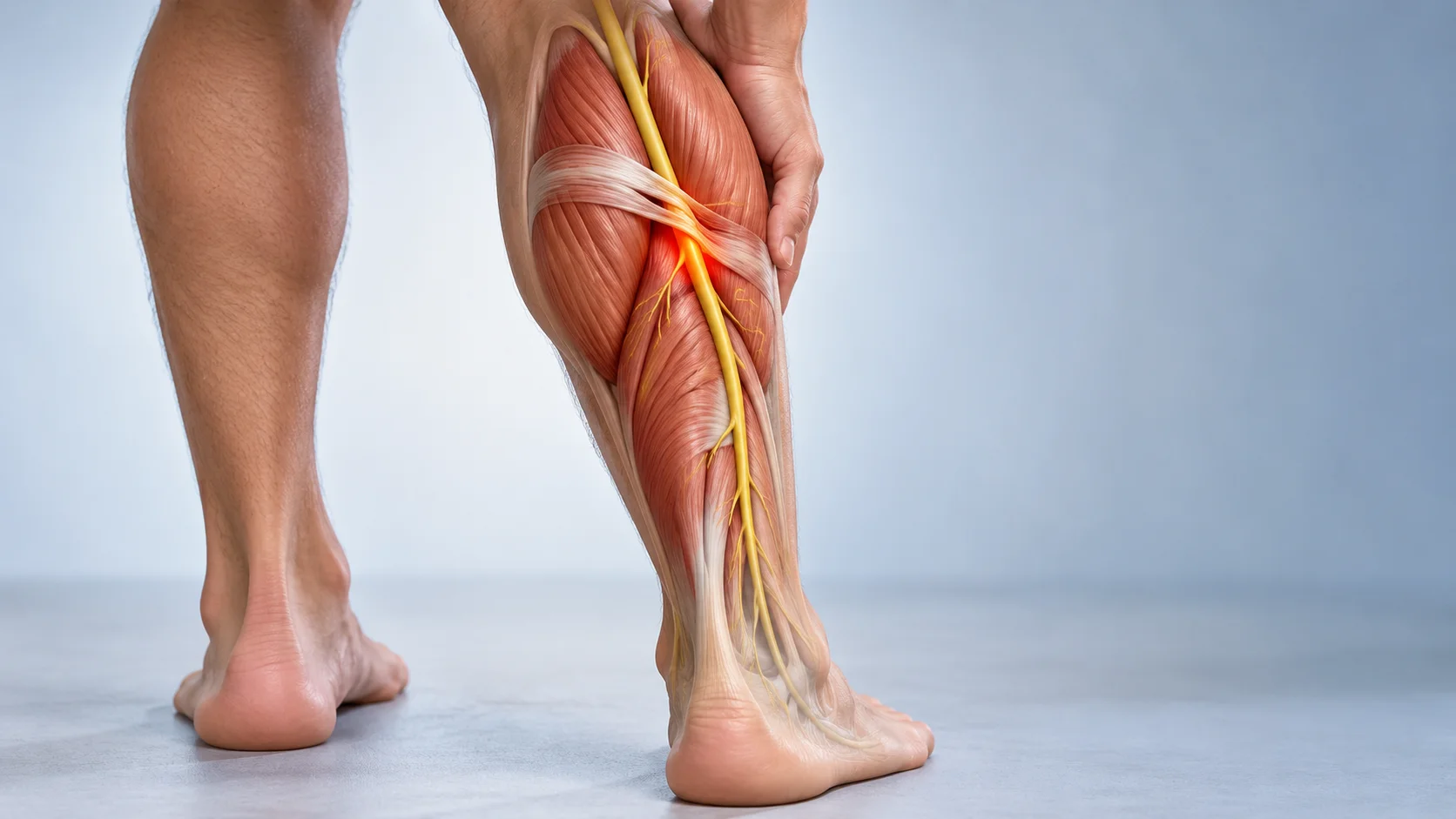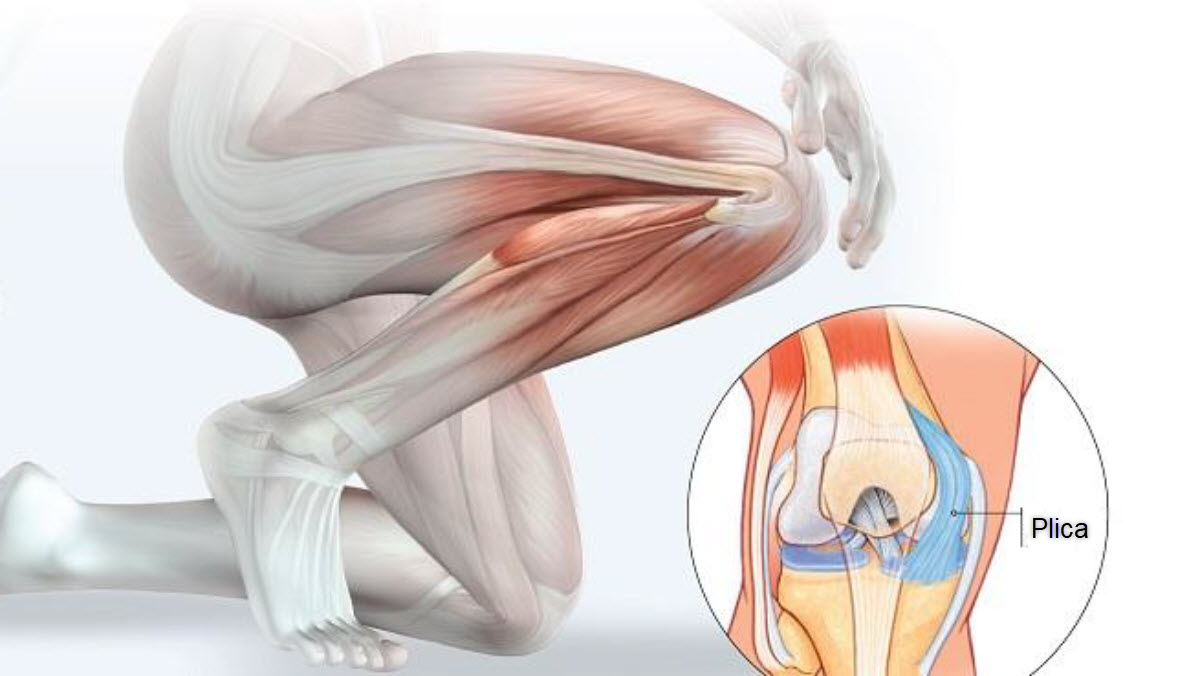
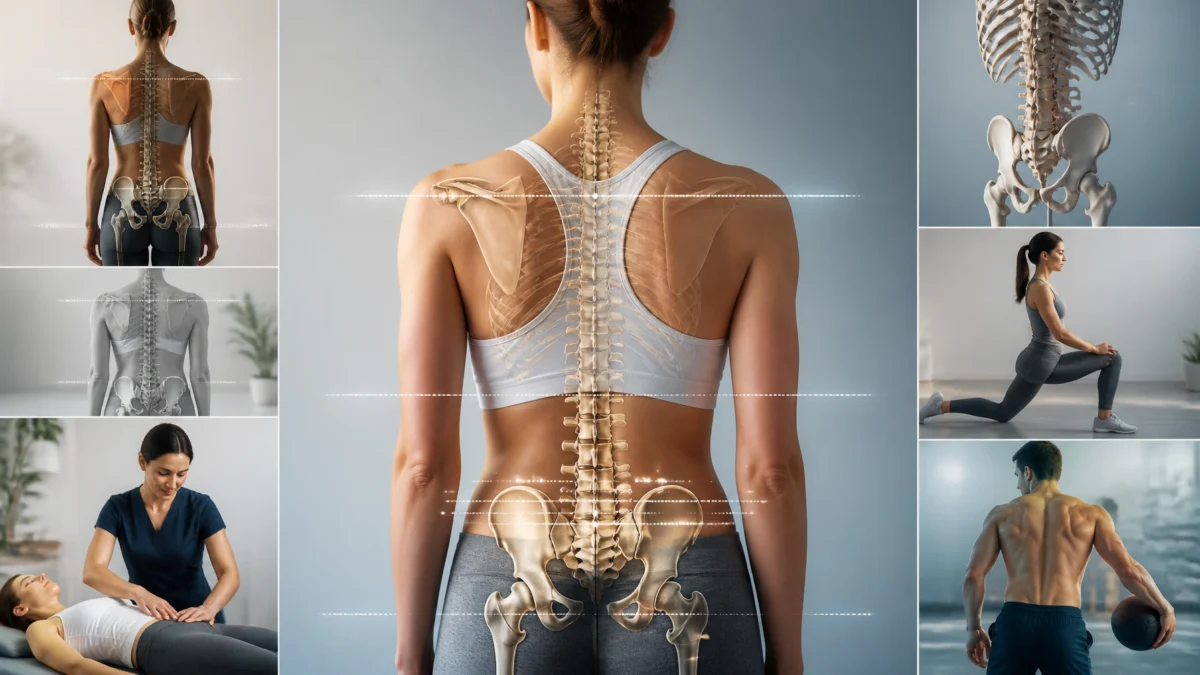
One shoulder sitting higher, a slightly tilted pelvis, or one leg appearing different from the other are extremely common. Yet these asymmetries are often presented as direct causes of pain and as something that must be “straightened.”
Current evidence calls for more caution. A visible asymmetry can be real without automatically being pathological or responsible for symptoms.
Is the Human Body Perfectly Symmetrical?
No. Side dominance, anatomy, habits, sports, and adaptations across life naturally produce differences.
An asymmetry is therefore not a diagnosis in itself.
Does a Tilted Pelvis Necessarily Cause Low Back Pain?
No. A recent meta-analysis on postural asymmetry and low back pain found some average differences, including slightly greater pelvic tilt in people with low back pain.
However, the studies were heterogeneous, and the authors concluded that firm causal conclusions cannot be drawn from these parameters.
Does Association Mean Cause?
No. Even if a postural feature is more common in a group with pain, that does not prove that it caused the pain. It may be an adaptation to pain, a pre-existing characteristic, or simply a clinically unimportant difference.
Why Are Some People Without Pain Very Asymmetrical?
Because the musculoskeletal system has a great capacity to adapt. Many athletes have differences in mobility, muscle mass, or posture without symptoms.
What About People Who Look Very “Straight”?
They can still have pain. Apparently ideal posture does not protect a person from pain. This reminds us that pain depends on many factors and cannot be reduced to body geometry.
Why Aren’t the Shoulders Always the Same Height?
Hand dominance, the rib cage, scoliosis, musculature, work habits, and neck position can all contribute to a visible difference. A higher shoulder does not automatically mean that a muscle needs to be released.
Can an Asymmetry Sometimes Be Relevant?
Yes. Some major asymmetries may be related to pathology or functional limitation. Structural scoliosis, deformity after fracture, neurological weakness, or a major anatomical leg-length difference may justify more specific assessment.
How Can We Know Whether an Asymmetry Is Relevant?
The osteopath can ask whether it is new, associated with symptoms, truly changes function, is accompanied by weakness, varies under different loads, or appears clearly structural.
Why Is a Posture Photograph Not Enough?
Static posture captures a moment. It does not show how the person walks, carries a load, bends, or recovers after effort. It also does not measure pain, capacity, or tolerance to movement.
Can an Osteopath Palpate a “Rotated” Pelvis?
Palpation of pelvic landmarks is commonly used, but several studies show limited inter-practitioner reliability for some positional tests.
A difference felt under the fingers should therefore not be presented as a precise anatomical measurement.
Why Can the Pelvis Feel Different From One Session to Another?
The patient’s position, muscle tone, breathing, and even how the practitioner places their hands can influence the palpatory impression. Variation does not necessarily mean that the pelvis is constantly moving out of position.
What Does a Leg-Length Difference Mean?
There are true anatomical differences and apparent differences related to position or movement. Small asymmetries are common. They do not automatically require a heel lift or manual correction.
Should Perfect Symmetry Be the Goal?
No. Perfect symmetry is neither necessary nor realistic. Excellent function can exist in an asymmetrical body.
Why Can Pursuing Perfect Posture Be Harmful?
If a patient believes they must stay perfectly straight to prevent pain, they may become hypervigilant and avoid normal positions. The message “your pelvis is crooked” can also create an unnecessary sense of fragility.
Are There “Bad Postures”?
Some positions can become uncomfortable when held for a long time, but no single posture is universally bad. Variation is often more important than maintaining one ideal position permanently.
Why Can Asymmetry Change With Pain?
A person in pain may spontaneously unload one side, change shoulder height, or shift their weight. In that situation, the asymmetry may be a consequence of pain rather than its cause.
What Happens When the Patient Voluntarily Changes Posture?
Sometimes pain decreases, and sometimes it does not. That response is more useful than appearance alone. If a postural modification reproducibly improves a task, it can be used temporarily without being presented as the only correct posture.
Do Athletes Need to Be Perfectly Symmetrical?
No. Many sports create side-specific adaptations. A tennis player, thrower, or jumper may develop differences in strength or mobility. The clinical goal is to determine whether those adaptations remain compatible with performance and load tolerance.
When Does an Asymmetry Deserve Investigation?
- new or progressive deformity;
- trauma;
- unexplained muscle weakness;
- rapidly progressing scoliosis;
- focal bone pain;
- neurological symptoms;
- major asymmetry in a child or adolescent.
Can Manual Treatment Temporarily Change Posture?
Yes. Some interventions may alter mobility, tone, or the position adopted immediately after a session. But a rapid visual change does not prove that the original problem was a “misalignment.”
What Should the Osteopath Aim For?
Rather than imposing symmetry, the practitioner can aim for less pain, more useful movement, better load tolerance, sufficient strength, and greater confidence in different positions.
How Can Unnecessary Worry Be Avoided?
It is better not to announce a common asymmetry as if it were a serious diagnosis. When a difference is visible, the practitioner can describe it without automatically assigning pathological meaning.
Should a Painless Asymmetry Be Corrected?
Usually not, unless there is a particular context. An observation without symptoms or limitation does not need to become a treatment target. Systematically treating every anatomical difference risks medicalizing normal variation.
How Can an Asymmetry Be Explained to the Patient?
“I can see a small difference between the two sides. That is common and does not automatically mean something is out of place. Let’s see whether the difference has a real effect on your movement or pain.”
What Is the Role of Osteopathy?
An osteopath can observe asymmetries, but should place them in a functional context. An asymmetry worth treating is one that appears genuinely related to the problem and whose modification improves a relevant function.
The goal is not to transform every body into a perfectly symmetrical model.
Can an Asymmetry Be Functional Rather Than Anatomical?
Yes. A person may stand more on one leg, slightly rotate the trunk, or elevate one shoulder out of habit without a major skeletal difference. When the instruction or task changes, the asymmetry may decrease immediately.
This variability matters: if the position changes easily, it is difficult to present it as a fixed structural defect.
Why Is Movement Often More Informative Than Posture?
Two people with the same pelvic tilt at rest may function very differently. One may run, lift, and walk without difficulty; the other may have pain during a specific task. Dynamic observation helps determine whether a particular strategy actually increases symptoms.
For the osteopath, it is therefore useful to watch the patient stand up, walk, squat, rotate, or carry a load rather than basing the entire analysis on a static photograph.
Can Manual Correction of an Asymmetry Be Temporarily Useful?
Yes, if it improves a movement or reduces pain. But the result should be described cautiously. A post-treatment change may reflect less pain, different muscle recruitment, or a new chosen position rather than permanent correction of a displaced bone.
How Can We Know Whether the Asymmetry Really Needs Treatment?
A simple question helps: if the asymmetry changes, does the function that causes the problem improve? If not, it is probably unnecessary to make the asymmetry the main treatment target.
Why Can Unilateral Strength Be More Relevant?
In some cases, the difference between sides is mainly a difference in capacity. Testing strength, balance, or endurance may provide more useful information than visually measuring a few millimetres. The plan can then target capacity rather than alignment.
Conclusion
Pelvic or shoulder asymmetry can be visible and measurable yet still have little clinical importance. Evidence on posture and low back pain shows some associations, but not a simple cause-and-effect relationship.
In osteopathy, it is more relevant to evaluate what the person can do, what reproduces symptoms, and what improves function than to pursue perfect symmetry as a treatment goal.
References
- Sugavanam T, et al. Postural asymmetry in low back pain – a systematic review and meta-analysis of observational studies. Disabil Rehabil. 2025;47:1659-1676.
- Pelvic Palpatory Tests in Manual Therapy and Osteopathy: A Critical Review of the Literature and Suggestions for New Research. 2024. PMID:39114222.
- Reliability and validity of manual palpation for the assessment of patients with low back pain: a systematic and critical review. 2021. PMID:34446040.