
Understanding your body without letting analysis replace every experience
We can accumulate knowledge about our body yet find it difficult simply to inhabit it. Knowing a muscle’s name, understanding a pain mechanism or identifying a postural habit provides useful reference points. But an explanation does not fully replace the sensation of a foot on the floor, an easier movement or effort that has become less necessary.
This article offers an educational reflection by the author: allowing an alternation between understanding and experiencing. It presents neither a diagnostic method nor evidence of efficacy specific to osteopathy. The cited research illuminates certain concepts—body perception, pain, attention, adaptation—without automatically validating this proposal as a whole. Preserving this distinction allows exploratory thinking without granting it scientific certainty.
The described body and the lived body
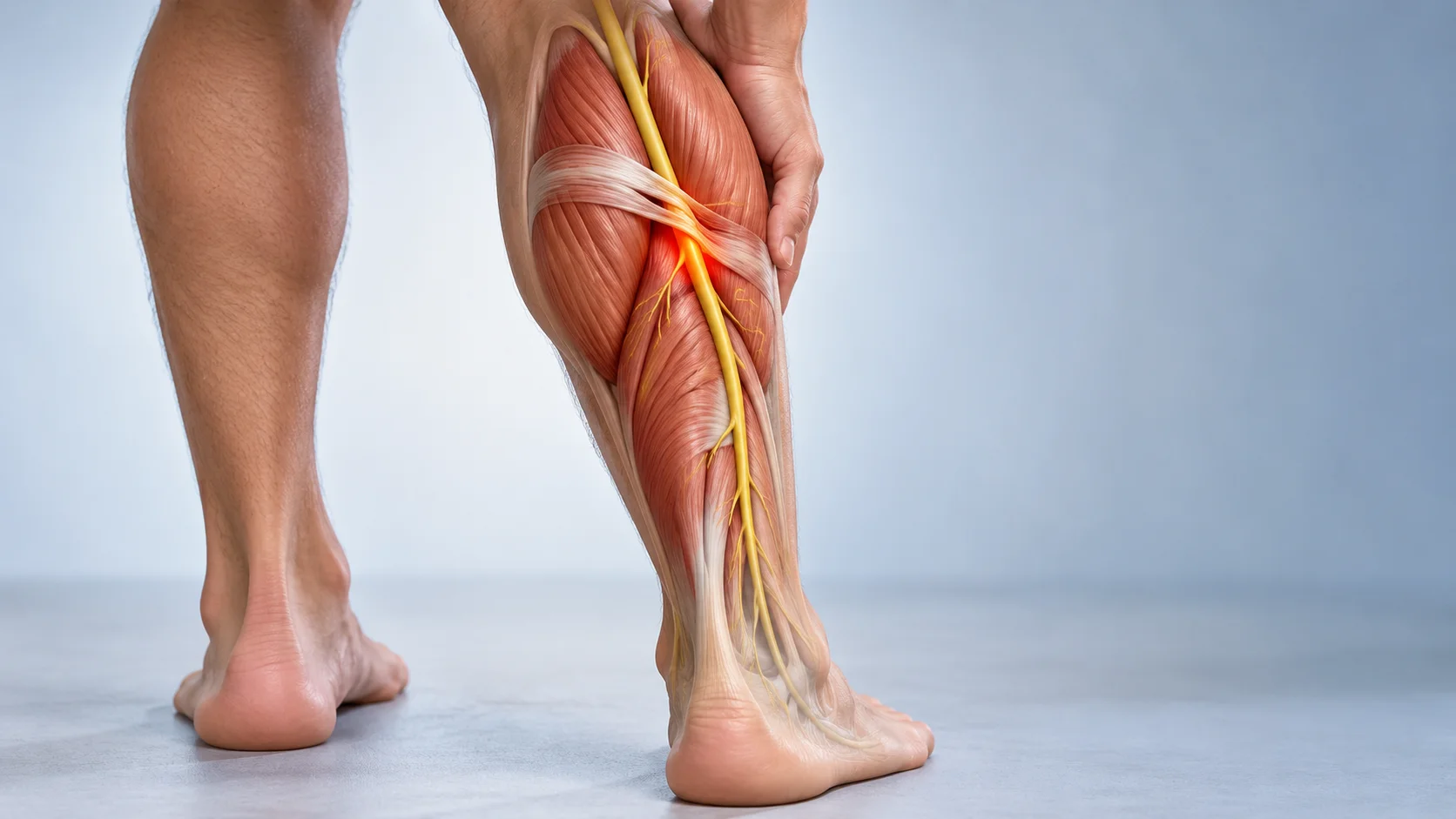
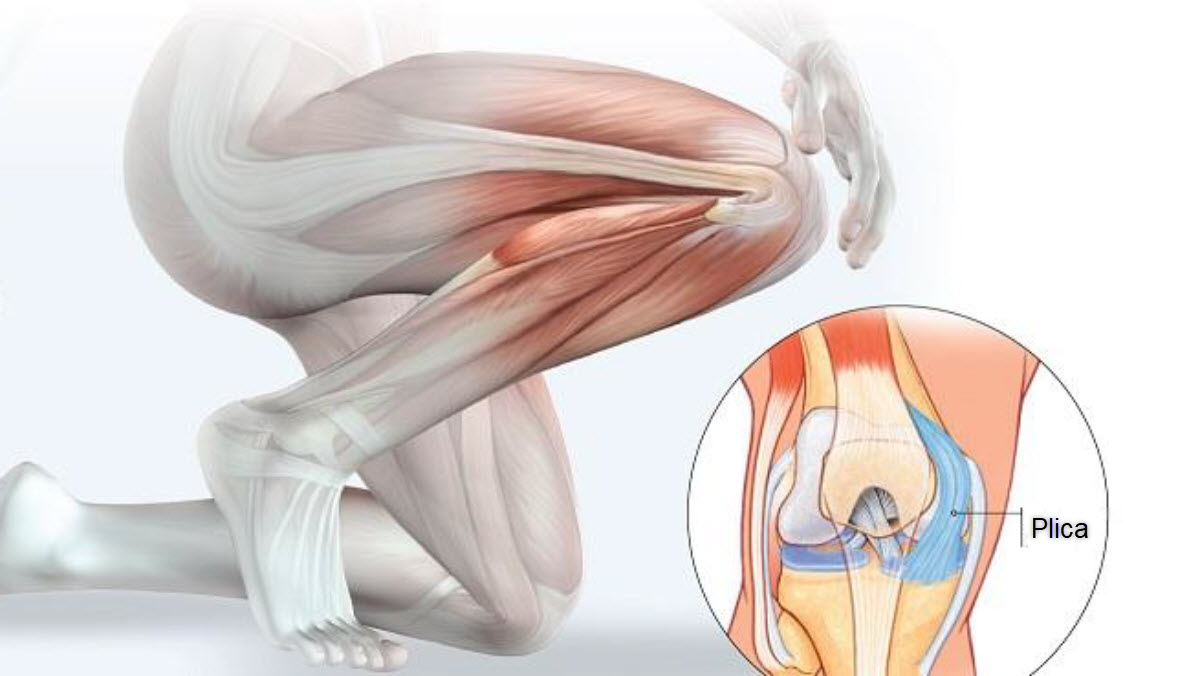
We often speak about the body as an object: “my neck is stiff,” “my back is fragile,” “my pelvis is unbalanced.” The anatomical and medical perspective is essential. It helps us understand functions, diseases and injuries, and identify situations requiring care. It does not, however, tell us everything about present experience.
There is also a lived body: the weight of the arms, how the chest accompanies breathing, the effort of a movement or a sense of stability. Several systems contribute. Proprioception provides information about position, movement and force; interoception concerns perceiving and processing information from the internal state. These are not single abilities that can be summarized as “listening well to your body.” [1][2]
Describing a sensation and interpreting its cause are two different operations. “I feel tension” does not mean “I know what causes it.” We can acknowledge the experience without immediately imposing a story. This pause in interpretation must never be used to ignore a medical warning sign.
When understanding becomes constant monitoring
A person may know their diagnoses, the regions involved and different pain mechanisms while feeling less and less free to move. Every variation becomes information to analyze: tension must have a cause, an asymmetry seems to require correction, an unfamiliar sensation becomes worrying. The body risks becoming nothing more than a problem to solve.
This is not about blaming people for taking an interest in their health. Pain is real and can naturally lead to a search for explanations. Its contemporary definition emphasizes a personal experience influenced by biological, psychological and social factors; respecting it does not require reducing the symptom to just one of those factors. [3]
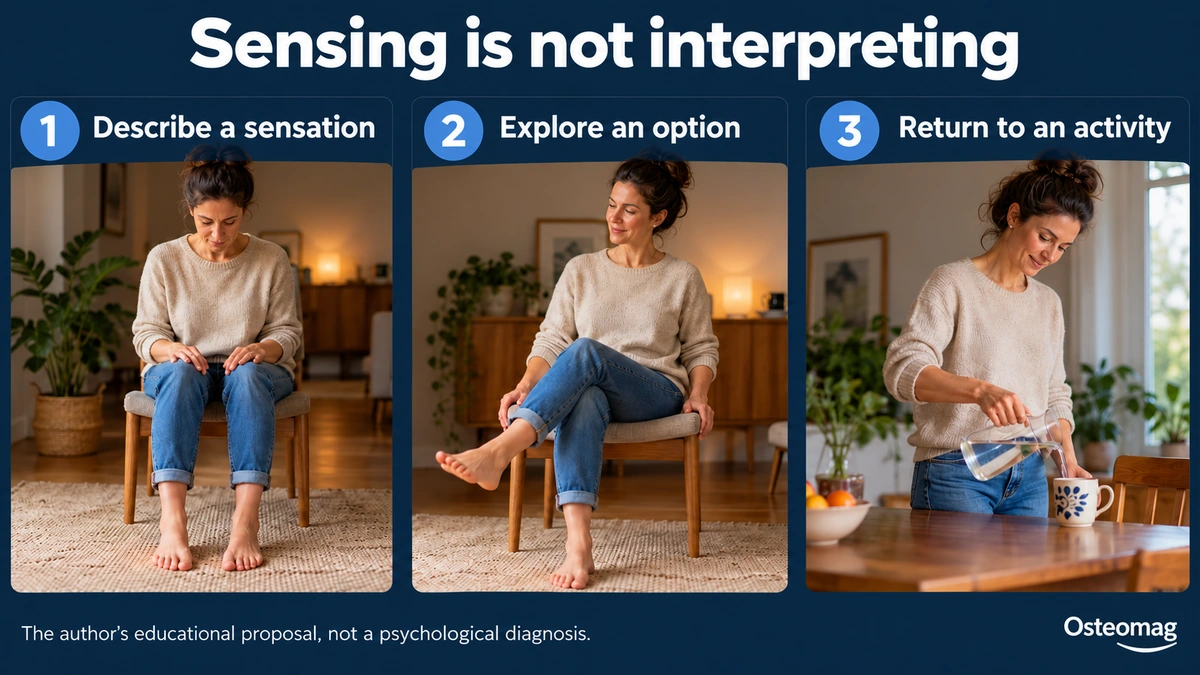
The author’s proposal is more modest: when the problem has been assessed and no new warning sign appears, it may sometimes be possible to suspend the search for an explanation and observe a concrete possibility. “What happens if I change position slightly?” becomes a different question from “which structure is still blocked?” This is an option for exploration, not a duty to feel correctly.
The mind is not the body’s enemy
Thinking lets us anticipate, plan, learn and decide. The aim is therefore not to “silence the mind.” There are times to understand and others to try, then reflect on what has just been experienced. Analysis and experience can complement rather than compete with each other.
Research on psychological flexibility examines, among other things, relationships with thoughts, emotions and meaningful actions. A meta-analysis found associations with well-being, but the questionnaires and concepts studied have limitations. [4] A review of mechanisms in acceptance and commitment therapies likewise calls for distinguishing the domains studied and their relationships. [5] These studies do not demonstrate that a mentally more “flexible” person has mechanically more flexible tissues.
In this text, availability is therefore an educational analogy: being able to use several responses depending on the situation, rather than imposing permanent relaxation. It is neither a biomarker nor a measure of mental health obtained through palpation.
Returning to a simple experience
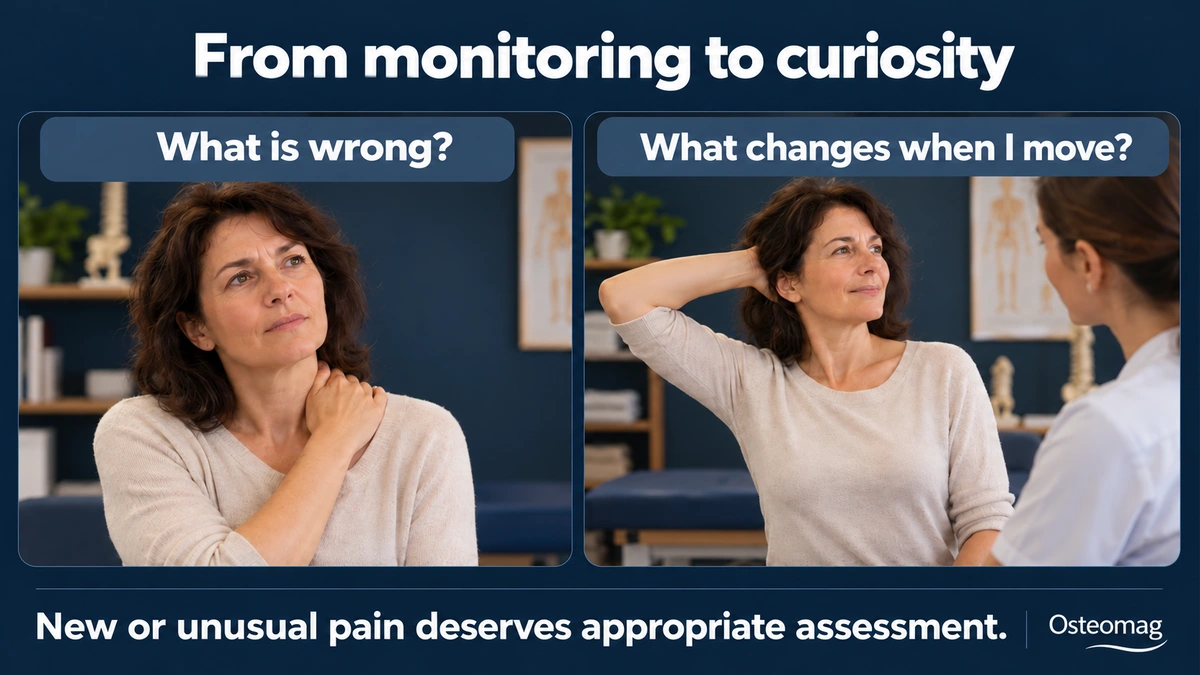
Imagine neck tension that has already been assessed. We can look for a cause—a pillow, activity, posture—and those questions may be relevant. We can also spend a few moments observing the head’s weight, support from a backrest or the difference between two small comfortable ranges of movement. The aim is not to achieve the greatest rotation or test resistance to pain.
Exploration should remain voluntary, brief and adapted. Some people prefer attending to an external task: looking at a marker, picking up a light object or walking toward a chosen place. If internal attention increases anxiety, there is no reason to insist on obtaining a supposedly indispensable sensation. The person can stop the exercise or choose another way forward.
Mindfulness research illustrates this caution. A meta-analysis examining objective measures of body awareness does not justify equating every practice with a general improvement in perceptual accuracy. [6] Another examines participants’ reported perceptions, which are not equivalent to objective performance. [7] Feeling more attentive to the body and detecting a signal more accurately are distinct outcomes.
| Approach | Possible question | Limit |
|---|---|---|
| Understand | Which diagnosis or context should be considered? | An explanation does not describe the entire experience. |
| Observe | What do you feel now? | A sensation does not automatically reveal its cause. |
| Explore | Does a comfortable variation change the task? | A successful attempt does not prove healing. |
| Decide | Does this option help with your activity? | Reassess if the presentation changes or does not progress. |
Sense before correcting, without seeking perfect posture
“Sit up straight,” “pull your stomach in,” “bring your shoulders back”: some instructions can help with a specific task, but repetition may suggest that an ideal position must be maintained all day. Before correcting, it may be useful to ask whether the position is comfortable, whether it can vary and which goal justifies the change.
Pain may be accompanied by diverse motor adaptations whose effects depend on the task and context. The model proposed by Hodges and Tucker does not describe one identical response for everyone. [8] Nor does it justify treating all tension as bad: contracting may be necessary to act, and relaxing may become possible in other circumstances.
Exploring a slower movement or a better-supported position can provide a useful experience without immediately calling it “reprogramming.” We observe what changes, then check whether it genuinely helps an activity. A single experience is not proof of a therapeutic mechanism.
Touch as information, not psychological reading
With explicit consent, a resting hand can provide a sensory reference point. An assisted movement can help compare two sensations or levels of effort. This remains a clinical possibility; it does not demonstrate that the practitioner has retrieved lost information or corrected a specific neural circuit.
Patients can refuse contact, modify it or ask for a pause. A tense shoulder does not automatically mean an emotional burden, and a clenched jaw does not reveal a repressed emotion. The practitioner need not interpret an intimate sensation or make a memory appear. Osteopathy does not replace psychotherapy.
Connecting with a useful activity
Movement can be a way of knowing: a person sometimes discovers a variation that an explanation alone had not made accessible. To prevent exploration becoming another form of monitoring, it helps to return to a concrete goal. Carrying an object, working more comfortably or returning to a walk are more meaningful reference points than a permanent ideal of symmetry.
Musculoskeletal pain guidelines support, in particular, assessing relevant factors, shared decision-making and adapted support. [9] They do not guarantee outcomes for every mind–body approach. If manual care brings no useful benefit, the plan must be open to change, with medical referral or rehabilitation when needed.
Psychological help may also be appropriate when fear, distress or avoidance behaviors become very limiting. For some chronic pain conditions, cognitive behavioral therapies produce small average benefits; this work requires specific competence, not an emotional interpretation of tissues. [10]
Do not turn every sensation into a message
“The body speaks” is a metaphor. Tension may simply be tension; fatigue may relate to sleep, activity or illness. Systematically searching for what the body “means” risks reintroducing the constant interpretation we were trying to move away from.
New, unusual or progressive pain, weakness, loss of sensation, fever or general deterioration requires appropriate assessment. A previously assessed situation may also change. Curious attention does not mean waiting in the face of a concerning sign or abandoning indicated care. [9]
Knowing without losing yourself
We do not have to choose between knowing our body and inhabiting it. Science helps us understand and recognize risks. Experience informs us about comfort, effort and present possibilities. In the author’s proposal, the practitioner offers an option, the person tries it, then the experience is observed and discussed. “The body responds” is a figure of speech here, not diagnostic proof.
The point is not to silence one to hear the other. It is to let understanding and bodily experience become complementary again, without demanding perfect perception, obligatory relaxation or a hidden story behind every sensation.
References
- [1] Khalsa SS, Adolphs R, Cameron OG et al. Interoception and Mental Health: A Roadmap. Biol Psychiatry Cogn Neurosci Neuroimaging. 2018;3(6):501-513. doi:10.1016/j.bpsc.2017.12.004.
- [2] Proske U, Gandevia SC. The proprioceptive senses: their roles in signaling body shape, body position and movement, and muscle force. Physiol Rev. 2012;92(4):1651-97. doi:10.1152/physrev.00048.2011.
- [3] Raja SN, Carr DB, Cohen M et al. The revised International Association for the Study of Pain definition of pain: concepts, challenges, and compromises. Pain. 2020;161(9):1976-1982. doi:10.1097/j.pain.0000000000001939.
- [4] Ong CW, Barthel AL, Hofmann SG. The Relationship Between Psychological Inflexibility and Well-Being in Adults: A Meta-Analysis of the Acceptance and Action Questionnaire. Behav Ther. 2024;55(1):26-41. doi:10.1016/j.beth.2023.05.007.
- [5] Macri JA, Rogge RD. Examining domains of psychological flexibility and inflexibility as treatment mechanisms in acceptance and commitment therapy: A comprehensive systematic and meta-analytic review. Clin Psychol Rev. 2024;110:102432. doi:10.1016/j.cpr.2024.102432.
- [6] Schwartz K, Ganster FM, Voracek M et al. Mindfulness and Objective Measures of Body Awareness: A Preregistered Systematic Review and Multilevel Meta-Analysis. Biopsychosoc Sci Med. 2025;87(4):235-248. doi:10.1097/PSY.0000000000001381.
- [7] Treves IN, Chen YY, Wilson CL et al. A meta-analysis of the effects of mindfulness meditation training on self-reported interoception. Sci Rep. 2025;15(1):38889. doi:10.1038/s41598-025-22661-4.
- [8] Hodges PW, Tucker K. Moving differently in pain: a new theory to explain the adaptation to pain. Pain. 2011;152(3 Suppl):S90-S98. doi:10.1016/j.pain.2010.10.020.
- [9] Lin I, Wiles L, Waller R et al. What does best practice care for musculoskeletal pain look like? Eleven consistent recommendations from high-quality clinical practice guidelines: systematic review. Br J Sports Med. 2020;54(2):79-86. doi:10.1136/bjsports-2018-099878.
- [10] Williams ACC, Fisher E, Hearn L et al. Psychological therapies for the management of chronic pain (excluding headache) in adults. Cochrane Database Syst Rev. 2020;8(8):CD007407. doi:10.1002/14651858.CD007407.pub4.