Observe the shape, then assess symptoms and abilities
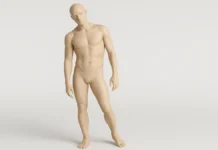
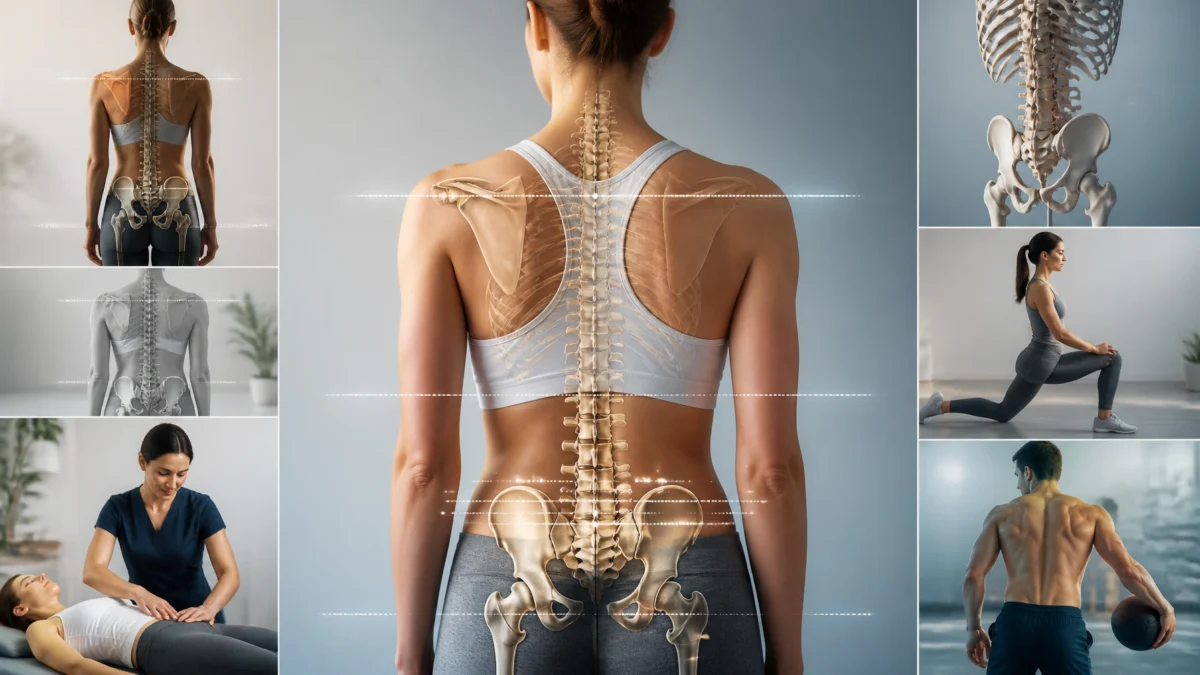
A slightly higher shoulder, a pelvis that appears tilted, or a more prominent shoulder blade can easily draw attention. These differences may be longstanding, vary with position, and be compatible with comfortable activity. In some contexts, they may also accompany a problem that warrants examination. The word “asymmetry” alone does not make it possible to distinguish between these situations.
The right question, therefore, is not so much “should everything be straightened?” as “what does this observation contribute to understanding this person?” Its onset, progression, symptoms, and abilities matter. A stable difference without limitation is not automatically treated as a disease; a new difference accompanied by weakness should not be dismissed as merely a matter of posture.
Key takeaway
A visible asymmetry is not a diagnosis. A recent, progressive, or trauma-related change, or one accompanied by loss of function, warrants an appropriate assessment, even if a longstanding asymmetry appeared to have no consequences.
The body is not perfect geometry
The two sides do not always perform the same tasks. Hand dominance, sports participation, and work habits may be accompanied by differences in development or movement. The rib cage, muscles, and bony contours are not necessarily perfectly symmetrical. However, the variation observed is not enough, on its own, to determine that a particular difference is normal for a patient.
It is important to distinguish between an observation of body shape, an anatomical measurement, and a difference in ability. A higher shoulder in a photograph does not directly indicate arm strength. A tilted pelvis does not demonstrate the bony length of the legs. One person may bear weight differently and walk comfortably, while another may experience difficulty without any obvious asymmetry.
This reasoning respects the shape of the body without making it the sole goal of care. If the person can perform their activities, the observation is stable, and no specific signs are found, seeking perfect symmetry may be of little value. Some situations, particularly during growth, nevertheless require specific monitoring.
Posture and pain: an association is not enough
The review by Sugavanam and colleagues brings together 46 observational studies comparing postural parameters in people with and without low back pain. It identifies some average differences, particularly in pelvic tilt, but highlights substantial heterogeneity. It does not make it possible to attribute an individual’s pain to a slight observed tilt.[1]
A posture may precede pain, change because of it, or simply coexist with it. Another factor may also influence both. The umbrella review by Swain and colleagues finds no consensus supporting a simple causal relationship between the postures studied, physical exposures, and low back pain.[2]
This does not mean that position never matters. A posture may be less comfortable for a given task, and adapting it may help. But this benefit does not demonstrate that the body was anatomically misaligned. A strategy that is useful during one movement does not become a mandatory rule for every activity.
Pelvis: what does the examination actually measure?
Pelvic landmarks are palpated through tissues that vary in thickness. Position, weight-bearing, and technique can alter what the practitioner perceives. Reviews of palpation show limitations in the reproducibility of several bony landmark or mobility tests. A difference felt under the fingers should therefore not be presented as an exact measurement of displacement.[3] [4]
The pelvis brings together joint structures and muscle attachments that contribute to movement and force transfer. Its orientation in space can change without a bone having moved out of place. Describing “more weight-bearing on the right today” leaves room to verify the observation; claiming that a torsion is responsible for all symptoms requires additional evidence.
The comparison becomes more interpretable when the position, instructions, and testing conditions are reproduced. Even then, it remains one piece of information among others. The history of the complaint, gait, functional mobility, and strength provide context that palpation alone cannot offer.
Situations that call for different responses
| Observation | More reassuring context | What requires greater attention |
|---|---|---|
| Higher shoulder | Longstanding, stable difference; activities well tolerated | Recent onset, significant pain, or weakness. |
| Tilted pelvis | Appearance varies with position, without limitation | New limp, trauma, or progressive deformity. |
| Apparently shorter leg | Small difference not confirmed by an appropriate measurement | After-effects of a fracture or significant impact on walking. |
| More prominent shoulder blade | Known appearance, without loss of ability | Recent change with difficulty raising the arm. |
| Trunk asymmetry in a young person | Variation has been examined and monitoring agreed upon | Suspected curvature or change during growth. |
| Difference in strength between sides | Known adaptation to usual tasks | New, progressive, or unexplained weakness. |
This table avoids two opposing shortcuts: treating every visible difference, or ignoring every difference in the name of diversity. The response depends on the situation. A person who reports a change should be listened to, even if the appearance seems minor at first glance.
Shoulders and shoulder blades: also observe the arm in motion
The shoulder blade moves over the rib cage as the arm moves. Its appearance at rest does not describe its entire function. A more prominent shoulder blade may have several explanations. A new change accompanied by weakness, pain, or loss of range of motion requires examination of the muscles and, depending on the signs, the nerves involved.[8] [9]
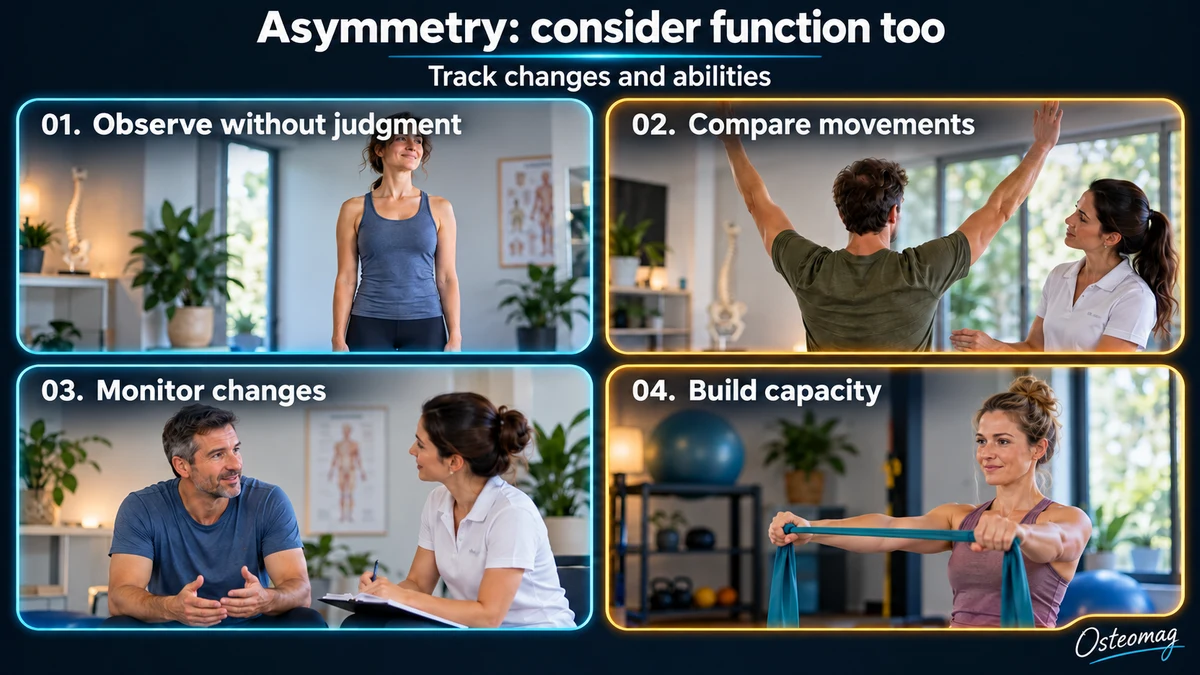
The professional can observe movement, compare abilities, and identify what reproduces the complaint. The aim is not to ask every person to keep their shoulders at the same level all day. A position that is useful for one exercise may be unsuitable for another task, and postural advice does not replace an investigation when strength is declining.
A truly winged shoulder blade associated with nerve injury is not simply a bad habit. References on scapular winging describe assessment and management tailored to the mechanism. This distinction warrants referral when the history and examination indicate more than a simple variation in appearance.[9]
Leg length: appearance and anatomy
An anatomical discrepancy means that the bony lengths differ. An apparent difference may depend on the configuration of the hips, knees, pelvis, or weight-bearing. Comparing the feet on an examination table is not necessarily enough to distinguish these mechanisms. The decision to add a correction requires an appropriate measurement and objective.
The review by Alfuth and colleagues examines the validity and reliability of the available methods. The standing block test appears to be among the most useful clinical methods; a weight-bearing radiograph of the lower limbs can measure an anatomical discrepancy when warranted. The choice depends on the question and the expected consequences.[5]
A heel lift should therefore not be prescribed automatically after a quick impression that one leg is shorter. If a correction is being considered, its value should be assessed during walking, for comfort, and in the tasks concerned. A sense of improvement may help guide the choice, without retrospectively demonstrating that all pain resulted from a difference in length.
In children or adolescents, assess growth
A difference in shoulder height, a more prominent hip, or trunk asymmetry may prompt an assessment for scoliosis. The diagnosis is not based on a single photograph. Examination and, when necessary, imaging can clarify the curvature and monitoring needs, particularly during growth.[6] [7]
Known scoliosis does not automatically preclude an active life. Monitoring and management depend on age, the curvature, and how it changes over time. It is preferable to follow an appropriate plan rather than trying to correct a higher shoulder on one’s own with exercises chosen solely on the basis of its appearance.[6]
When changes over time alter the priority
A deformity following trauma, significant pain, or an inability to use the limb normally requires prompt assessment. New weakness, loss of sensation, or increasing difficulty walking also calls for referral. An asymmetry associated with these signs should not be interpreted merely as a postural variation.
New urinary or bowel problems associated with low back pain and neurological symptoms require urgent assessment. The priority is then to identify a condition requiring specific management rather than to correct alignment.[13]
Progressive changes should also be reported: a difference becoming more pronounced, declining ability, or a developing limp. Repeated comparisons should remain simple and relevant. Constantly photographing oneself can increase concerns without providing a reliable measure of tissue condition.
Use the response to movement
A change in position can be tested during a task that causes difficulty, if the situation allows. Does the movement become more comfortable? Can the person do more work? If the result is repeated under comparable conditions, this strategy may have practical value.
The purpose of the trial is not to discover a mandatory ideal posture. It helps identify options. A person may prefer to vary how they bear weight, temporarily modify a movement, or work on an ability that is lacking. The benefit should be assessed with them, beyond the practitioner’s visual impression.
Strength, endurance and coordination may therefore be more relevant goals than shoulder height alone. Exercise has a specific evidence base for chronic low back pain; this covers a variety of populations and programmes and does not validate a universal programme aimed at restoring symmetry.[11]
The role of osteopathy
An osteopathic approach can combine observation of the body with the person’s history, movements and abilities. If manual contact provides comfort, its effect should be assessed during an important task. Manual therapies may work through multiple mechanisms; a change in posture after treatment does not prove that a displaced bone has just been put back into place.[10]
Goals and options are discussed with the person. If they wish to better understand a visible difference, the explanation should acknowledge uncertainty and specify the signs to monitor. If they want to carry a load or return to a sport, follow-up is more useful when it measures that activity rather than promising perfect alignment.[12]
A cautious approach also includes the decision not to intervene in a stable variation with no identified consequences. This decision can be revisited if symptoms or function change. Osteopathy remains complementary to the necessary investigations and rehabilitation when a specific condition is suspected.
Understanding form, supporting function
The body can function with differences between its two sides. Their significance is determined by changes over time, symptoms and activities. A useful examination can therefore recognise a variation of little concern, measure what needs to be measured and refer when a new sign warrants it.
The final question remains practical: does this observation help the person move better, understand their complaint or receive appropriate care? If it does not change any relevant decision, it does not necessarily deserve to become the focus of treatment. Form provides a clue; function and changes over time determine its significance.
References
- [1] Sugavanam T et al. Postural asymmetry in low back pain: a systematic review and meta-analysis of observational studies. 2025.
- [2] Swain CTV et al. No consensus on causality of spine postures or physical exposure and low back pain. 2020.
- [3] Nolet PS et al. Reliability and validity of manual palpation for the assessment of patients with low back pain. 2021.
- [4] Colonna S, Mazzanti M. Pelvic palpatory tests in manual therapy and osteopathy. 2024.
- [5] Alfuth M et al. Leg length discrepancy: validity and reliability of clinical assessments and imaging diagnostics. 2021.
- [6] NHS. Scoliosis.
- [7] AAOS. Idiopathic scoliosis in children and adolescents.
- [8] AAOS. Scapular shoulder blade disorders.
- [9] Scapular winging: evaluation and treatment. AAOS exhibit selection. 2015.
- [10] Bialosky JE et al. The mechanisms of manual therapy in the treatment of musculoskeletal pain. 2009.
- [11] Hayden JA et al. Exercise therapy for chronic low back pain. 2021.
- [12] NICE. Shared decision making. NG197.
- [13] NICE. Suspected neurological conditions: recognition and referral. NG127.