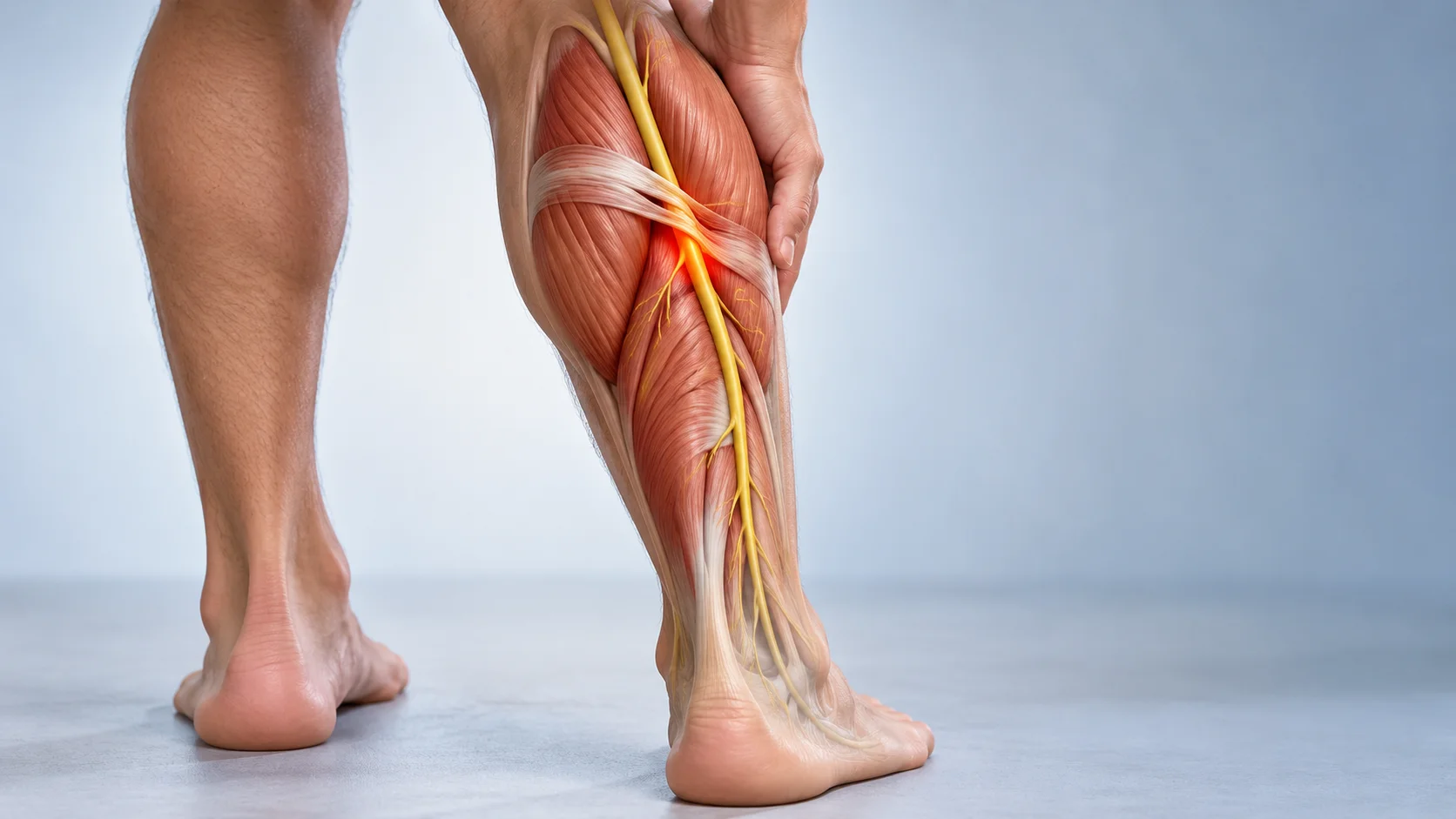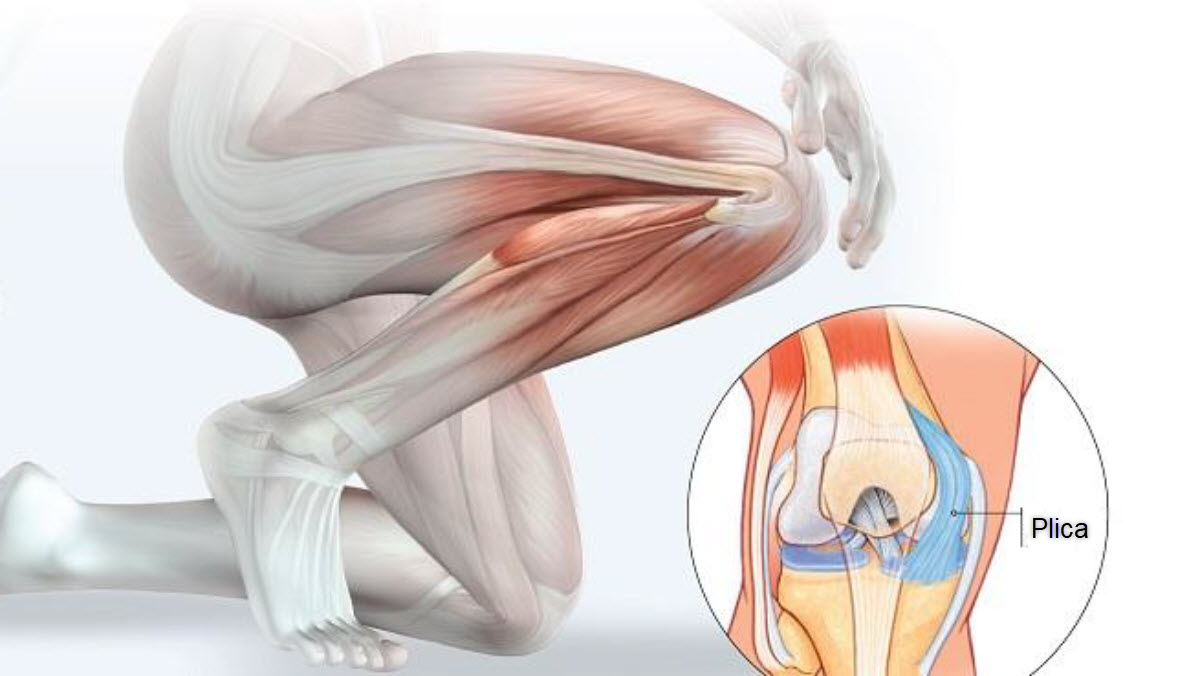

Understanding the difference between immediate relief and lasting recovery
A person arrives in pain, receives manual care, notices that movement is easier, then experiences some of the symptoms again the next day. They may wonder: “If I was better yesterday, why is the pain coming back?” Some imagine that a joint has moved out of place again, or that the session was useless.
There is no single explanation for this pattern. A change in pain during a consultation does not, on its own, tell us about tissue healing, strength or tolerance of a day of activity. Conversely, the reappearance of a symptom does not automatically prove a new injury. Understanding what is happening requires consideration of the clinical course, function and possible warning signs, rather than interpreting a single before-and-after measurement. [1][2]
Why can pain change within minutes?
Pain is not a direct, isolated measurement of a tissue’s mechanical condition. During a session, contact, position, movement, attention, expectations and the therapeutic relationship may change simultaneously. A less uncomfortable position or a better-tolerated movement may alter the immediate experience, without allowing the result to be attributed to a single mechanism.
A 2025 review describes possible multisystem responses to manual therapies, with varying levels of evidence for the mechanisms studied. It emphasizes that their clinical value as mediators of outcomes remains insufficiently established. Observing a change therefore does not establish that the practitioner has identified and corrected “the cause.” [1] The perspective of the IASP working group proposes considering manual care within an integrated, person-centered approach. It does not demonstrate a universal mechanism for every session. [2]
Does rapid improvement prove realignment?
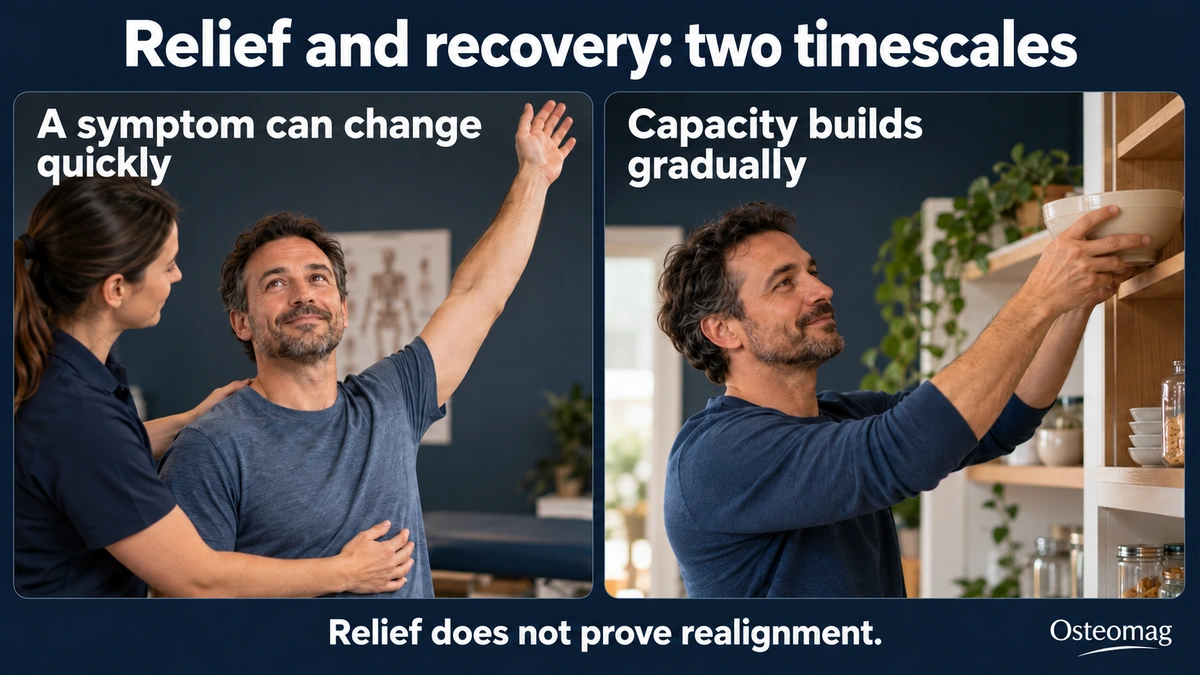
No. Turning the head further or raising the arm with less pain is a real change, but not evidence that a structure has been put back into place. Several factors may contribute to movement: pain, reported apprehension, effort, coordination or familiarity with the task. Distinguishing them requires more than a successful test immediately after care.
It would also be excessive to conclude that the result is “only psychological.” A contextual effect is not an imaginary effect, and a symptom change does not establish an anatomical transformation. A cautious explanation might simply be: “Today, this movement has become more accessible; let’s see whether that helps with activities that matter to you.” This wording preserves the experience’s value without attributing certainty it cannot provide. [1][2]
What studies of sensitivity allow us to say
Researchers measure pressure pain thresholds before and after manual interventions. This is an experimental outcome, different from everyday pain or participation at work. A 2015 review found immediate changes in some thresholds, while judging their clinical relevance uncertain. [5] A 2023 review did not find a consistent, clinically meaningful immediate effect for the modalities and populations it studied. This demonstrates neither an absence of all manual effects nor a mechanism shared by all pain conditions. [3]
Other reviews report some effects on sensitivity measures, mainly immediately or in the short term. [4] An overview of 30 reviews found conflicting findings and often low to very low methodological quality. [7] Caution means presenting these mechanisms as avenues of research, not as proof that a nervous system has been “reset.”
Research on myofascial techniques also has limitations: particular populations, different interventions and few sufficiently comparable outcomes. An increase in range of motion does not establish that a specific adhesion or fascial restriction has been removed. [6] These distinctions help explain why an effect during a consultation does not necessarily predict its persistence.
Why can symptoms return after the session?
A consultation does not instantly remove every factor involved in a problem. People return to their activities, constraints, periods of sitting or training. With a sensitive shoulder, a prolonged overhead task may exceed current tolerance. This is a hypothesis to check against the history and function, not a rule explaining every recurrence.
Returning pain may also depend on natural fluctuations of a condition, incomplete recovery, disturbed sleep or a diagnosis requiring reassessment. We should therefore not automatically respond: “You overdid it.” That explanation may be wrong and blaming. Details matter: is the symptom the same, more intense, more widespread or accompanied by a new sign?
Improvement followed by a partial return of symptoms is not necessarily a failure. But benefits that are always very brief do not, on their own, justify an indefinite series of sessions either. The plan should be reconsidered if function is not progressing.
Fluctuation does not necessarily mean additional damage
Many musculoskeletal pains do not follow a steady line. A poor night’s sleep, unfamiliar activity or a more demanding period may change the experience. Sleep and pain have bidirectional relationships, and longitudinal research suggests, in particular, that sleep problems may contribute to worsening persistent pain. This cannot predict the day after a session for an individual. [9]
More pain therefore does not always prove a new injury; less pain does not always prove healing. Clinical context remains decisive. After trauma, with inability to bear weight, unusual worsening or a new deficit, transient relief from a session must not be the only reason for reassurance.
| What is observed | What it may indicate | What it does not prove |
|---|---|---|
| Less pain immediately | A modifiable symptom experience | Realignment or tissue healing |
| Easier movement | Better tolerance of that task | Sufficient capacity for the whole day |
| A return of the symptom | A course that needs reassessment | Automatically a new injury |
| Gradually better-tolerated activity | Useful functional improvement | Certain identification of the care’s mechanism |
Can brief relief still be useful?
Yes, if it brings concrete value to the person. A more comfortable period may allow a walk, a task or an adapted exercise. Its benefit is not limited to the number of pain-free hours: we should also ask what that period made possible, whether the activity remains better tolerated and whether reported confidence is changing.
This “window” is a clinical way of describing a possibility, not a demonstrated mechanism for every patient. It is not an invitation to use a temporary absence of pain to ignore medical restrictions or abruptly increase load. A fracture, recent injury or operation has its own instructions, even if comfort improves.
Turning improvement into a gradual return
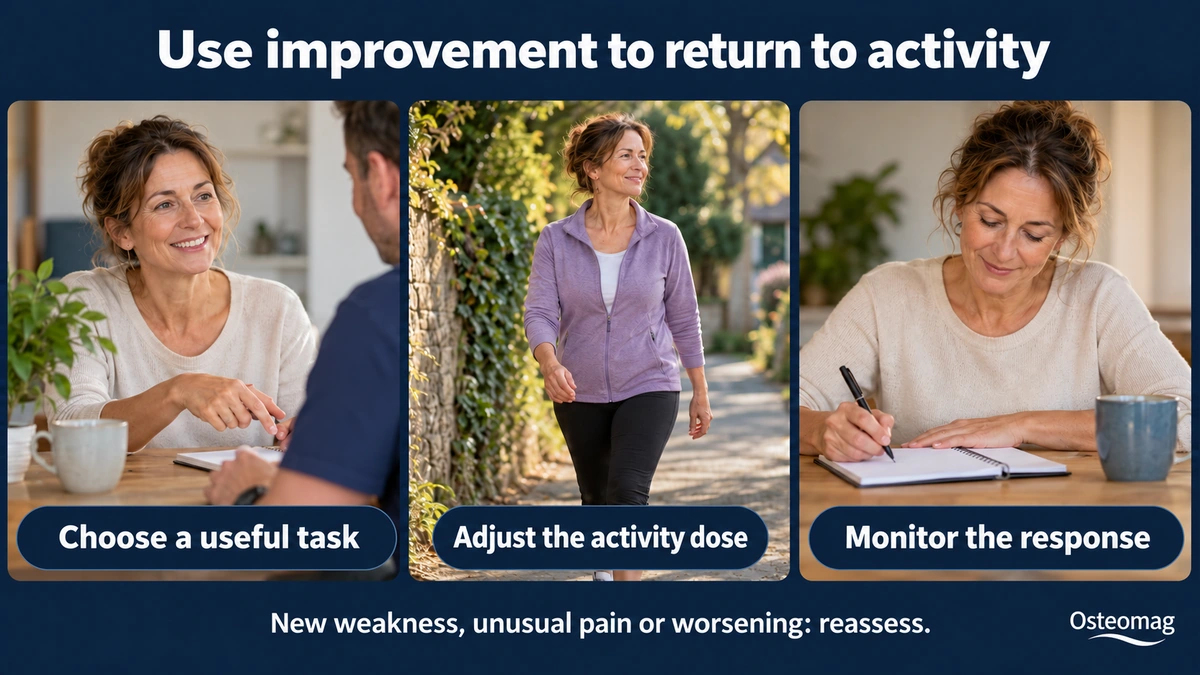
A simple goal makes follow-up more useful: walking to a chosen place, working for a defined period with breaks or resuming a necessary movement. The starting point takes account of diagnosis, abilities and any instructions. Progression can address one variable at a time, such as duration, frequency or difficulty, rather than everything at once.
Research on exercise for chronic nonspecific low back pain supports average benefits, with effects that vary by comparison. It does not provide a single program applicable to every painful body region. [8] WHO guidance for chronic primary low back pain favors individualized care combining relevant interventions; it does not validate every osteopathic method or provide a protocol for all pain. [10]
How can progress be followed without monitoring every sensation?
Brief follow-up can focus on three reference points: the chosen task, its tolerability and recovery afterward. Noting a trend over several days is often more informative than comparing every hour-to-hour variation. The frequency should remain proportionate to the problem; some people prefer an occasional functional reassessment to a permanent diary.
The practitioner can compare the same movement under similar conditions, ask which changes are genuinely useful and check whether independence is increasing. Explanations remain simple: a variation is not necessarily a catastrophe, but it deserves attention if accompanied by an unusual change in the clinical picture. The aim is not to impose an identical level of “acceptable” pain on everyone.
When should the strategy change or medical advice be sought?
If the effect consistently disappears without any functional progress, the history, assessment and goals need revisiting. Another form of care, medical advice or interprofessional coordination may be necessary. Repeating exactly the same care is not the only possible response. Imaging is considered according to clinical indications, not simply because a symptom returns the next day. [2][10]
New or markedly worsened pain after care, weakness, progressive numbness, fever or general deterioration require appropriate assessment. New urinary or bowel problems associated with neurological symptoms, faintness with chest pain or significant shortness of breath warrant urgent assessment. A concerning reaction must not be dismissed as an obligatory part of “detoxification” or healing.
Key points
Immediate relief, tissue recovery and activity capacity are not equivalent. Pain can change quickly, while a lasting return sometimes takes time and active support. The best indicator is not a spectacular demonstration at the end of a session, but useful progress in function, participation and independence. When that progress is lacking, the right question is not “what has moved out of place again?” but “what should we reassess and adapt?”
References
- [1] Keter DL, Bialosky JE, Brochetti K et al. The mechanisms of manual therapy: A living review of systematic, narrative, and scoping reviews. PLoS One. 2025;20(3):e0319586. doi:10.1371/journal.pone.0319586.
- [2] Draper-Rodi J, Newell D, Barbe MF et al. Integrated manual therapies: IASP taskforce viewpoint. Pain Rep. 2024;9(6):e1192. doi:10.1097/PR9.0000000000001192.
- [3] Jung A, Adamczyk WM, Ahmed A et al. No Sufficient Evidence for an Immediate Hypoalgesic Effect of Spinal Manual Therapy on Pressure Pain Thresholds in Asymptomatic and Chronic Pain Populations: A Systematic Review and Meta-Analysis. Phys Ther. 2023;103(3):pzad003. doi:10.1093/ptj/pzad003.
- [4] Martínez-Pozas O, Sánchez-Romero EA, Beltran-Alacreu H et al. Effects of Orthopedic Manual Therapy on Pain Sensitization in Patients With Chronic Musculoskeletal Pain: An Umbrella Review With Meta-Meta-analysis. Am J Phys Med Rehabil. 2023;102(10):879-885. doi:10.1097/PHM.0000000000002239.
- [5] Voogt L, de Vries J, Meeus M et al. Analgesic effects of manual therapy in patients with musculoskeletal pain: a systematic review. Man Ther. 2015;20(2):250-6. doi:10.1016/j.math.2014.09.001.
- [6] Webb TR, Rajendran D. Myofascial techniques: What are their effects on joint range of motion and pain? – A systematic review and meta-analysis of randomised controlled trials. J Bodyw Mov Ther. 2016;20(3):682-99. doi:10.1016/j.jbmt.2016.02.013.
- [7] Rodgers LJ, Bialosky JE, Minick SA et al. An overview of systematic reviews examining the quantitative sensory testing-derived hypoalgesic effects of manual therapy for musculoskeletal pain. J Man Manip Ther. 2024;32(1):67-84. doi:10.1080/10669817.2023.2267954.
- [8] Hayden JA, Ellis J, Ogilvie R et al. Exercise therapy for chronic low back pain. Cochrane Database Syst Rev. 2021;9(9):CD009790. doi:10.1002/14651858.CD009790.pub2.
- [9] Finan PH, Goodin BR, Smith MT. The association of sleep and pain: an update and a path forward. J Pain. 2013;14(12):1539-52. doi:10.1016/j.jpain.2013.08.007.
- [10] World Health Organization. WHO guideline for non-surgical management of chronic primary low back pain in adults in primary and community care settings. Geneva: WHO; 2023. ISBN 9789240081789.