
Muscle soreness, tendons and unusual signs: understanding delayed pain
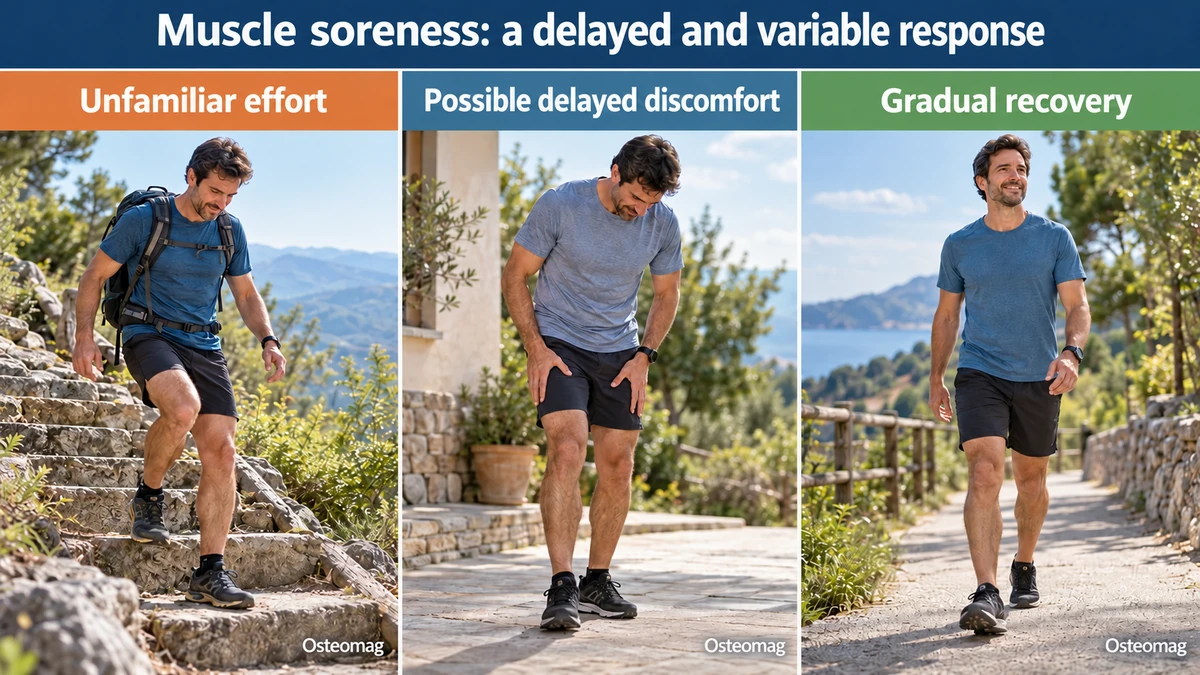
You go hiking, work out at the gym or spend several hours gardening, and everything feels reasonably fine at the time. The next day, you feel it in your thighs, shoulders or back. Then, 24 to 48 hours after the effort, the pain becomes noticeably worse. This delay is common and does not automatically mean an injury has occurred.
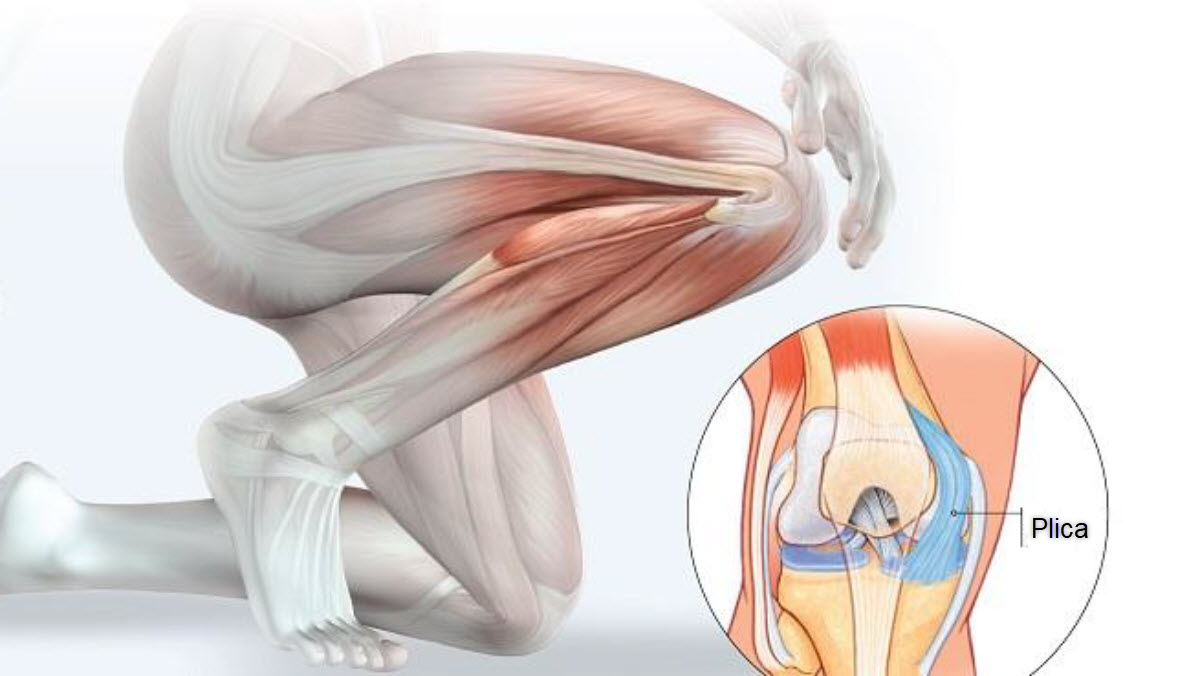
The best-known cause is delayed-onset muscle soreness, or DOMS (delayed onset muscle soreness). However, delayed pain may also reflect tendon overload, an overly rapid increase in training, joint irritation or, less commonly, an actual injury. The timing, type of pain and subsequent course often help distinguish these possibilities.
What is DOMS?
DOMS is muscle pain or tenderness that develops after unfamiliar exercise or effort more intense than someone is used to. It is particularly common after eccentric contractions, when a muscle produces force while lengthening.
Walking downhill, lowering a weight during a biceps curl or controlling the downward phase of a squat are examples of eccentric effort.
Pain generally appears several hours after exercise, often peaks between 24 and 72 hours, then decreases over the following days. Timing and duration vary. [1]
Why is the pain not immediate?
DOMS is not caused by a build-up of lactic acid. Lactate returns towards near-normal levels relatively quickly after exercise.
Instead, delayed soreness appears to involve a combination of microscopic muscle fibre changes, a local inflammatory response, connective tissue changes and a temporary increase in pain receptor sensitivity. [2]
These processes take time to develop, helping explain why pain may be mild immediately after exercise but more intense the next day.
DOMS does not mean a ‘torn’ muscle
Soreness can accompany adaptations after unfamiliar effort, but its intensity does not directly measure microscopic muscle changes. Multiple mechanisms have been proposed; delayed pain does not prove a tear.
An actual muscle tear more often causes sudden pain during or immediately after exertion, sometimes with a snapping sensation, substantial loss of strength, bruising or an inability to continue the activity.
DOMS, by contrast, is generally diffuse and affects the exercised muscle more broadly.
Why do some people experience much more DOMS than others?
The response is highly individual. Several factors can affect its intensity:
- exercise type;
- volume and intensity;
- previous experience;
- familiarity with eccentric contractions;
- sleep and recovery;
- genetics;
- age and training level.
Two people completing the same session may therefore experience very different levels of pain.
The repeated bout effect: the body learns
After an initial unfamiliar session, the body adapts. Repeating the same effort a few days or weeks later generally causes less DOMS.
This phenomenon, known as the repeated bout effect, shows that the muscle and nervous system become more effective at tolerating a previously encountered load. [3]
It helps explain why the first sessions of a new programme are often the most painful.
Can DOMS occur in the back?
Yes. Experimental protocols can induce DOMS in the lumbar muscles. A recent systematic review shows that pain and tenderness can persist for several days after exercise designed to induce lumbar DOMS. [4]
Low back pain beginning the day after unfamiliar exercise can therefore be muscular without necessarily involving damage to a disc or joint.
However, neurological weakness, loss of sensation or urinary problems change the assessment.
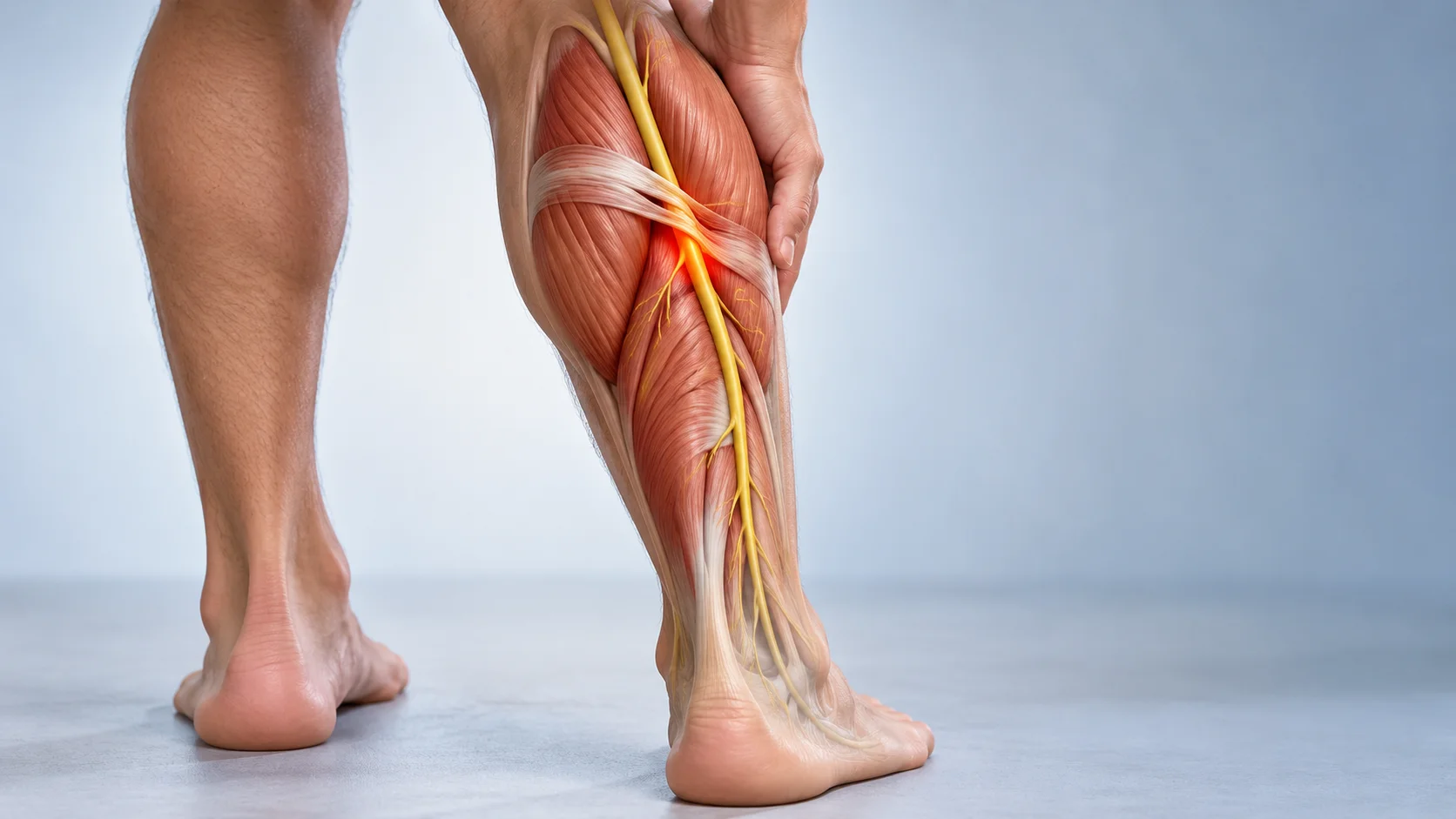
Can a tendon hurt only the next day?
Yes. An overloaded tendon may react several hours after activity, particularly when the load exceeds its current tolerance.
In someone with Achilles, patellar or shoulder tendinopathy, next-day pain is often used as an indicator of the response to loading. [5]
Mild, temporary pain may be acceptable, whereas a substantial increase lasting several days may indicate that progression was too rapid.
DOMS or tendinopathy?
DOMS is generally diffuse within the muscle belly and follows unfamiliar effort.
Tendinopathy more often causes localized pain near the tendon insertion or along its course, reproduced by specific tasks such as jumping, running, climbing stairs or raising the arm.
However, both can coexist, especially when returning to sport.
Why does an increase in loading matter so much?
The body adapts to loading, but adaptation takes time. Suddenly doubling running volume, the number of squats or the length of a hike may expose muscles and tendons to demands beyond their usual capacity.
This mismatch between the imposed load and current capacity explains a substantial share of pain after returning to activity.
The problem is not that loading is inherently bad, but that it increases faster than capacity.
Does delayed pain mean you ‘overdid it’?
Not always. Moderate DOMS can be compatible with a normal session, particularly when an exercise is new.
A more useful question is: does pain gradually decrease, and does function return quickly?
If so, this often reflects normal adaptation. If pain keeps increasing, becomes very localized or causes substantial loss of function, an injury becomes more plausible.
Which signs suggest an actual muscle injury?
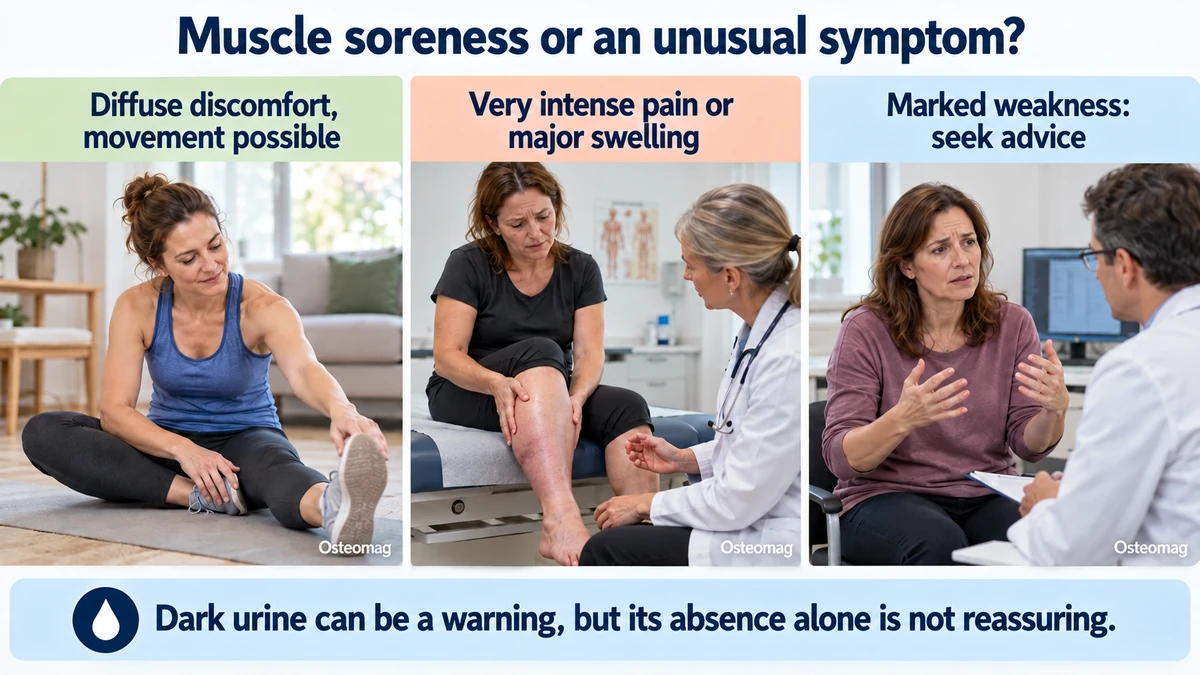
A muscle injury is more strongly suspected with:
- sharp pain during effort;
- a snapping or tearing sensation;
- an immediate need to stop the activity;
- substantial weakness;
- swelling or bruising;
- very localized pain;
- an inability to use the limb normally.
Diffuse soreness beginning the next day after unfamiliar effort is more consistent with DOMS.
Does stretching prevent DOMS?
Available evidence does not show that stretching after exercise substantially prevents DOMS.
A systematic review and meta-analysis of randomized trials found no clinically meaningful improvement in delayed soreness, strength or range of motion with post-exercise stretching compared with passive recovery. [6]
Stretching may feel pleasant, but it is not a guaranteed antidote to soreness.
| Pattern | Possible interpretation | Caution |
|---|---|---|
| Delayed, diffuse muscle discomfort | Possible DOMS | Timing alone does not establish a diagnosis. |
| Reproducible, localized tendon pain | A loading response that needs assessment | Do not impose a universal pain threshold. |
| Sudden pain, weakness or substantial swelling | Possible injury or another complication | Seek assessment rather than pushing through. |
Does massage help?
Recent evidence syntheses suggest that massage may modestly reduce DOMS-related pain at certain time points, particularly around 24 to 72 hours. [7]
The effect is mainly symptomatic. Massage does not necessarily substantially accelerate muscle repair.
It can be used if it feels comfortable, but it is not essential.
Should you use ice?
Cooling may temporarily reduce post-exercise pain. Meta-analyses show some effects on DOMS, but evidence quality varies across cryotherapy methods.
Ice is not mandatory for ordinary muscle soreness. The choice mainly depends on comfort and recovery goals.
What about heat?
Heat may temporarily improve comfort and reduce stiffness. Some reviews report a modest effect on DOMS-related pain.
Like cold, it is primarily a comfort measure.
Should you stop moving completely?
In most cases, no. Light activity may be better tolerated than complete rest: walking, gentle cycling or comfortable movements.
Pain may temporarily decrease during activity through increased muscle temperature and pain modulation.
However, an intense session involving the same very sore muscle group may reduce movement quality and performance.
Can you train with DOMS?
Yes, if pain is moderate and movement quality remains good. Reducing the load, training another muscle group or choosing a lighter session may be preferable.
If pain is severe or clearly alters technique, waiting for partial recovery may be more reasonable.
The role of sleep
Sleep supports physical recovery and pain regulation. A poor night may make soreness harder to tolerate and reduce performance the following day.
Recovery in a training programme therefore depends not only on exercise, but also on sleep, nutrition and the overall progression of loading.
Why do beginners often feel more soreness?
Beginners have not yet developed exercise-specific adaptations. Even a modest volume may represent a substantial load when a movement is new.
Starting with a smaller dose and progressing regularly often helps reduce excessive soreness without compromising adaptation.
Does more soreness mean a better workout?
No. DOMS intensity is not a reliable indicator of training quality.
Strength and muscle mass can increase with little soreness. Conversely, a very unfamiliar session may cause considerable pain without necessarily being better designed.
Consistently seeking soreness can lead to excessive loading.
When should you seek assessment?
Post-exercise pain warrants assessment if accompanied by: [8]
- very severe, localized pain;
- an inability to use a limb normally;
- substantial swelling;
- extensive bruising;
- persistent weakness;
- pain that continues to increase after several days;
- fever or feeling generally unwell;
- very dark urine after extremely intense exercise;
- numbness or a neurological deficit.
Rhabdomyolysis: uncommon, but important
After extremely intense exercise, especially in an untrained person, substantial muscle breakdown can occasionally cause rhabdomyolysis.
Possible signs include severe muscle pain, weakness, swelling and dark urine. This situation requires urgent medical assessment. [9]
The absence of dark urine does not rule out rhabdomyolysis. Disproportionate pain with substantial weakness or swelling also warrants urgent assessment; this is not a situation to massage before medical evaluation.
Ordinary muscle soreness tends to improve without a substantial decline in general health.
How can you resume activity after severe soreness?
Activity can resume when movement becomes comfortable again and strength returns. It is not necessary to wait until all tenderness has disappeared.
Volume or intensity can be reduced temporarily, then gradually increased.
This strategy is particularly important after a long period off.
Tendinopathy: why recovery days may help
For tendinopathy, resistance-training evidence suggests that sufficiently loaded sessions separated by recovery days may be more effective than light exercises repeated every day. [10]
Tendons need loading to adapt, but also time to recover.
These associations from varied programmes do not define a universal frequency and are not a prescription for muscle soreness.
What is the role of osteopathy?
Manual treatment may help temporarily reduce stiffness or pain after overload. It can also make movement easier when soreness makes particular activities uncomfortable.
However, it should not be presented as a way to ‘eliminate toxins’, ‘drain lactic acid’ or repair microscopic muscle changes faster. These explanations are not supported by evidence.
The most useful role of a manual intervention is often to improve comfort while natural recovery takes its course.
Conclusion
Pain appearing 24 to 48 hours after exertion often corresponds to DOMS, particularly after new exercise or activities involving many eccentric contractions. It is generally a normal, temporary response to loading.
However, delayed pain may also indicate tendon overload or an overly rapid increase in training. An actual injury is more strongly suspected when pain is sudden, very localized, and associated with loss of function, swelling or bruising.
The main message is simple: soreness does not prove serious damage, and an absence of soreness does not prove ineffective training. The best progression stimulates the body enough to adapt without consistently exceeding its recovery capacity.
References
- [1] Cheung K, Hume P, Maxwell L. Delayed onset muscle soreness : treatment strategies and performance factors. Sports Med. 2003;33(2):145-64. doi:10.2165/00007256-200333020-00005.
- [2] Proske U, Morgan DL. Muscle damage from eccentric exercise: mechanism, mechanical signs, adaptation and clinical applications. J Physiol. 2001;537(Pt 2):333-45. doi:10.1111/j.1469-7793.2001.00333.x.
- [3] McHugh MP, Connolly DA, Eston RG et al. Exercise-induced muscle damage and potential mechanisms for the repeated bout effect. Sports Med. 1999;27(3):157-70. doi:10.2165/00007256-199927030-00002.
- [4] Ducas J, Véret C, Gauthier-Wong É et al. The Effects of Lumbar Delayed Onset Muscle Soreness on Clinical, Biomechanical and Neuromuscular Outcomes: A Systematic Review and Meta-Analysis. Eur J Pain. 2026;30(4):e70264. doi:10.1002/ejp.70264.
- [5] Escriche-Escuder A, Casaña J, Cuesta-Vargas AI. Load progression criteria in exercise programmes in lower limb tendinopathy: a systematic review. BMJ Open. 2020;10(11):e041433. doi:10.1136/bmjopen-2020-041433.
- [6] Afonso J, Clemente FM, Nakamura FY et al. The Effectiveness of Post-exercise Stretching in Short-Term and Delayed Recovery of Strength, Range of Motion and Delayed Onset Muscle Soreness: A Systematic Review and Meta-Analysis of Randomized Controlled Trials. Front Physiol. 2021;12:677581. doi:10.3389/fphys.2021.677581.
- [7] Wiecha S, Cieśliński I, Wiśniowski P et al. Physical Therapies for Delayed-Onset Muscle Soreness: An Umbrella and Mapping Systematic Review with Meta-meta-analysis. Sports Med. 2025;55(5):1183-1212. doi:10.1007/s40279-025-02187-5.
- [8] Finucane LM, Downie A, Mercer C et al. International Framework for Red Flags for Potential Serious Spinal Pathologies. J Orthop Sports Phys Ther. 2020;50(7):350-372. doi:10.2519/jospt.2020.9971.
- [9] Scalco RS, Snoeck M, Quinlivan R et al. Exertional rhabdomyolysis: physiological response or manifestation of an underlying myopathy? BMJ Open Sport Exerc Med. 2016;2(1):e000151. doi:10.1136/bmjsem-2016-000151.
- [10] Pavlova AV, Shim JSC, Moss R et al. Effect of resistance exercise dose components for tendinopathy management: a systematic review with meta-analysis. Br J Sports Med. 2023;57(20):1327-1334. doi:10.1136/bjsports-2022-105754.