Healed skin, persistent sensations: understanding pain and improving tolerance to touch
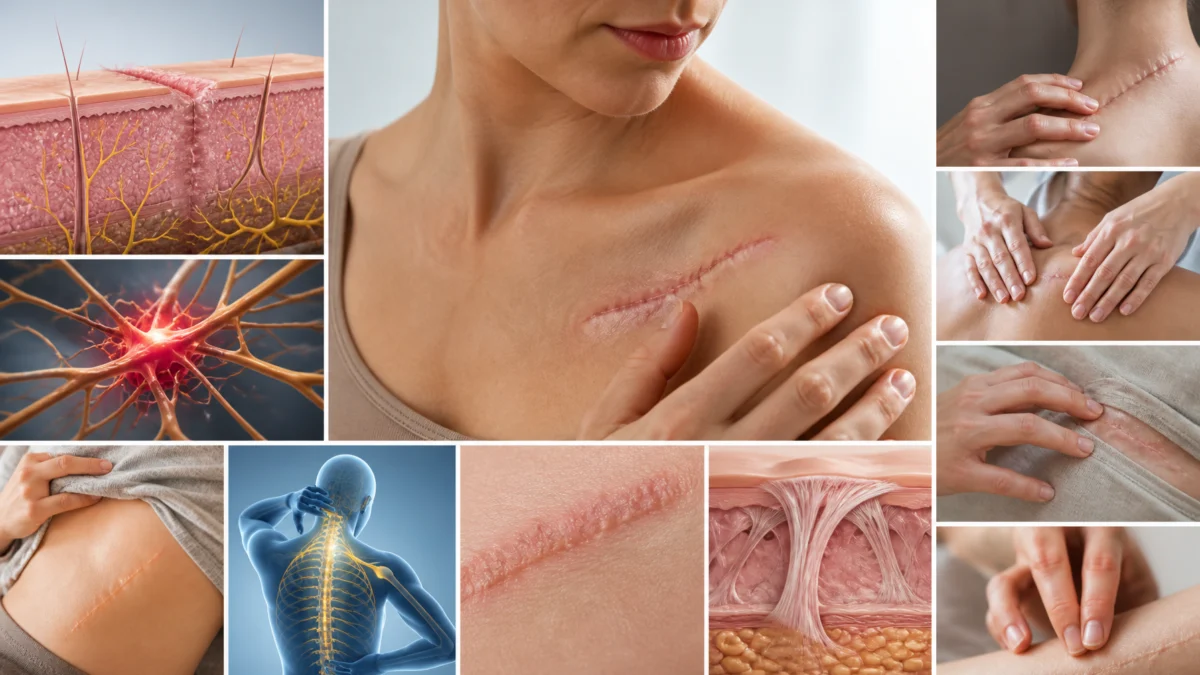
A scar can be closed, clean, and inconspicuous while still causing discomfort. Clothing rubbing against it, stretching the arm, or light contact can trigger burning, tingling, or a sensation of tightness. Conversely, part of the skin may feel numb. These experiences deserve to be taken seriously, without automatically concluding that the scar is “stuck.”
Wound closure and the return of comfort are two different stages. Persistent pain may involve the skin, small nerves, or the movement of nearby tissues. Its interpretation depends on the history of the injury, how it has progressed, and specific limitations. The goal is to understand the situation and regain useful movements, rather than impose treatment on every old scar.[1] [2]
Healing continues after the skin has closed
When an injury occurs, the body produces repair tissue that contains collagen, among other components. This tissue then remodels: its colour, thickness, and flexibility may change over many months. A recent scar may be red and firm before becoming less noticeable. Its appearance also depends on the depth and location of the injury and how the wound healed.[3] [15]
Some scars remain thick or limit movement. A hypertrophic scar stays within the boundaries of the original injury, while a keloid extends beyond them. These situations cannot be reduced to simply not having had enough massage. A specific assessment may be helpful when raised tissue, itching, or functional discomfort becomes significant.[4]
Pain, numbness, and tightness: different mechanisms
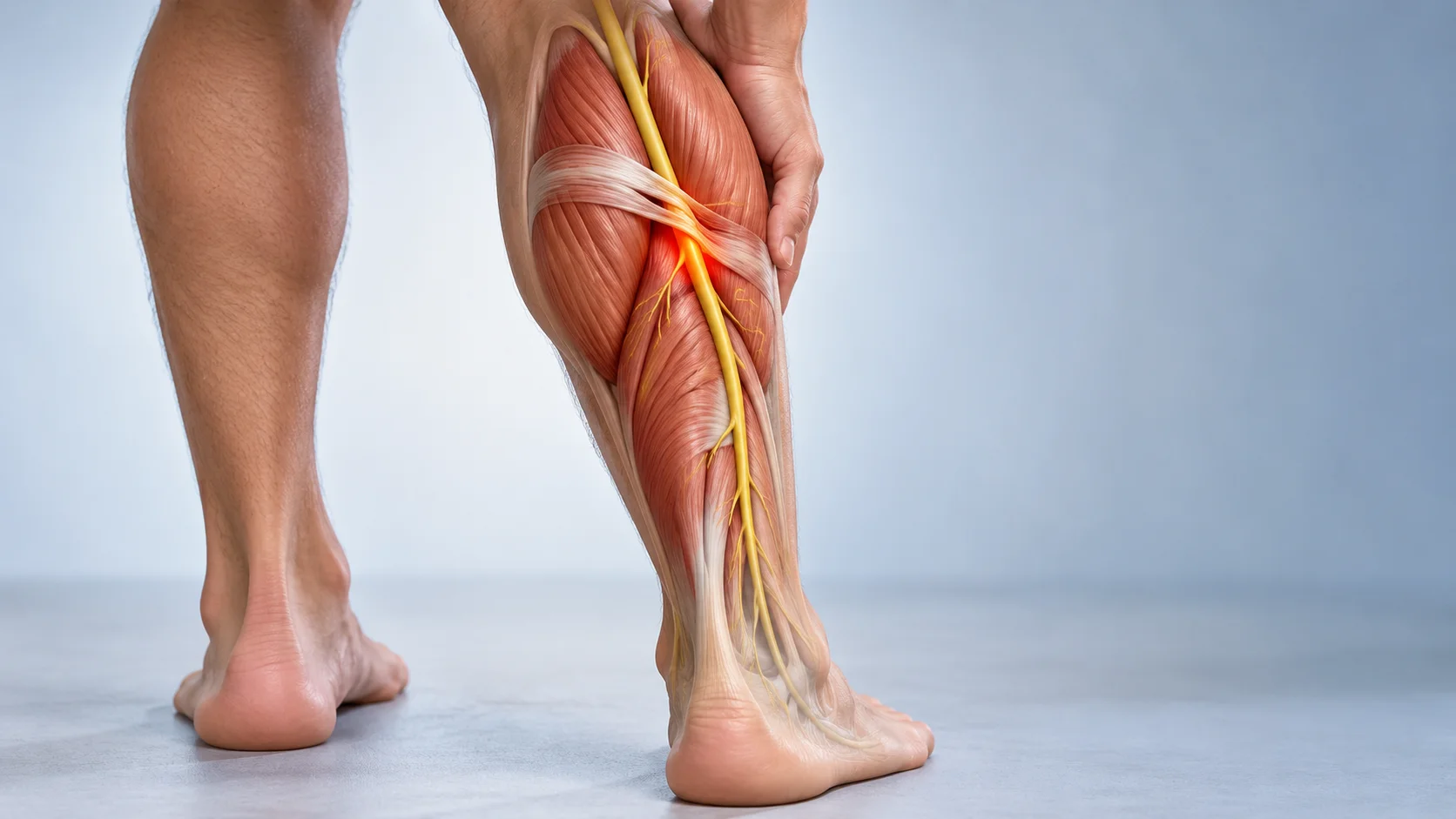
Small nerve branches in the skin may be affected by a cut or surgery. Reduced sensation may persist around the scar, with recovery varying from person to person. Burning or electric shock-like sensations suggest a possible nerve-related component, but their description alone is not enough to establish a diagnosis. Pain may also involve several mechanisms.[1] [2]
Allodynia refers to pain caused by a normally non-painful stimulus, such as contact with fabric. It explains why a barely visible scar may be difficult to tolerate. Sensitivity therefore does not simply reflect the size of the mark. Painful touch does not prove that there is an adhesion that needs to be released.[2] [12]
A very specific point that triggers electric shock-like pain may prompt an assessment for nerve irritation or injury, sometimes a neuroma. A neuroma is the disorganized repair of an injured nerve; however, not all localized pain is caused by a neuroma. Persisting with firm pressure is neither a reliable test nor an appropriate response.[1]
| What you feel | What it may suggest | Reasonable next step |
|---|---|---|
| Clothing is painful on contact | Hypersensitivity, sometimes allodynia | Assess the skin and try gradual exposure if it is healed |
| Numb area | Altered sensation after injury to small nerves | Monitor changes and protect skin with reduced sensation |
| Highly localized electric shock-like sensations | Possible nerve irritation or neuroma | Seek an assessment rather than massaging more firmly |
| Tightness during movement | Local strain or reduced mobility | Compare movements and monitor function |
| Thick scar or scar extending beyond the wound | Possible hypertrophic scar or keloid | Have the type of scar clarified |
| Warmth, discharge, opening, or rapid worsening | Possible complication | Stop direct scar care and seek prompt medical advice |
Reduced mobility does not prove the cause of all pain
The skin and adjacent layers may glide less freely after certain injuries. When a scar crosses a mobile area, this restriction may contribute to discomfort during movement. However, the examination must distinguish tissue glide, sensitivity to touch, and actual limitations in range of motion. A mobile scar can be painful; another that is relatively firm may cause no problems.
This distinction also protects against overly broad explanations. An old abdominal scar does not automatically become the cause of back, hip, or shoulder pain. Immediate improvement after contact also does not prove that a fascial chain has been released. In a 2025 randomized trial involving people with low back pain and an abdominal scar, scar treatment showed no significant difference in pain compared with the group receiving placebo touch.[11]
What studies show about physical scar treatments
The scoping review by Scott and colleagues reports possible benefits of postoperative scar massage, particularly for pain, movement, and certain scar characteristics. However, it highlights the diversity of techniques, frequencies, and outcome measures. This heterogeneity prevents the recommendation of a universal method or dosage. A positive result in one study does not justify systematically treating every patient.[5]
The meta-analysis by Deflorin and colleagues reports improvements in several symptoms with various physical treatments. It does not focus solely on massage and therefore does not allow all effects to be attributed to a manual technique. The comparisons, study quality, and type of scar must be considered before applying the findings to a specific person.[6]
A substantial portion of the research concerns burns and hypertrophic burn scars. The 2024 reviews indicate a possible benefit of certain interventions for pain and itching, with evidence of limited to moderate quality and varying protocols. An extensive burn scar is not equivalent to a thin, old surgical scar; findings do not automatically transfer from one group to another.[7] [8]
After a caesarean section: encouraging findings, limited scope
The exploratory Quebec study by Gilbert, Gaudreault, and Gaboury observed changes in certain mechanical properties and the pressure pain threshold after standardized mobilization of caesarean scars. Thirty-two participants completed the study. This work is useful for exploring local effects, but its design cannot guarantee lasting benefits or demonstrate a deep-release mechanism.[9]
In 2024, Olszewska and colleagues compared two groups of fifteen women and observed improvements in several scar characteristics after a manual therapy program. The small sample and the program’s specific methods limit generalizability. These findings support discussing targeted care for someone experiencing discomfort; they do not prove that every caesarean scar requires treatment sessions.[10]
Returning to activities after childbirth also depends on overall recovery, abdominal comfort, and the healthcare team’s instructions. Difficulty carrying the baby or turning over in bed can serve as a concrete goal. Treating the skin should not replace the assessment of deep pain, a wound problem, or another postpartum difficulty.[13]
Begin only when the wound is ready
Before any direct contact, the wound must be completely closed and postoperative instructions must be followed. A persistent scab, opening, or discharge indicates that the area should not be treated like a mature scar. The right time varies depending on the injury and procedure; a timeline found online does not replace instructions from the team monitoring the healing process.[13] [15]
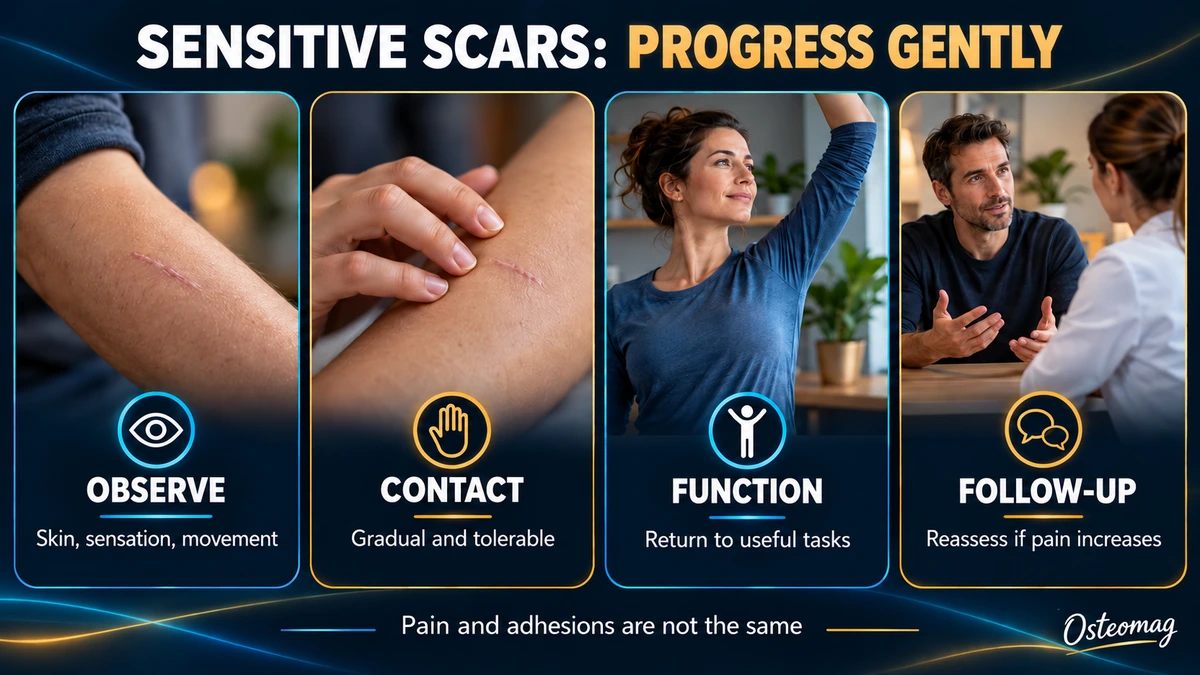
Once the skin is ready, care can begin with brief, light contact, depending on tolerance. It is not necessary to cause severe pain in the hope of achieving a result. Skin that remains noticeably more sensitive after trying this is a reason to reduce stimulation and reassess. On a numb area, also avoid friction or heat that you might not perceive properly.
Gradual desensitization
Desensitization uses graded contact to help improve tolerance of ordinary sensations. A professional may suggest starting with the hand or a soft fabric, then gradually expanding the range of textures and movements. Exposure is tailored to the scar and your response; it should not be experienced as an obligation to endure significant pain.[12]
For a hand scar, the goal may be to resume contact with everyday objects. For a scar on the trunk, it may be to tolerate clothing better. Alternate this exploration with well-tolerated activities and follow restrictions related to deeper tissue repair. Rehabilitation recommendations describe these principles, but they do not prove that every scar will respond in the same way.[15]
Regaining the movements that matter
Choose a specific movement to monitor: raising the arm, opening the hand, straightening up, wearing a belt, or sleeping in a position that was previously uncomfortable. The movement can begin within a comfortable range, then progress according to recovery and instructions. This approach links care to your daily life, rather than measuring only the flexibility felt under the fingers.
Compare the same conditions over time. Being able to tolerate clothing for longer, resume a task, or feel less discomfort the next day provides useful information. If the scar seems more mobile immediately but activities remain unchanged, the practical benefit remains uncertain. Slow progress may be appropriate, but a sustained lack of improvement should lead to a review of the assumptions and the program.
Skin scars and abdominal adhesions
Internal adhesions can form after abdominal surgery. They involve tissues inside the abdomen and are not synonymous with poorly mobile skin. Many cause no symptoms, but some can lead to complications. Touching a superficial scar cannot confirm their presence or demonstrate that they have disappeared.[14]
Severe abdominal pain with vomiting, abdominal swelling, and inability to pass gas or stool requires urgent evaluation, particularly after surgery. This presentation should not be treated with scar massage. Likewise, a new mass or persistent deep pain should be examined without assuming that an old incision provides the explanation.[14]
When to seek a new evaluation
A scar that becomes warm, swollen, or more painful, purulent discharge, or reopening of the skin warrants prompt medical attention. Associated fever or malaise further reinforces this need. Persistent electric-shock-like pain, sensation that changes progressively, or significant limitation also merits examination, even if the surface appears healed.[1] [3]
Evaluation may include inspection, careful assessment of sensation and movement, followed by targeted tests when warranted by the clinical presentation. Not all scars require imaging. The choice depends on whether nerve involvement, a deep complication, or another cause is suspected; an area that merely feels “hard” under the fingers is not enough to make that decision.
An osteopathic contribution focused on function
Osteopathy’s interest in the relationships between structure and function can encourage careful assessment of movement and the patient’s experience. In this context, the osteopath may offer tolerable touch, support appropriate movements, and monitor jointly defined goals. Consent remains essential, particularly for an intimate scar or one associated with a difficult experience: the person may ask for a pause or decline touch.
This holistic approach must remain consistent with the limitations of the evidence. Touch cannot establish that organs have shifted, that an emotion is trapped in the scar, or that the scar explains all pain elsewhere. Improved comfort is a valid outcome when it genuinely helps with activities. It does not require a narrative of “broken” or “detached” tissue and should be reassessed if the benefit does not last.[5] [9] [11]
References
- [1] Abd-Elsayed A et al. Diagnosis, Treatment, and Management of Painful Scar: A Narrative Review. 2022.
- [2] Bijlard E et al. A Systematic Review on the Prevalence, Etiology, and Pathophysiology of Intrinsic Pain in Dermal Scar Tissue. 2017.
- [3] NHS. Scars: progression, care, and reasons to seek medical advice.
- [4] Kingston and Richmond NHS. Keloid and hypertrophic scars.
- [5] Scott HC et al. Is massage an effective intervention in the management of post-operative scarring? Scoping review, 2022.
- [6] Deflorin C et al. Physical Management of Scar Tissue: A Systematic Review and Meta-Analysis. 2020.
- [7] Santuzzi CH et al. Massage, laser and shockwave therapy improve pain and scar pruritus after burns. Systematic review, 2024.
- [8] Barnes SP et al. Efficacy of Massage Techniques for Hypertrophic Burn Scars. Systematic review, 2024.
- [9] Gilbert I, Gaudreault N, Gaboury I. Exploring the Effects of Standardized Soft Tissue Mobilization on the Cesarean Section Scar. Exploratory study, 2022.
- [10] Olszewska K et al. Changes in the scar tissue structure after cesarean section as a result of manual therapy. 2024.
- [11] Makita DK et al. The effect of manual therapy on abdominal scars in patients with nonspecific chronic low back pain. Randomized trial, 2025.
- [12] Great Ormond Street Hospital. Scar desensitisation: principles of gradual exposure to touch.
- [13] Kent and Medway NHS. Your body after birth: care after complete healing.
- [14] NIDDK. Abdominal Adhesions: internal adhesions and signs of obstruction.
- [15] North Tees and Hartlepool NHS. Hand Therapy – Scars: recovery and sensitivity.