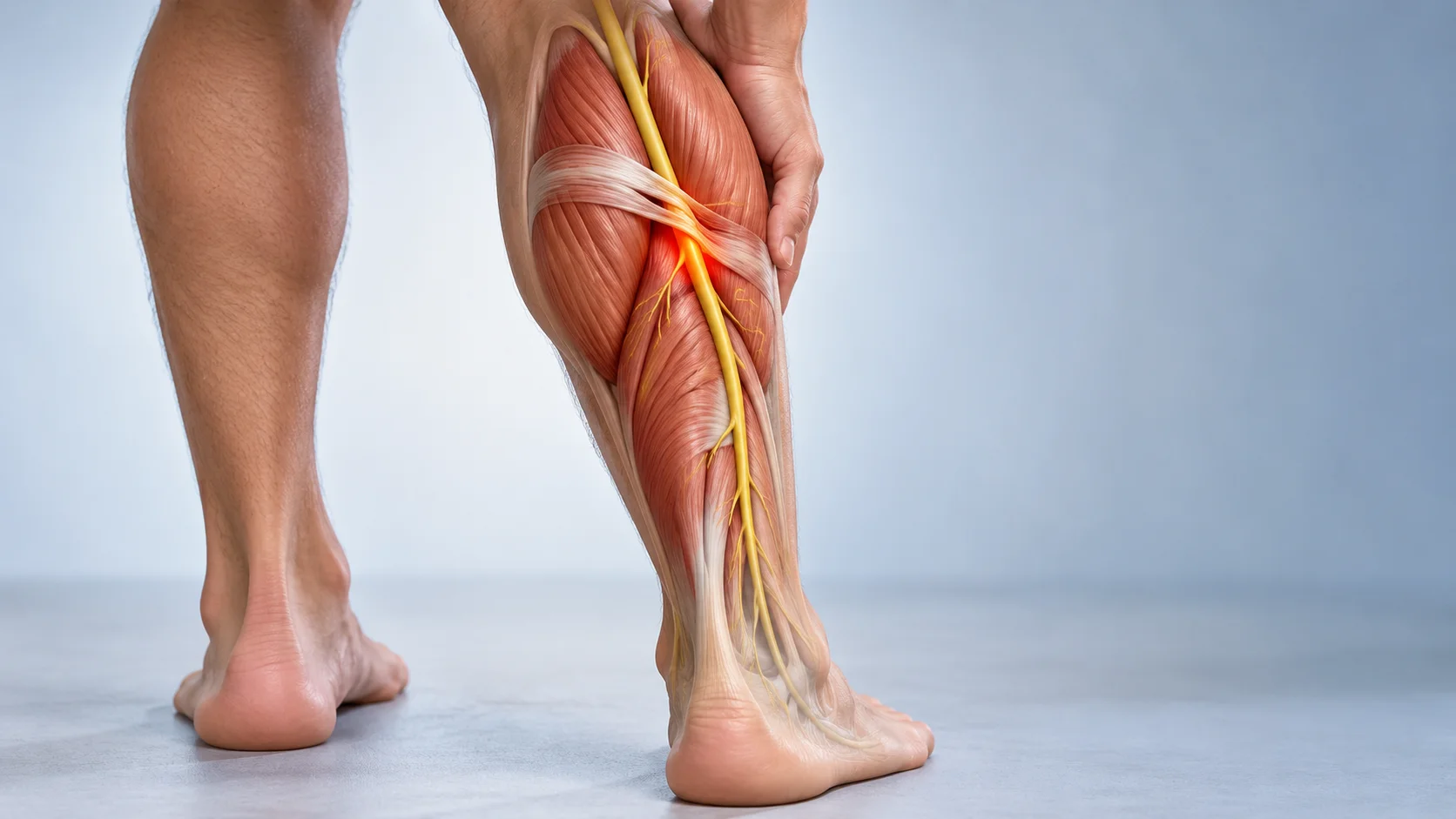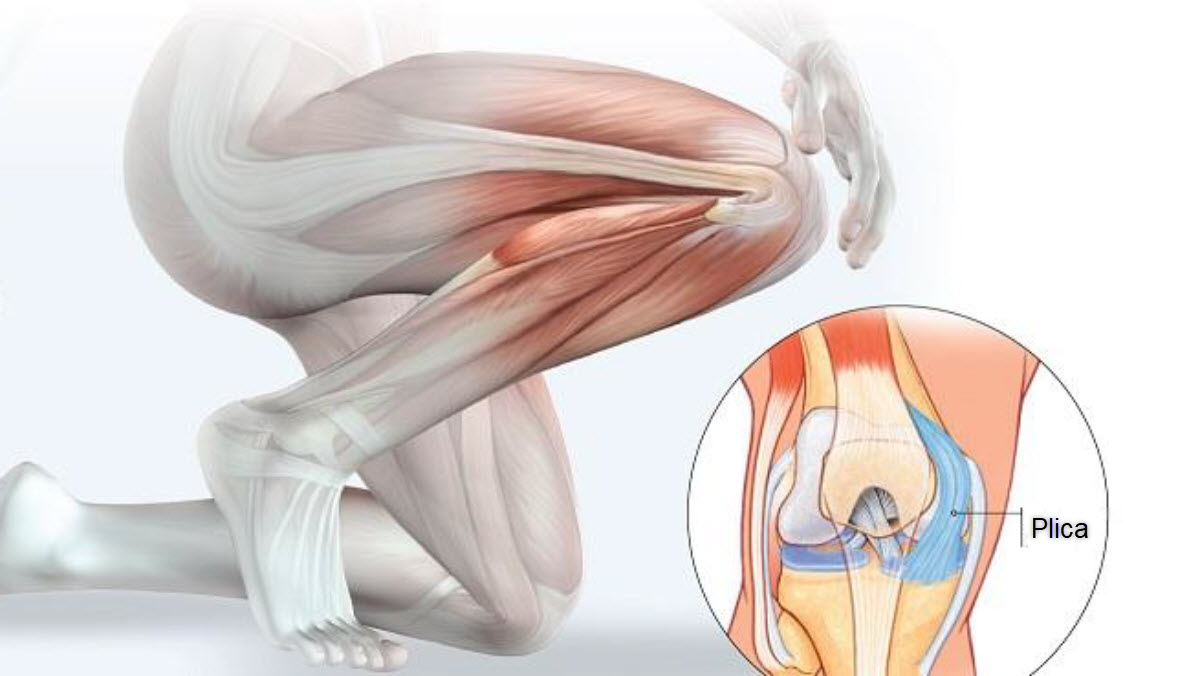
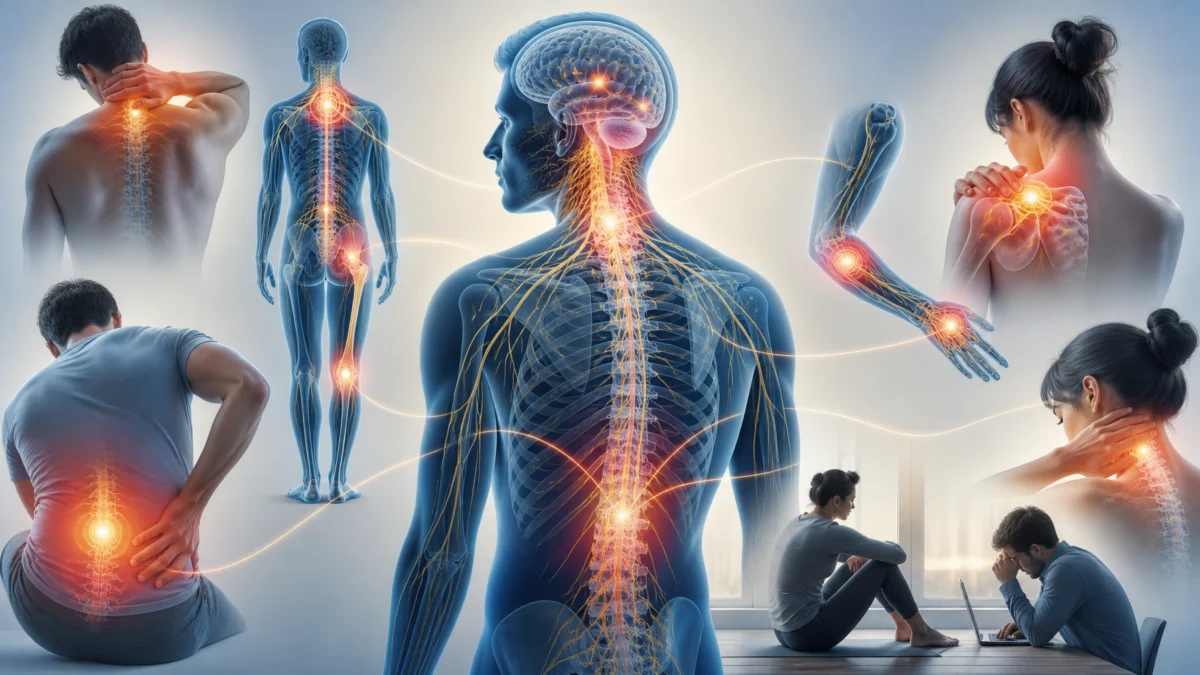
Pain may begin in the lower back and then be felt in the buttock a few days later. Shoulder discomfort may extend into the arm. Neck pain can change sides or become more diffuse. For the patient, this movement can be worrying: “Is the problem spreading?” or “Have I injured something else?”
Often, the answer is no. The location of pain is not an exact photograph of the location of tissue damage. Tissues, nerves, the central nervous system, activity, and movement strategies can all influence where pain is felt.
Why Do Pain and Tissue Injury Not Always Overlap?
Nociceptive messages coming from a region are processed by the nervous system. The brain then constructs the pain experience from this information, the context, and the state of the organism. A painful structure can therefore be experienced in a nearby area or sometimes farther away.
What Is Referred Pain?
Referred pain is pain perceived at a distance from its source. It is well described for certain spinal, joint, muscular, and visceral structures. A 2023 review notes that the mechanisms are complex and that referral patterns can overlap, which limits the value of using a pain map by itself.
Is Referred Pain the Same as Nerve Pain?
No. Radicular or neuropathic pain tends to follow the distribution of a nerve or nerve root and may be accompanied by burning, electric-shock sensations, numbness, or weakness. Referred pain can be more diffuse and does not necessarily include a neurological deficit.
Why Can Low Back Pain Move Into the Buttock?
Structures in the lumbar spine can produce referred pain in the buttock or thigh. In addition, when a person begins walking more again or changes the way they move, other tissues may be loaded differently. A change in location therefore does not automatically mean that the condition is worsening.
What About Shoulder Pain That Travels Down the Arm?
It may be referred from the shoulder itself, from the neck, or sometimes have a neurological origin. The presence of tingling, weakness, loss of sensation, or pain reproduced by certain neck movements changes the clinical reasoning.
Why Can Pain Change Sides?
Load, position, sleep, activity, and movement can vary from one day to another. A person may also protect one side and use the other more. The whole clinical picture should be examined rather than assuming that a “problem has moved” from one side to the other.
Can the Nervous System Change the Painful Area?
Yes. When pain persists, sensory responses can become more diffuse or less precisely localized. However, caution is needed with the term “central sensitization.” A critical 2024 review emphasizes that chronic pain mechanisms should not automatically be attributed to a single neurophysiological explanation that is difficult to demonstrate clinically.
Does a Newly Painful Area Mean It Has Been Injured?
Not necessarily. A region may become sensitive because it is working more, because movement has changed, or because the pattern of referred pain has changed. But a new pain can also represent a new condition. Context remains essential.
Why Does Pain Vary With Load?
Tissues do not all have the same tolerance. A more active day can make a tendon, muscle, or joint more sensitive. Conversely, prolonged inactivity can increase perceived stiffness. The area that “speaks the loudest” can therefore change according to what has been asked of the body.
Can Sleep and Fatigue Play a Role?
Yes. Insufficient sleep, marked fatigue, or a period of stress can increase pain sensitivity in some people. This does not mean that the pain is psychological; it shows that pain is influenced by the overall state of the system.
Why Does Posture Not Explain Everything?
A person who temporarily changes posture because of pain may begin to feel discomfort elsewhere. But it is rarely possible to say that migrating pain is caused by one specific “bad posture.” The relationship between posture and pain is generally more variable.
Is Pain That Centralizes a Good Sign?
In some low-back presentations, pain that moves from the leg toward the back during repeated movements can provide useful clinical information. However, “centralization” should not become a universal rule applied to every pain condition.
Can Pain Move After Manual Treatment?
Yes. Sensitivity in one area may decrease while another area becomes more noticeable. This may also happen because movement changes. A practitioner should not automatically explain the phenomenon as a “release” that makes pain circulate through the body.
Why Does Some Pain Change From Hour to Hour?
Tissues are loaded differently throughout the day. The nervous system also varies with activity level, attention, and recovery. Fluctuating pain is common in musculoskeletal disorders and does not necessarily indicate progressive tissue damage.
When Is a Change in Pain Location Reassuring?
It is more reassuring when overall function is improving, pain remains linked to familiar movements, no neurological deficit appears, and the overall trend is toward greater tolerance of activity.
When Should More Caution Be Used?
Pain that moves while being accompanied by weakness, significant numbness, loss of coordination, fever, shortness of breath, chest pain, limb swelling, or general deterioration should be reassessed promptly.
Can Chest or Abdominal Pain Be Referred?
Yes, and that is precisely why caution is important. Some visceral or vascular conditions can be felt in the back, shoulder, or jaw. New or atypical pain should not be interpreted solely as a musculoskeletal phenomenon.
How Can an Osteopath Assess Pain That Moves?
An osteopath can map the painful regions, ask what triggers or relieves each area, and compare the movements that reproduce symptoms. Neurological examination, strength testing, reflexes, and sensory testing may be useful when the history suggests a nerve-related origin.
Should Every Painful Area Be Treated?
No. If several regions hurt, the practitioner should look for movements and activities that influence the overall pattern. It is not necessary to apply a technique to every tender point.
Why Is Functional Context More Useful Than a Fixed Pain Map?
A pain map shows where pain is felt at a particular moment. Functional context shows what the person can do, what changes the pain, and how the situation evolves. This information is often more useful for guiding progression.
Can Manual Treatment Help Migrating Pain?
It may sometimes temporarily reduce sensitivity in one region and make movement easier. But its effectiveness should be judged against concrete goals, not on the idea that the practitioner has “put the pain back in its place.”
What Can the Patient Do?
The patient can note the activities, positions, and loads associated with changes in pain, maintain a tolerable level of activity, and avoid adding unnecessary protective behaviors. A very detailed diary is not required; a few simple observations are often enough.
Why Avoid Constantly Scanning the Body?
Constant monitoring can increase the importance given to every small variation. It is often more useful to track function: walking, sleep, ability to work, movement, or sports activity.
Can Pain That Moves Still Be Serious?
Yes, sometimes. Variability does not guarantee that a condition is harmless. Unusual changes, systemic or neurological symptoms, and pain that does not behave mechanically should therefore remain warning signs.
How Can This Be Explained Without Minimizing the Pain?
One possible explanation is: “The fact that the pain changes region does not necessarily mean that a new injury is developing. We will check whether the pattern fits referred pain, a change in load, or a sign that deserves another type of assessment.”
Why Can a New Activity Make Another Area Painful?
When a person resumes activity after a period of protection, load may not be distributed exactly as it was before. Walking may become faster, standing time may increase, or certain muscles may begin working more again. A new area can then become sensitive without a new injury having occurred. It is useful to ask what changed in the preceding days rather than immediately searching for another structure that has supposedly moved “out of place.”
Should Activity Wait Until All Pain Is Gone?
Not always. In many musculoskeletal situations, a gradual return to activity is preferable to waiting for complete absence of symptoms. Progression must still remain compatible with the diagnosis, the condition of the tissues, and the response after activity. A marked and lasting increase in pain, the appearance of neurological symptoms, or loss of function should prompt reassessment of the strategy.
Conclusion
Pain can move without a new structure being injured. Referred pain, changes in load, movement adaptations, and sensory modulation can all change where pain is experienced.
The osteopath’s role is to look for the overall pattern, associated function, and warning signs rather than assuming that migrating pain represents a problem mechanically “travelling” through the body.
References
- Jin Q, et al. Referred pain: characteristics, possible mechanisms, and clinical management. Front Neurol. 2023.
- Velasco E, et al. Is chronic pain caused by central sensitization? A review and critical point of view. Neurosci Biobehav Rev. 2024;167:105886.
- Curatolo M. Central Sensitization and Pain: Pathophysiologic and Clinical Insights. Curr Neuropharmacol. 2024;22(1):15-22.
- Riley SP, et al. Does manual therapy meaningfully change quantitative sensory testing and patient reported outcome measures in patients with musculoskeletal impairments related to the spine? J Man Manip Ther. 2023.